Who gets to have 'good debt'? A sociologist, theologian, philosopher and other experts weigh in
Humans have debated the merits and morality of debt throughout history.
Key points
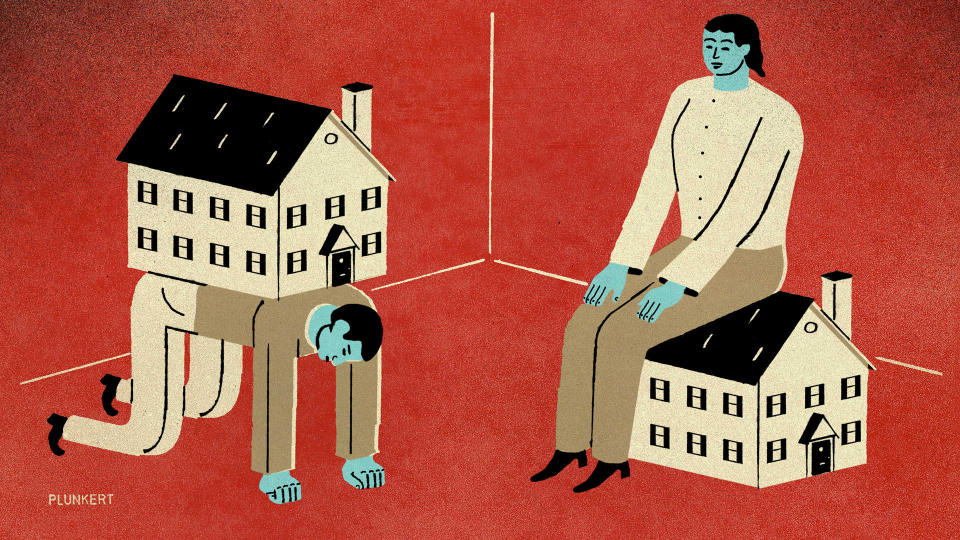
- Experts say access to affordable borrowing that builds wealth has never been equal.
- Princeton sociologist Frederick Wherry says the wealthy are most likely to have 'good debt'.
- Historian Louis Hyman says the 1930s credit system mainly served white middle-class married men.
Debate over what makes debt 'good' or 'bad' has run from ancient Greece to modern America, but experts say one thing has stayed constant: affordable borrowing that helps build wealth has never been equally available. CNBC spoke with scholars in philosophy, history, theology, sociology and financial psychology about who gets to have 'good debt' and why.
Princeton sociologist Frederick Wherry pointed to the 'Matthew effect,' which he described as 'To those who have much, more is given, and those who have little, the little they have is taken away from them.' He said people who are not in financial distress are the ones most likely to have good debt, while those desperate to borrow are often exposed to bad debt.
Views from philosophy and history
Graham Hubbs, a philosophy professor at the University of Idaho, said debt questions date to the ancient Greeks and appear in the early pages of Plato's 'Republic.' He said good debt is tied to the pursuit of happiness and the expectation of future income, while bad debt is linked to stress and anxiety. He added that good debt is becoming harder to attain as home and college payments rise faster than expected incomes.
Louis Hyman, a political economy historian at Johns Hopkins University, said the early 1900s marked a shift in American attitudes. Debt had been seen as quasi-immoral, but a more industrial, urbanizing country with steady paychecks made installment lending possible for cars and household goods. By the 1920s, he said, debt was widely seen as the future and even as broadly democratic.
The middle class is hit really hard
— Frederick Wherry
A two-tier credit system
Hyman said the U.S. built an 'entire new credit regime' in the 1930s during the New Deal era, mainly for white middle-class married men. Black Americans and single women had limited or no access to that federal mortgage system and the expanding suburban credit world. He called access to credit 'really a two-tier system,' with one tier cheaper and more accommodating for the white middle class and another offering exorbitant rates or no credit at all.
Sonya Lutter, director of financial health and wellness at Texas Tech University, said she hears the term 'good debt' less often now because uncertainty makes people want to avoid any debt. She said anxiety about taking on good debt is likely lower for those with options, and that social media comparisons can make people's financial situations seem worse than they are. Devin Singh, a religion professor at Dartmouth College, said debt has long been a moral construct used to include or exclude people, and that unequal access to good debt persists partly because society has been shaped to see certain practices as good.