Why are more roofs not made of solar tiles?
Solar tiles were touted as an attractive alternative to solar panels - why have they not taken off?
Key points
- Solar roofs look like regular tiles but cost about twice as much as standard solar panels.
- Tesla stopped selling solar roofs after weak sales and a lawsuit over price hikes.
- Solar tiles are less efficient than panels due to smaller size and reduced airflow.
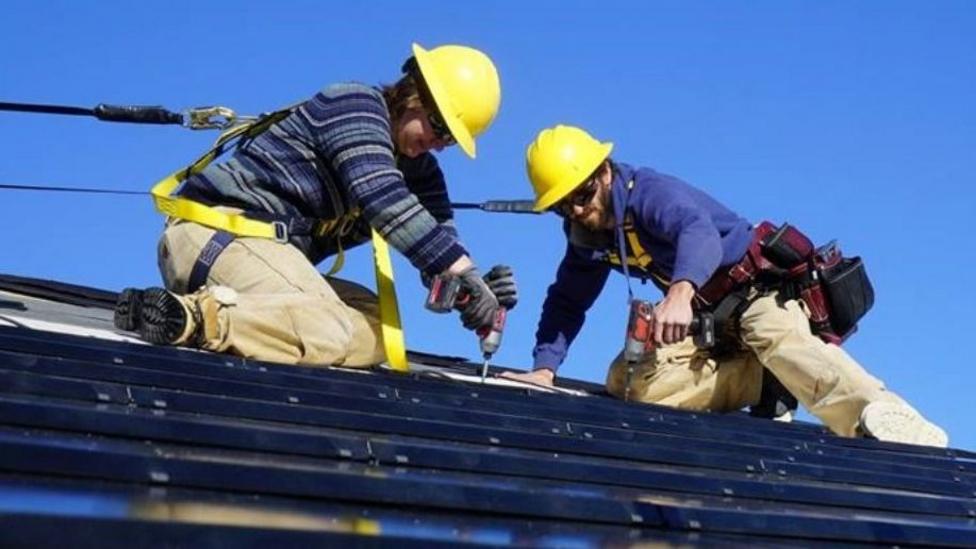
Solar roofs, which use tiles or shingles containing solar cells while resembling regular roofing, remain a niche product in the US and elsewhere. Kate Collardson, who handles operations for Solar Service of Colorado, acknowledged that some people in the US "still hate the look of solar." The product category gained wider attention in August when Tesla's website stopped offering solar roofs, following disappointing sales and a lawsuit over sudden price hikes.
Tesla's withdrawal sent shockwaves through the solar roof industry, with some viewing it as a death knell for solar tiles and others as an opportunity. The small Swiss company Freesuns is considering expanding to the US. Deborah Learoyd, Freesuns' CEO and managing director, estimates sales have grown 20–30% since the company was established in 2019.
Cost and efficiency drawbacks
Solar roofs typically cost about twice as much as a system of solar panels mounted on a roof, before repair costs are factored in. They are also less efficient, partly because the tiles are smaller and because heat builds up due to less airflow than with standard panels. Coloured tiles are even less efficient; Ben Graves, co-founder of UK solar company Sunsave, noted that black is the best absorbing colour.
Solar roofs require collaboration among roofers, solar installers and electricians, and building regulations tend to be more complex than for solar panels. Collardson explained that the additional time and paperwork can hurt a roofing business, saying a roofer might think, "This is taking forever. I'm losing money." Repairing solar shingles is also harder, as there is no mapping of individual output and walking on them can create micro-fractures.
a lot of the cost is actually the fact that every roof is a little bit different. And so it has to be engineered a little bit differently, installed a little bit differently
— Deborah Learoyd
Outlook and new technology
Supporters argue solar roofs should not be compared directly with standard solar modules. Martin Heinrich, who leads a research group at the Fraunhofer Institute for Solar Energy Systems, urged looking at PV roof tiles as generating additional electricity from roofs instead of just having the roof sit there. One promising advancement is matrix shingling technology, which cuts solar cells into narrow strips connected with conductive adhesive rather than metal wires.
Learoyd said matrix shingling allows current to flow around shaded areas, giving the example of a bird dropping on part of a cell. Heinrich added that cutting cells into smaller areas makes it easier to fill special sizes without adhering to a regular pattern. Freesuns is an early adopter of the technology. Learoyd remains optimistic, believing that for people with the means, installing a new roof with embedded solar will eventually become standard, calling it "just a no-brainer."