Willem de Kooning review – the artist’s lifelong rebellion against himself is thrilling to watch
Rijksmuseum, Amsterdam Marking a century since the Dutch artist stowed away to New York, this vast retrospective gloriously showcases the abstract expressionist’s fierce boundary-pushing Willem de Kooning was the last great artist who really knew how to draw. More precisely, if less provocatively, he was the last truly transformative painter to have been schooled in the academic tradition that produces what is still…
Key points
- The Guardian reviews a Rijksmuseum exhibition tracing Willem de Kooning's career from his academic training in Rotterdam to his final paintings.
- The show argues de Kooning was the last truly transformative painter schooled in the academic tradition of drawing.
- It highlights his refusal to separate drawing from painting and his lifelong rebellion against convention, including himself.
A new exhibition at the Rijksmuseum in Amsterdam examines the career of Willem de Kooning, described in the review as the last truly transformative painter to be schooled in the academic tradition. The show traces his development from meticulous student drawings made at the Rotterdam academy to the abstract expressionist works that made his name.
The review notes that de Kooning's early charcoal still life Dish With Jugs, made when he was in his mid-teens, is so minutely rendered that it could be mistaken for a sepia photograph. The catalogue estimates it took 600 hours to complete at the academy.
Drawing and painting merged
The review says de Kooning made no distinction between drawing and painting, unlike the tradition of drawing outlines and painting the space between them. In Queen of Hearts he drags charcoal across wet paint, and in a 1949 work on paper white sparks against a black ground end in a scrawled sexual image.
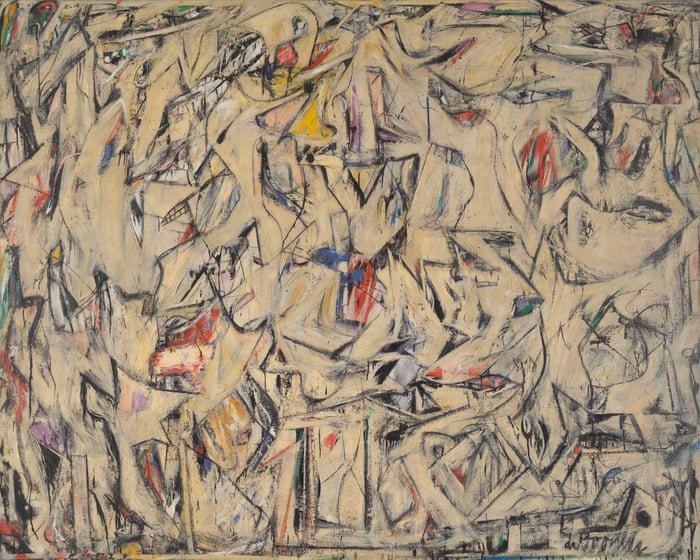
Excavation, completed in 1950, is called a knockout masterpiece that first appears as interlocking abstract shapes before revealing screaming faces and dismembered body parts. It is paired with a drawing from four years earlier, Judgment Day.
Draw what you see and not what you think
— the young De Kooning's teachers
Woman I and later work
Woman I hangs in a separate gallery normally reserved for Dutch golden age treasures. The review says the painting holds its own against Vermeer and Rembrandt, and that the old charge that it defames womankind now seems to rely on mid-century assumptions about how women should be represented.
The review finds the black-and-white works made in Rome in the late 1950s slapdash and derivative of Franz Kline. It says the show does little to overturn the view that de Kooning struggled for two decades afterward, though drawings from that period show he could always rely on his line.