60 Minutes Transcript: What's driving French protests
60 Minutes visits France to understand who and what are driving protests and interviews populist, far-right politician Marine Le Pen, who could benefit from the strife in the streets.
Key points
- Protests across France have damaged 2,500 businesses and injured more than 1,500 police.
- The unrest began in mid-September at a rundown school in a working-class Paris suburb.
- Marine Le Pen's popularity has risen as France's presidential election approaches next April.
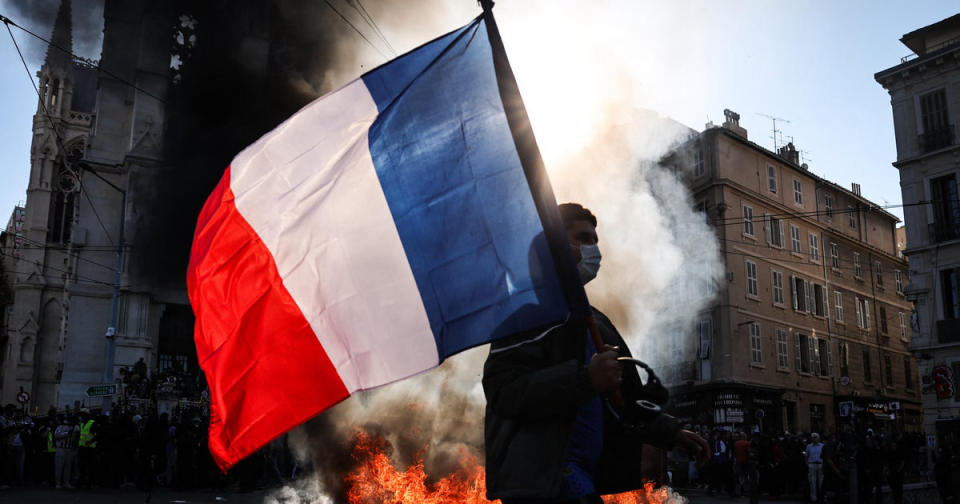
France has been in turmoil for weeks, with 2,500 businesses damaged, more than 1,500 police injured and property damage said to exceed a billion dollars, CBS News reported. The unrest began in mid-September in a working-class Paris suburb over a dilapidated school and a shortage of teachers, then spread to cities including Paris, Marseilles and Lyon.
On Oct. 17, arsonists in Limoges set fire to the city's town hall, which first opened on Bastille Day in 1883, and a bakery in Paris owned by Jhemima Sheilha was ransacked by looters. The demonstrations have widened from a campaign for better school funding into a broader protest about economic inequality.
Le Pen's rising popularity
Marine Le Pen, leader of the National Rally Party, is now the favourite to win the presidency next April after three failed attempts, and her popularity has risen since the protests began. She told CBS that the extreme left creates chaos and that a number of high school students' demands are worth listening to, though that does not justify violence.
Le Pen said there is no discrimination in France and called it the least racist country, and she said immigrants who reject French culture should leave, adding that France might "force you to leave." She denied being a fascist and said her embezzlement conviction, which she has taken to France's highest court, has not changed her message.
I have a simple rule: if you don't stop criminals, they won't stop.
— Marine Le Pen
Anger at Macron
Much of the protesters' anger is directed at President Emmanuel Macron, who was elected nearly 10 years ago and is now seen by voters as a lame duck who has left France with too many bills and too little money. Many young activists back Jean-Luc Melenchon, a 75-year-old former communist who declined an interview request, and some say they fear fascism.
Student Malhia Garin said she posted her school's protest on social media and it went viral, after which protests spread to big cities. Lola-Fleur Whittaker, 22, told CBS that looters were wrong but that a looted shop draws more shock than people sleeping outside.