A massive asteroid slammed into the North Sea and unleashed a 330-foot tsunami
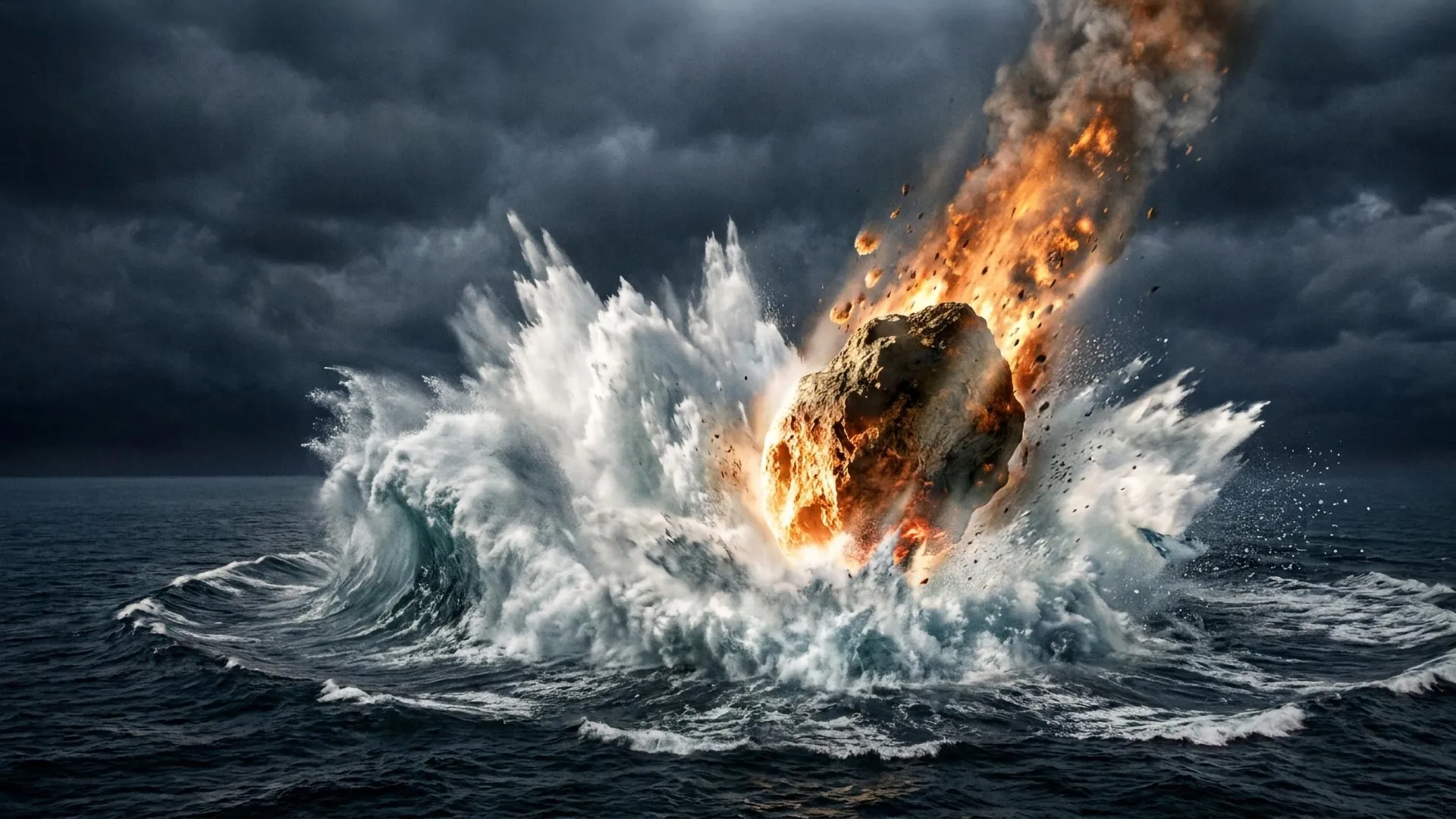
A decades-long mystery beneath the North Sea has finally been solved. Scientists have confirmed that the Silverpit Crater, buried 700 meters below the seabed, was created when a 160-meter-wide asteroid struck Earth roughly 43 to 46 million years ago. The violent collision blasted a towering curtain of rock and water 1.5 kilometers into the air and triggered a tsunami more than 100 meters high.
Key points
- Researchers led by Dr. Uisdean Nicholson of Heriot-Watt University have confirmed that the Silverpit Crater in the North Sea was formed by an asteroid or comet impact 43 to 46 million years ago.
- The impact created a tsunami more than 100 meters (330 feet) high, according to computer simulations.
- The team found rare shocked quartz and feldspar crystals in rock samples from an oil well near the crater, providing physical evidence of extreme shock pressures.
Scientists have confirmed that a massive asteroid struck the North Sea roughly 43 to 46 million years ago, creating what is now known as the Silverpit Crater and triggering a tsunami more than 100 meters (330 feet) high. The findings, published in Nature Communications, settle more than two decades of debate over how the buried structure formed.
A research team led by Dr. Uisdean Nicholson of Heriot-Watt University in Edinburgh used advanced seismic imaging, microscopic examination of rock samples and computer simulations to reconstruct the event. The crater lies about 700 meters beneath the seabed in the southern North Sea, roughly 80 miles off the coast of Yorkshire, England.
Evidence from shocked minerals
The crater measures about three kilometers across and is surrounded by a 20-kilometer-wide region of circular faults. When the formation was first identified in 2002, its circular outline, elevated central peak and surrounding fault rings resembled other impact sites, but some geologists argued that underground salt movement or volcanic activity had caused it. In 2009, most participants in a geologist vote rejected the asteroid hypothesis.
The decisive evidence came from rare shocked quartz and feldspar crystals found in rock cuttings from an oil well near the crater, at the same depth as the crater floor. Nicholson said the team was "exceptionally lucky" to find them and that the crystals prove the impact hypothesis beyond doubt.
It is very rewarding to have finally found the silver bullet.
— Professor Gareth Collins
Reconstructing the impact
Computer models suggest an asteroid about 160 meters across approached from the west and struck the seabed at a shallow angle. According to the simulations, the collision created a 1.5-kilometer-high curtain of rock and water that collapsed back into the sea within minutes, producing the tsunami.
Silverpit is now one of the few confirmed impact craters on Earth. Nicholson said around 200 confirmed craters exist on land and only about 33 have been identified beneath the ocean. The research was funded by the Natural Environment Research Council.