NASA’s Perseverance Mars rover just shattered the all-time off-world driving record
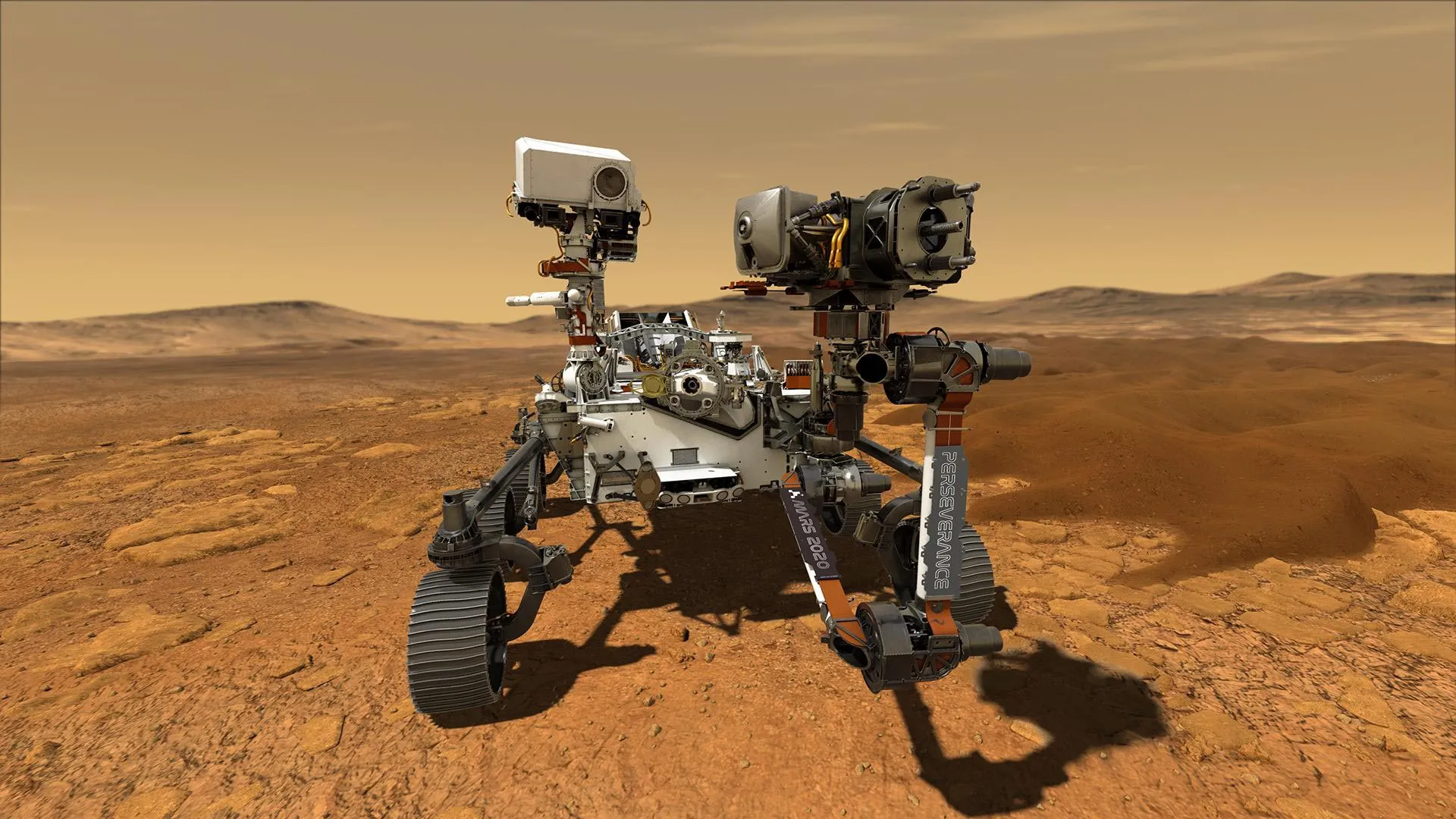
NASA’s Perseverance rover has shattered a historic space exploration record, traveling farther across another world than any vehicle before it. Its advanced self-driving system helped it surpass Opportunity’s 28.06-mile record in just five and a half years, a feat that previously took nearly 15. Now, Perseverance is exploring some of the oldest rocks in the solar system, searching for clues about ancient Martian…
Key points
- NASA's Perseverance rover set a new off-world driving record on October 11, reaching 28.10 miles (45.22 kilometers) and surpassing Opportunity's 28.06 miles (45.16 kilometers).
- Perseverance covered its record distance in about five and a half years, while Opportunity took nearly 15 years.
- The rover's AutoNav system has handled more than 90% of its driving distance, compared with about 5% for the earliest autonomous navigation on Spirit and Opportunity.
NASA's Perseverance rover has set a new driving record on another world. On October 11, its odometer reached 28.10 miles (45.22 kilometers), passing the previous mark of 28.06 miles (45.16 kilometers) set by NASA's Opportunity rover, which explored Mars from 2004 to 2018.
Perseverance reached the distance far faster than its predecessor. Opportunity took nearly 15 years to cover its record total, while Perseverance did it in about five and a half years, on its 2,006th Martian day, or sol.
Where the record was set
The milestone came as Perseverance traveled toward a location called Idubi, crossing an area beyond the western rim of Jezero Crater known as Lac de Charmes. The region may hold some of the oldest terrain examined in the solar system.
Scientists hope to find evidence at Idubi of ancient hydrothermal systems, where heated water once moved through rocks and may have created conditions suitable for life. Similar rocks on Earth have largely disappeared through erosion and plate tectonics, which Mars lacks.
It is an honor to be working on Perseverance at a moment when the technology has evolved to the point that drives like these are routine
— Steven Lee
How AutoNav drives the rover
Much of the rover's progress comes from its autonomous driving system, AutoNav. The rover photographs its surroundings, builds a three-dimensional map of obstacles and chooses a safe route between destinations set by mission controllers, a process NASA calls thinking while driving.
AutoNav has been involved in more than 90% of the distance Perseverance has traveled, compared with about 5% for the earliest autonomous navigation on Spirit and Opportunity. Sojourner evaluated just 20 measurement points to pick a route, while Perseverance now analyzes about 600,000 points each time it surveys the terrain.
Plans for the extended mission
NASA has approved Perseverance's first mission extension, which begins in October and runs through about the end of 2028. The rover is expected to continue along the crater rim and later head south, with Rainbow Falls, a 328-foot (100-meter-wide) piece of ancient crust, among its future destinations.
Perseverance has also surpassed two historic lunar driving distances: the 22.2 miles (35.7 kilometers) traveled by Apollo 17 astronauts Gene Cernan and Harrison Schmitt in 1972 and the 24.2 miles (39 kilometers) covered by the Soviet Union's Lunokhod 2 rover the following year.