A mysterious 4,000-year-old wall is rewriting North Africa’s history
A remarkable 4,000-year-old defensive structure discovered in Morocco is rewriting what scientists thought they knew about ancient North African civilizations. The massive fortifications reveal unexpectedly sophisticated prehistoric societies and suggest that the region played a much greater role in Mediterranean history than previously recognized.
Key points
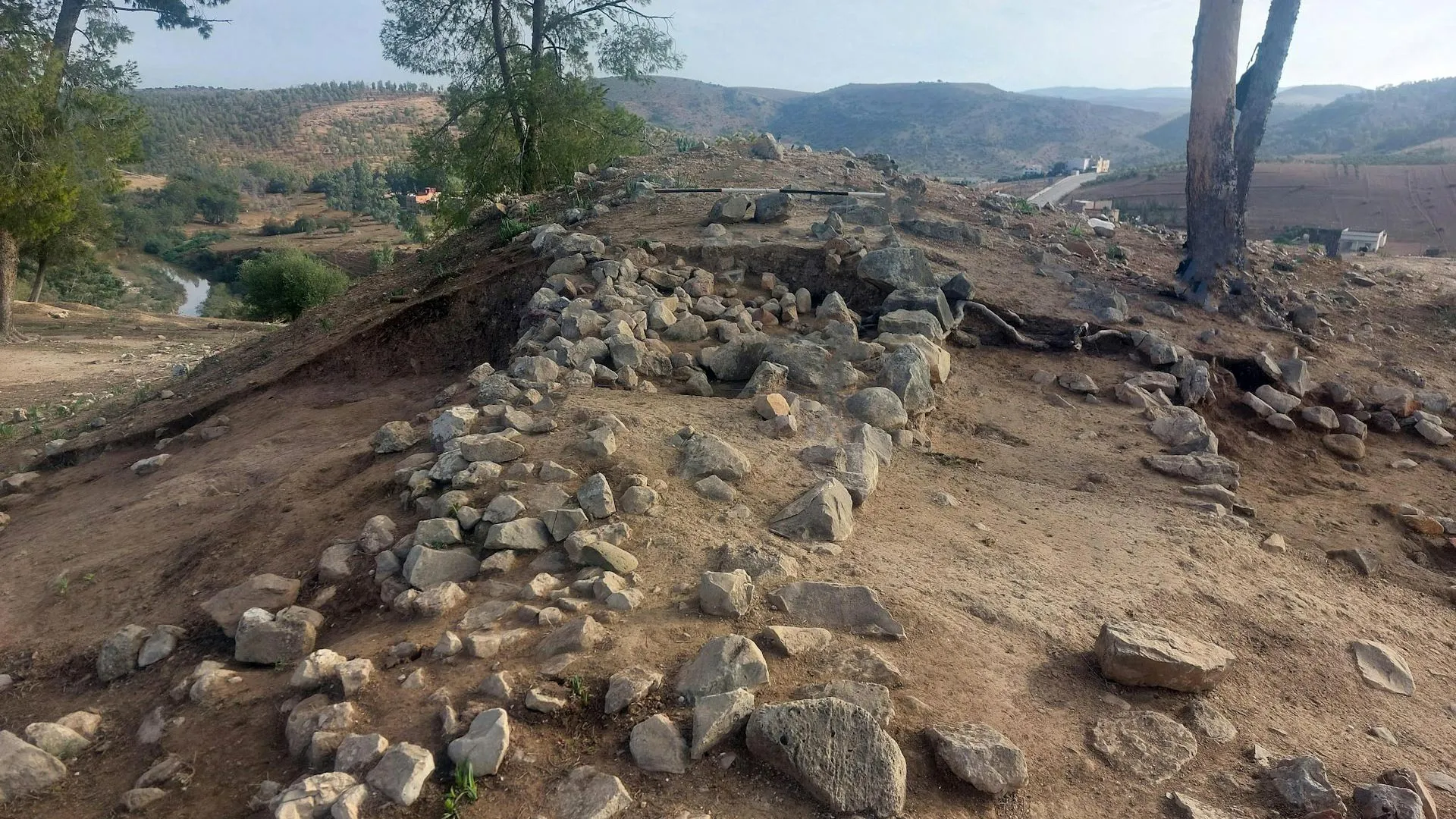
- Excavations at Oued Beht in north-west Morocco uncovered a defensive ditch, rampart and wall dated to about 4,000 to 3,500 years ago, the earliest confirmed defensive construction in north Africa outside Egypt.
- The structure was rebuilt in the medieval period, when a hamlet or farm was established nearby and people were buried in a cemetery between the two areas.
- Researchers say the site shows the Maghreb was connected to wider Mediterranean networks rather than isolated.
New excavations at Oued Beht in the hills of north-west Morocco have uncovered a large built structure that researchers describe as the earliest known large-scale construction of a probably defensive nature in north Africa beyond the Nile Valley. The structure is about 4,000 to 3,500 years old, according to a study whose 2023 excavations the authors took part in.
The work builds on earlier research at the site, which had already revealed what is likely the earliest and largest agricultural complex in Africa outside the Nile Valley, dating to around 5,400 to 4,900 years ago.
What the structure was
The excavations clarified a multi-phase ditch, rampart and wall built across a narrow section of the Oued Beht ridge between the river and a ravine, cutting off and protecting the ridge's southern tip. Radiocarbon dating of deposits linked to these structures placed the original construction at a time equivalent to the Bronze Age of the rest of the western Mediterranean.
The study says it is not known exactly what threats the wall-like structures were meant to counter. They likely relate to competition over land, resources and control of movement through the landscape, rather than to "invaders", and suggest communities felt a need to protect themselves or assert power over strategic locations.
This makes it the earliest confirmed defensive construction in north Africa outside Egypt.
— the study authors
Earlier activity and later reuse
Activity at Oued Beht spread across at least ten hectares, with the earliest major phase in the Final Neolithic period. Plant and animal remains indicate a farming community growing barley and wheat, exploiting wild plants and keeping livestock, and thousands of polished stone axes, other tools and decorated pottery have been found.
The ridge was used again in the medieval period, during the 11th to 13th centuries AD, when the defensive structure was rebuilt. The authors say the site was a landscape repeatedly selected by different communities across millennia.