Scientists discover metals that defy the deep freeze at -424°F
Scientists have discovered a surprising mechanism that allows certain metals to resist cracking at temperatures as low as -253°C (-424°F), when similar materials typically become dangerously brittle. Instead of breaking, two experimental alloys reorganize their internal structures, creating new ways to absorb stress and remain flexible.
Key points
- Two experimental niobium-titanium alloys resisted brittle failure at -253°C, or -424°F.
- The alloys use nanoscale twinning and crystal structure changes to create new deformation pathways.
- Researchers say the finding offers a new strategy for designing metals for extreme cold.
Scientists have found that two experimental metal alloys made from niobium and titanium can withstand extreme cold without becoming dangerously brittle. The alloys stayed resistant to damage at 20 kelvin, or -253°C (-424°F), and neither showed a measurable shift toward brittle behavior at the lowest temperature tested.
The findings were published October 14 in Nature. The research was led by an international team from the University of California, Berkeley, Lawrence Berkeley National Laboratory, and the University of Oxford.
How the alloys avoid fracture
Metals generally get stronger as they cool, but many also become more brittle. Body-centered cubic metals such as iron, tungsten and chromium are especially vulnerable, because small cracks can spread instead of the metal changing shape.
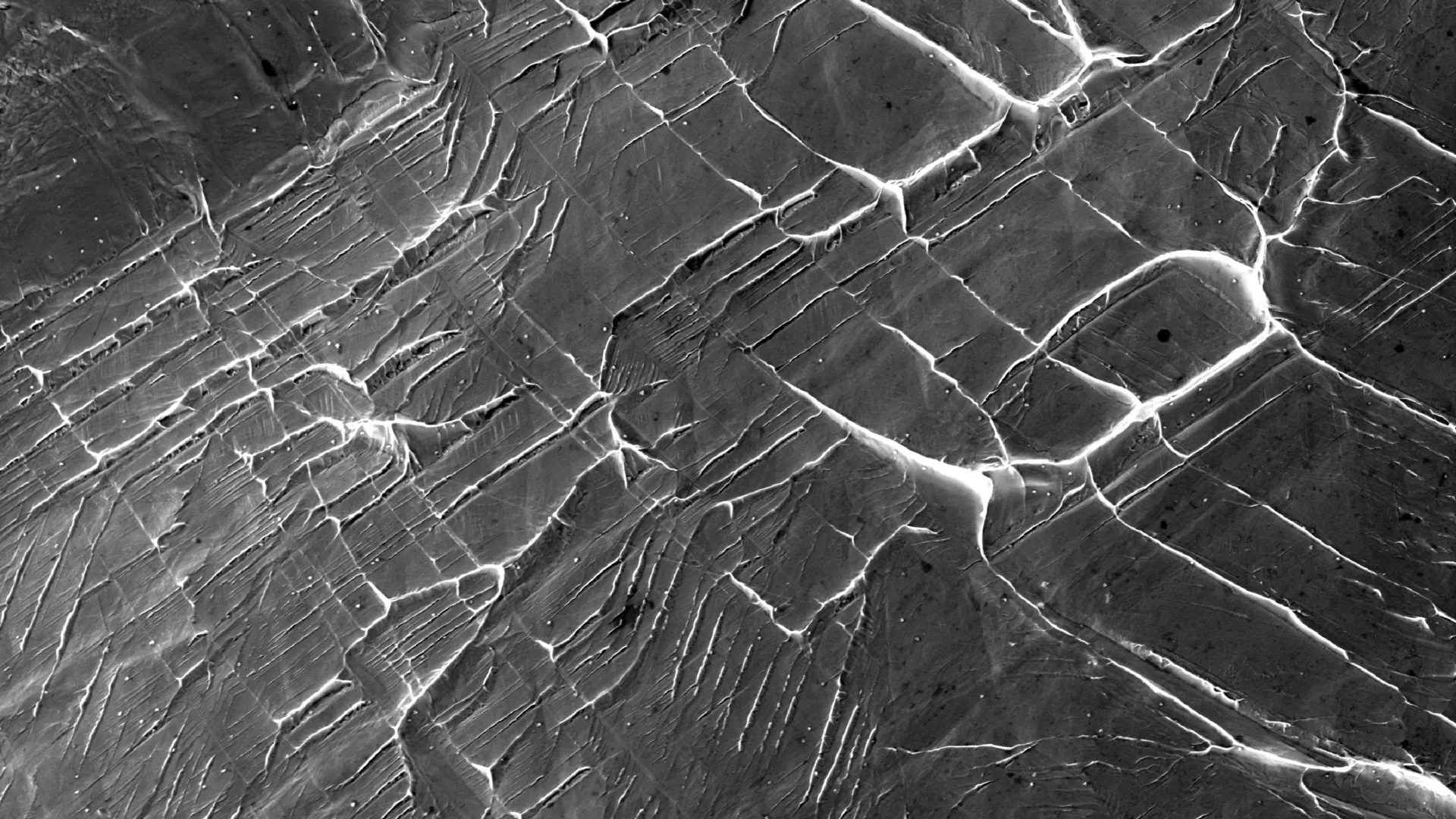
In the new alloys, researchers observed nanoscale twinning, in which tiny sections of the crystal structure rearrange into mirror-image patterns, along with a localized change in the crystal structure. These regions create concentrated stress that generates additional defects, giving the metal new ways to deform rather than crack.
What surprised us is that these alloys remain remarkably damage tolerant even at 20 kelvin.
— Professor Dong Liu
Testing at cryogenic temperatures
The team tested the alloys using the Engin-X instrument at the ISIS Neutron and Muon Source in Oxfordshire. Gaseous helium cooled the samples to about -253°C while a machine stretched them, and neutron measurements showed how the materials deformed. Electron microscopes and atom-probe analysis later revealed small structural changes and element distribution, supported by computer modeling.
What researchers said
Oxford corresponding author Professor Dong Liu said the results were surprising and pointed to a new design pathway. "What surprised us is that these alloys remain remarkably damage tolerant even at 20 kelvin," he said.
Lead author Dr. David Cook, who was at UC Berkeley during the study and is now at the University of Cambridge, said the findings suggest the ability to create new dislocations at interfaces may be critical to preventing brittleness.