Aipac halts candidate endorsements amid US backlash against Israel
Political candidates’ once reflexive support for Israel has increasingly become a liability When the American Israel Public Affairs Committee, the most prominent pro-Israel lobby group in the US, announced on Wednesday that it would stop endorsing candidates or make direct contributions to them, its many critics were quick to hail the development as Aipac’s admission of how toxic its brand had become. The…
Key points
- Aipac announced on Wednesday that it will stop endorsing candidates and making direct contributions to them.
- The group will keep operating its Super Pac, United Democracy Project, and continue directing millions to pro-Israel candidates through donors and members.
- Critics called the move an admission that Aipac's brand has become toxic, while analysts said it changes little in practice.
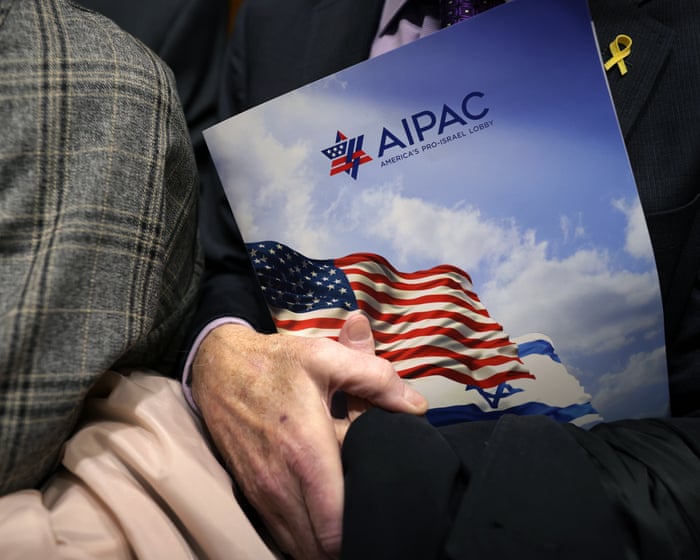
The American Israel Public Affairs Committee, the most prominent pro-Israel lobby group in the US, said on Wednesday that it would stop endorsing candidates and making direct contributions to them. Critics quickly described the announcement as an admission that Aipac's brand has become toxic in US politics.
The shift reflects how public opinion on Israel has changed over the war in Gaza and how candidates' once reflexive support for Israel has increasingly become a liability. Aipac said it would keep operating its Super Pac, United Democracy Project, and continue sending millions to pro-Israel candidates through individual donors and members.
What critics and analysts said
The political analyst Trita Parsi wrote that Aipac once seemed invincible, but its name now carries "such toxicity" that the group does not want it on its political donations. Beth Miller, political director of Jewish Voice for Peace Action, said Aipac had openly admitted its brand has become toxic in politics.
Dion Nissenbaum, whose documentary on Aipac was published this week, told the Guardian the announcement appeared to be the group's first real admission that its campaign strategy had backfired. He warned that if the Super Pac keeps operating, the move may be an attempt to reinvent itself without ceding the battlefield.
Through this shift, AIPAC openly admitted that their brand has become toxic in the political world
— Beth Miller
Limited practical change
An Aipac spokesperson told Jewish Insider that members contributed over $90m to candidates this election cycle, far more than the $3m the group gave directly through its Pac. Hady Amr, a former US state department official, said the change is not new and marks a return to Aipac's tried and true approach.
The New York Times reported that Aipac planned to give as much as $9m to a Pac supporting Republican Senate candidate Mike Rogers over Abdul El-Sayed in Michigan, after already spending $32m against El-Sayed in the primaries. Hamid Bendaas of the Reject Aipac campaign said the group is giving up one tool but will keep influencing elections.