Arctic sea ice hits another troubling low in 2026
Arctic sea ice is shrinking in both winter and summer, with satellite records revealing that the region's remaining ice is becoming thinner, younger, and more vulnerable to melting. Despite a recent slowdown in summer losses, scientists warn that the Arctic could experience a nearly ice-free summer before 2050.
Key points
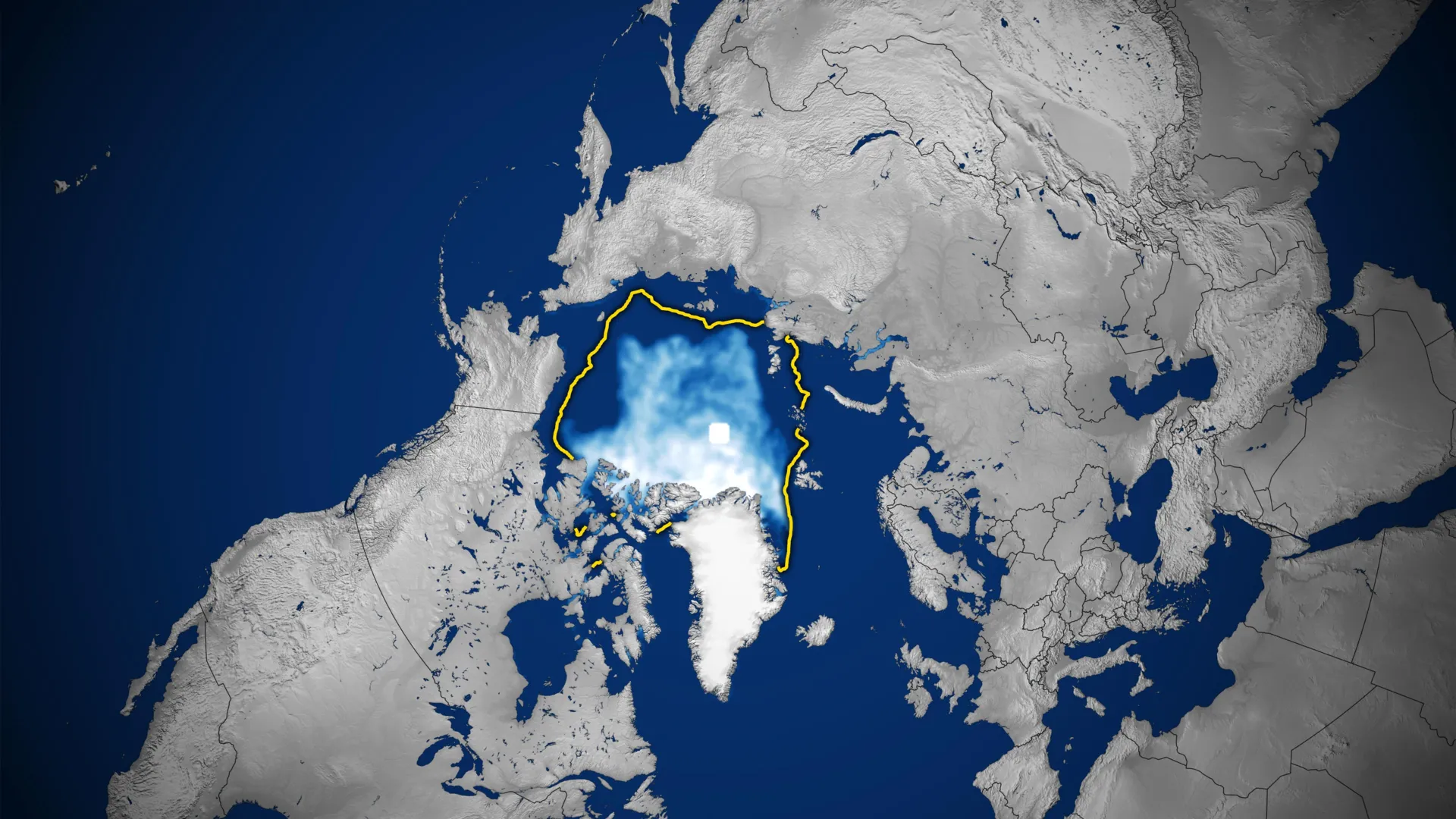
- Arctic sea ice reached its annual minimum on September 12, 2026, at about 4.6 million square kilometers.
- NASA and NSIDC say this tied 2008, 2010, and 2025 for the 10th-lowest minimum since satellite monitoring began.
- March 2026 also statistically tied March 2025 for the lowest winter maximum on record.
Arctic sea ice reached its annual minimum extent on September 12, 2026, covering about 4.6 million square kilometers (1.78 million square miles), according to NASA and the National Snow and Ice Data Center. This tied the minimums of 2008, 2010 and 2025 for the 10th-lowest level since satellite monitoring began in late 1978.
The long-term satellite record shows a decline in Arctic sea ice at both the September minimum and the March maximum. Every summer from 2007 through 2026 ranks among the 20 lowest September extents, with the smallest ever recorded in September 2012.
Recent slowdown in summer loss
Over the past decade, September sea ice coverage has remained comparatively stable rather than continuing its earlier rapid decline. Scientists note that short-term weather conditions can strongly influence how much ice disappears in any given summer.
For example, increased cloud cover over the Arctic in recent years has reduced the amount of sunlight reaching the ice, helping to limit additional melting. NASA researchers identified this as one factor in the recent slowdown, though September ice coverage remains far below its historical average.
the Arctic Ocean could become essentially free of sea ice during the summer at least once before the middle of the 21st century
— NASA Earth Observatory
Thinner, younger ice
The ice itself is also changing. Multiyear ice, which survives at least one summer, has declined significantly, leaving the Arctic increasingly covered by thinner first-year ice that is more prone to melting.
In March 2026, the annual maximum statistically tied March 2025 for the lowest winter peak in the satellite record. Natural patterns such as the Arctic Oscillation affect ice from year to year, but scientists say they cannot fully explain the persistent decline since 1978, which is linked to rising global temperatures and natural variability.