Are GCC countries looking for a regional security pact with Iran?
Observers say diverging views are unlikely to turn current diplomatic efforts into a lasting infrastructure.
Key points
- Gulf states have increased diplomatic contact with Iran to reduce regional tensions and prevent a wider war.
- Oman's foreign minister called for a non-aggression pact between Gulf countries and Iran that would reduce the US security role.
- Analysts say deep mistrust and US-Iran disagreements make a lasting regional security framework unlikely soon.
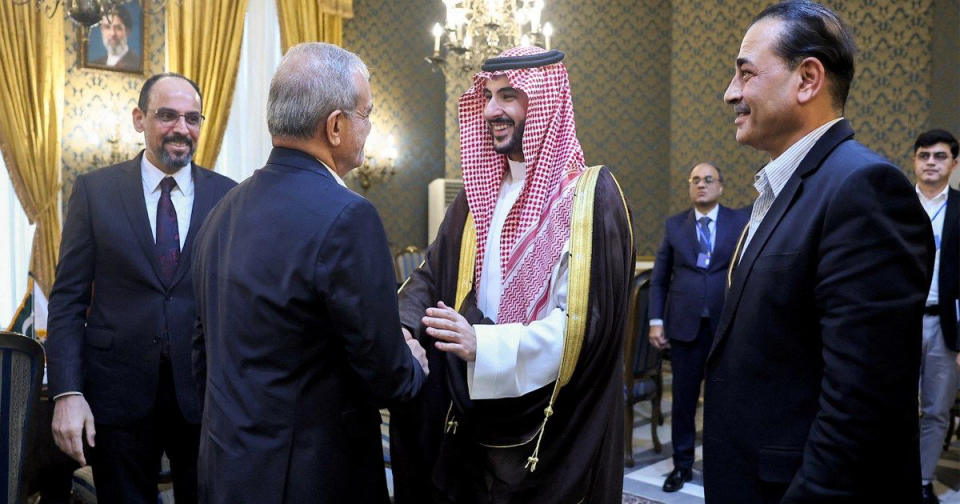
Gulf countries have intensified diplomacy with Iran to ease Middle East tensions, driven by fears of new US strikes on Tehran and growing hostilities between Iran-backed Houthi rebels in Yemen and Saudi Arabia. On Monday, Pakistan, Saudi Arabia and Turkiye, the three signatories of the August Mecca Joint Defence Agreement, along with Qatari diplomats, met senior Iranian officials in Tehran to try to prevent a return to full-scale war.
Saudi Minister of Defence Prince Khalid bin Salman Al Saud attended the Tehran meeting, days after Houthi fighters struck Saudi airports, ports and oil facilities. Also on Monday, Omani Foreign Minister Badr Albusaidi, speaking at the University of Cambridge in the United Kingdom, urged a regional security framework including a "non-aggression pact" between the Gulf and Iran, under which the United States would no longer be the main security provider.
Talks fall short of a deal
The Tehran meeting was the first high-level contact between Iran and the Mecca pact nations since the US-Israel war on Iran began on February 28, but reports say no agreement was reached. Reuters reported that Qatari mediators gave Iran a draft deal on Sunday, with a response expected by the end of the week. On Wednesday, the agency quoted Iranian officials saying Qatar's ideas were unacceptable and that Tehran would show no flexibility on the nuclear issue.
The gap is [wide] and what makes it worse is that there is no trust
— Khaled Batarfi
Obstacles to a framework
Saudi analyst Khaled Batarfi told Al Jazeera that the Tehran visit showed Saudi Arabia was willing to give Iran a "last warning" and address the region's concerns, but that Iran has refused so far. "The gap is [wide] and what makes it worse is that there is no trust," he said.
Aniseh Bassiri Tabrizi of Chatham House said a regional security framework is hard to foresee in the coming months or years, noting GCC countries do not necessarily share the same vision. Hamidreza Azizi of the International Crisis Group said the main obstacle is the US-Iran disagreement over the sequence of commitments, and that Gulf states are diversifying security partnerships rather than redefining their strategic alignments.