Audi defends plans for a $4 billion Georgia plant amid VW restructuring, tariffs
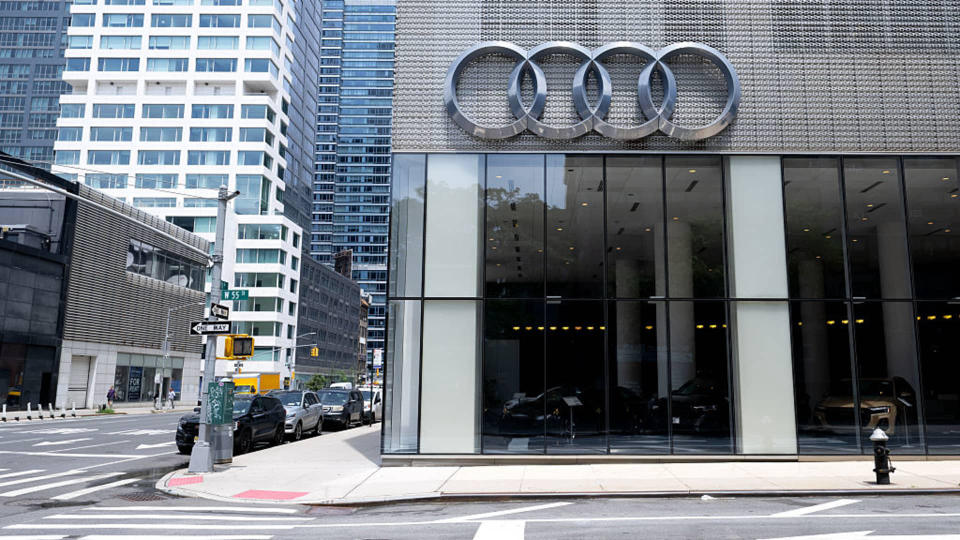
Audi's CEO defended the company's plans for a $4 billion plant in Georgia, calling it a business decision to grow sales and reduce exposure to U.S. tariffs.
Key points
- Audi's CEO defended the company's planned $4 billion plant in Georgia, saying it will grow U.S. sales and reduce exposure to tariffs.
- The plant, announced by President Donald Trump at a Georgia rally, is expected to build the Q7, Q8 and Q9 in the early 2030s with capacity for up to 200,000 vehicles a year.
- U.S. tariffs cost Audi 1.2 billion euros ($1.4 billion) last year, as the brand imports all its U.S. vehicles from Europe or Mexico.
Audi's CEO on Sunday defended the carmaker's plans for a new $4 billion plant in Georgia, describing it as a business decision to grow sales and limit exposure to U.S. tariffs. President Donald Trump announced the plant on Saturday at a rally in Georgia, near the site where the Volkswagen-owned luxury brand intends to build an SUV-producing facility.
Audi CEO Gernot Dollner said the company has larger goals in the U.S., which he called the second largest premium market in the world. He said Audi is not currently using that market's full potential and is changing that.
Why Audi chose Georgia
Dollner said the U.S. decision had been years in the making, with more than 70 locations evaluated over many months and intense negotiations with public officials. He said the move is not against Germany, which remains Audi's base for development and technology, and that Georgia takes no task away from Germany.
Audi has struggled with sales this decade amid rising operating costs and Trump's tariffs on vehicles from Germany and other countries. Tariffs on German vehicles are currently 15%, down from 25%, and last year cost Audi 1.2 billion euros ($1.4 billion) because it imports all U.S. market vehicles from Europe or Mexico.
This is not a decision against Germany. Germany remains the backbone of Audi.
— Audi CEO Gernot Dollner
Plant plans and sales
The Georgia plant is expected to begin producing the Q7, Q8 and Q9 in the early 2030s, with capacity for up to 200,000 vehicles annually. About half of that output is expected to be exported outside the U.S.
Dollner said the Trump administration asked Audi to make the announcement at the rally, which promoted Republicans ahead of the Nov. 3 midterm elections. He said the company accepted the invitation, and noted Audi is the last major German luxury brand to set up U.S. production after Mercedes-Benz and BMW. Audi of America President Vito Paladino said more details on U.S. investments and production are coming, and U.S. deliveries were roughly flat through the third quarter of this year after a 16% decline from 2024 to 2025.