Are global oil reserves sufficient to withstand renewed US-Iran war?
With emergency stocks at multidecade lows, analysts say the world may have only a month or two if Hormuz shuts again.
Key points
- Brent crude rose more than $2 to $110.85 a barrel on Wednesday, near a five-month high, as tanker attacks around the Strait of Hormuz increased.
- Analysts estimate only about 400 million barrels of usable emergency reserves remain worldwide, excluding China and Gulf stocks.
- Experts say usable reserves could last only weeks, with a possible price of $150 a barrel and the sharpest impact on diesel and Asian buyers.
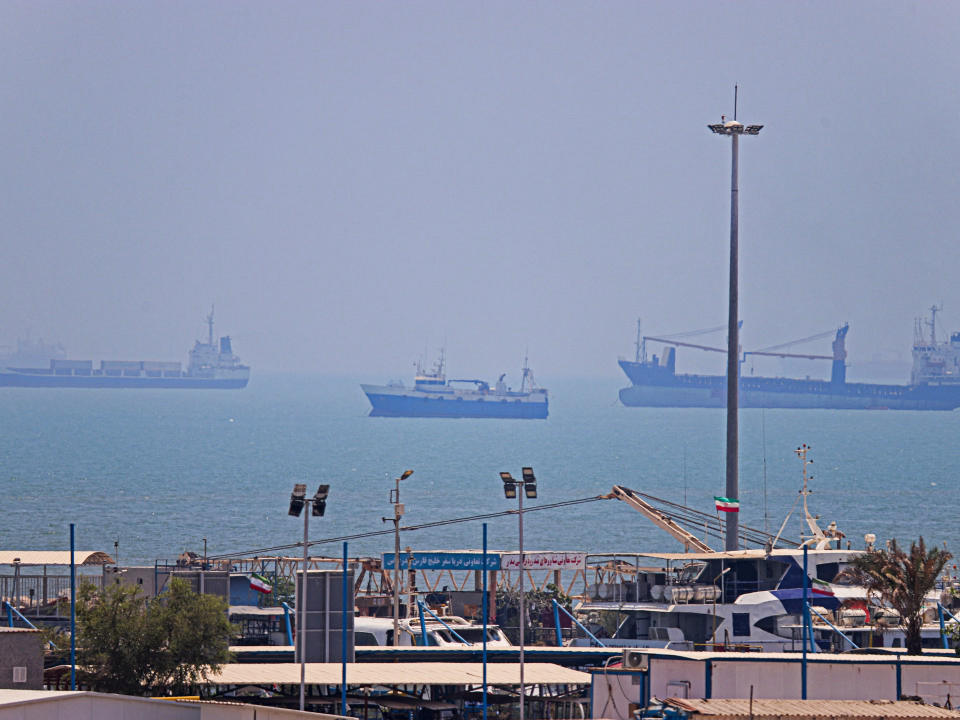
Oil prices have risen towards five-month highs as attacks on tankers in and around the Strait of Hormuz increase and efforts to end the US-Israel war on Iran remain deadlocked. Brent crude, the international benchmark, climbed more than $2 to $110.85 a barrel on Wednesday, close to a five-month peak.
Iran's Islamic Revolutionary Guard Corps said two tankers were set ablaze after hitting mines at what it called an illegal crossing point in the strait. On Thursday, the IRGC said it hit seven more tankers, a claim Washington dismissed. The IRGC said four of the vessels were transferring oil when they were targeted and caught fire overnight.
How long reserves could last
Emergency oil stocks are at their lowest levels in decades after heavy use since the Iran war began on February 28. On March 11, the International Energy Agency's 32 members agreed to release 400 million barrels, with the US pledging 172.2 million and Japan 79.8 million. The US Strategic Petroleum Reserve has since fallen to 283 million barrels, its lowest since October 1982.
Aaron Kildow, a senior crude oil analyst at Sparta Commodities, estimated only about 400 million usable barrels remain worldwide, excluding China's stockpile and Gulf stocks that could be cut off by a Hormuz closure. Nearly half are in Japan, while Europe has about 76 million uncommitted barrels. Experts say the reserves could last just weeks, not months.
The salient feature of March and beyond was how a crisis didn’t actually develop. We got away with it.
— Chris Beauchamp, chief market analyst at IG Group
Who would be hit hardest
Before the war, about one-fifth of the world's oil and liquefied natural gas, roughly 20 million barrels a day, passed through Hormuz. Kpler analyst Muyu Xu estimated a full Hormuz closure plus a Houthi blockade of Saudi tankers would leave about 7.5 million barrels a day of Middle Eastern crude, a shortfall of about 9.3 million barrels a day.
Kildow said the squeeze would land fastest where reserves are thinnest and substitute supply is farthest away, naming India and Pakistan among the most exposed. The IEA said diesel would face the sharpest pressure. Chris Beauchamp of IG Group said $150 a barrel is a distinct possibility, adding: "A month or two is all we have."