Horse-drawn carriage ban approved by NYC Council
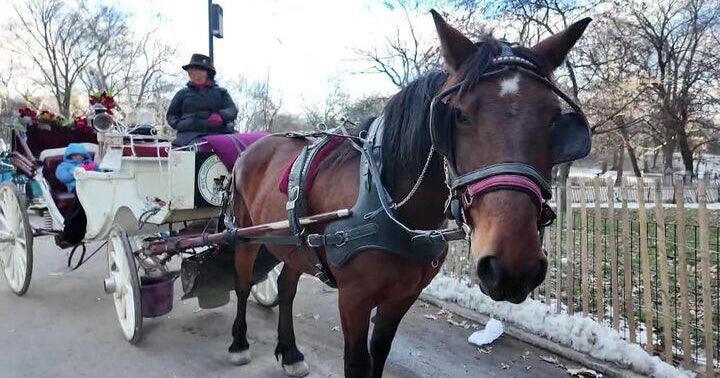
The New York City Council voted Thursday on Romanch's Law, which will ban horse-drawn carriage rides in the city by 2028.
Key points
- The New York City Council voted Thursday to ban horse-drawn carriage rides in the city by June 2028.
- The bill, Romanch's Law, is named after 18-year-old Romanch Mahajan, who died in a carriage accident in Central Park in June.
- The Transport Workers Union says it will challenge the ban in federal court, while carriage owners rallied against the plan.
The New York City Council approved a bill on Thursday that bans horse-drawn carriage rides in the city by 2028. The legislation, known as Romanch's Law, is named after Romanch Mahajan, 18, who died during a carriage accident in Central Park in June.
The bill now goes to Mayor Zohran Mamdani to sign. Carriage operations will end in June 2028, and a transition plan for workers and owners is required in 2027. The bill also calls for the humane placement of animals.
Support for the measure
Saggar Chadha, the attorney for Romanch's family, said, "We want to make sure Romanch's death was not in vain." Council member Christopher Marte said the Council has "a historic opportunity to protect New Yorkers, visitors, workers, and animals."
City Council Speaker Julie Menin told NY1 the ban is needed to protect animals and public safety. She said 42 million people use Central Park each year and that horses have been spooked and broken free in numerous accidents. Betsy Smith of the Central Park Conservancy said the rides pose a serious safety risk, and the Animal Legal Defense Fund called the vote the start of a more humane approach to New York tourism.
We want to make sure Romanch's death was not in vain.
— Saggar Chadha
Opposition and legal threat
Carriage owners and their families rallied outside City Hall on Wednesday and Thursday, arguing the plan does not go far enough. Owner Francesco Riccobono said he invested $400,000 two years ago to expand his father's business, and his wife, Natalie, asked for "fairness" and "a seat at the table."
The Transport Workers Union said it is prepared to challenge the ban in federal court. TWU lawyer Ben Kallos said he believes a judge will overturn the law and pointed to a blank economic impact analysis. President Donald Trump also criticized the vote, calling the end of the industry "sad" and saying it was driven by a single tragic accident.