Intero Biosystems wants drugmakers to test on mini human intestines, not animals
Intero Biosystems is selling lab-grown human intestines to drugmakers as regulators push for alternatives to animal testing, while the startup looks to scale production and expand its organoid technology.
Key points
- Intero Biosystems, a Denver startup spun out of the University of Michigan, is developing human intestinal organoids to test drugs without animal models.
- The company's flagship product, GastroScreen, is sold to pharmaceutical, biotech, food, and chemical companies for testing compounds.
- Intero has raised $2.3 million in pre-seed funding and generated over $400,000 in revenue from Q4 last year through Q3 this year.
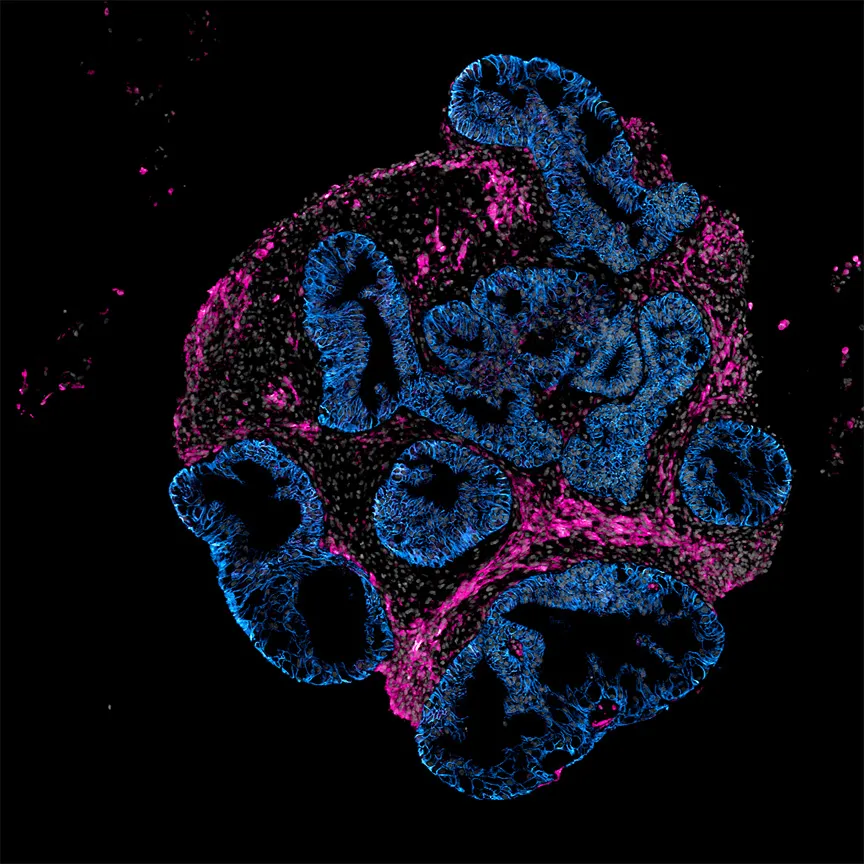
Intero Biosystems, a Denver-based startup founded in 2024, is developing human intestinal organoids as a way to test drugs and other compounds before human trials. The company, which spun out of the University of Michigan, says its organoids contain multiple cell and tissue types found in the human intestine, making them a more human-relevant model than animal testing.
Intero's flagship product, GastroScreen, is sold to pharmaceutical, biotech, food, and chemical companies. Each organoid is about one millimeter across, and the company ships roughly 100 at a time in a tube, according to co-founder and CEO Charlie Childs.
What the company offers
Beyond the organoids themselves, Intero sells supplies needed to grow and work with them, such as nutrient mixes and chemicals used in experiments. It also runs studies for customers, including designing custom experiments, performing lab tests, and delivering data. Much of this work focuses on drug safety and disease research.
Intero says it sets itself apart from competitors like Altis Biosystems and InSphero through the complexity and scalability of its model. Unlike models grown from tissue collected through colonoscopies, GastroScreen is derived from induced pluripotent stem cells, which can be generated from a blood sample, according to co-founder and CTO Madeline Eiken.
Most drugs fail clinical trials, and I think it’s pretty easy to appreciate that we are neither mice nor flat layers of cells.
— Madeline Eiken
Regulatory changes and validation
Regulatory changes have helped drive interest in alternatives to animal testing. In April of last year, the U.S. Food and Drug Administration laid out plans to reduce its reliance on animal testing, promoting alternatives including organoids. In March of this year, the FDA issued draft guidance on validating new approach methodologies.
Childs said the company is still building evidence that GastroScreen can predict human drug responses. Intero is in the second stage of a three-stage validation process. GastroScreen has shown expected responses to drugs that reduce intestinal inflammation and to compounds known to damage the gut, Childs told TechCrunch. The final stage will compare GastroScreen's results directly with pharmaceutical companies' existing animal and clinical data.