Iraq devalues dinar to ease cash crunch, leaving traders in limbo
The government hopes a weaker dinar will help pay salaries, but traders face rising import costs and uncertainty.
Key points
- Iraq devalued the dinar to 1,520 per US dollar from 1,320, a drop of almost 15 percent.
- The government says the move aims to ease a financial crisis caused by the US-Israeli war on Iran and disrupted oil exports through the Strait of Hormuz.
- Traders in Baghdad have suspended buying and selling, saying the weaker dinar makes prices unpredictable.
Iraq's government has devalued the national currency, the dinar, against the US dollar, a decision that has left traders in Baghdad facing sudden losses and uncertainty over what prices to charge. The new official rate, introduced on October 7, is 1,520 dinars per US dollar for cash sales to the public, down from 1,320 dinars per dollar, a devaluation of almost 15 percent.
The government said the step was meant to ease a financial crisis triggered by the US-Israeli war on Iran and the disruption of oil exports through the Strait of Hormuz. Before the war, Iraq exported around 3.5 million barrels of oil per day through the Strait, which accounted for 90 percent of government revenue.
Traders hit by losses
Food trader Hamza al-Rudayni, who works in Baghdad's Jameela wholesale market, told Al Jazeera he lost 25 million Iraqi dinars, roughly $16,500 at the new exchange rate, while larger merchants lost billions. He said he and many other traders have suspended buying and selling until the situation stabilises, adding that "market activity has ground to a halt."
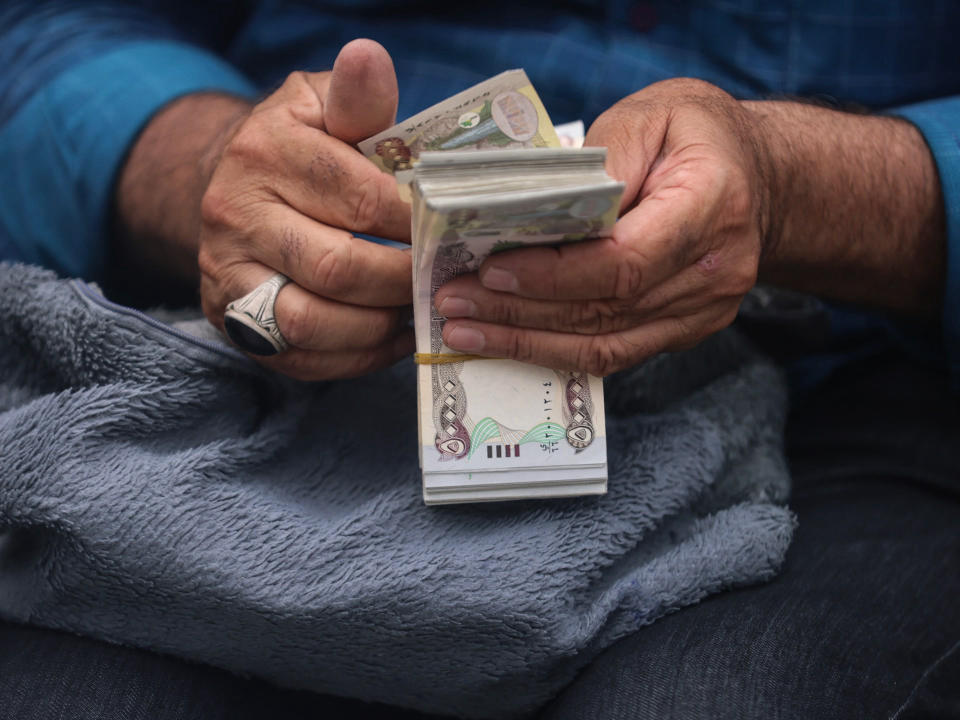
Traders buy goods in dollars but sell in dinars because regulations prohibit dollar sales. A weaker dinar means they must pay more local currency for imported goods and makes it harder to set prices for stock already on hand.
I don’t know what to do
— Hamza al-Rudayni
Government defends decision
Prime Minister Ali al-Zaidi said on Thursday, "It is my decision and I am responsible for it." He said he faced three options to cover salaries and mandatory spending: cutting salaries by 35 percent, paying them every 45 days, or resorting to foreign loans.
Al-Zaidi, a former banker, said his government inherited public debt exceeding 208 trillion Iraqi dinars, about $139bn at the new rate, when it took office in May, and needs roughly 10 trillion dinars, or $6.7bn, each month for salaries and essential expenditure. His financial adviser, Mudher Mohammed Salih, said in August that the Central Bank's foreign currency reserves had fallen from $106bn to about $80bn.
A Finance Ministry official, speaking anonymously, told Al Jazeera that paying salaries on time remains the priority and described it as a matter of domestic economic stability. Economist Nabil al-Marsoumi of Al Maaqal University in Basra warned that changing the exchange rate does not fix deeper economic weaknesses, saying it "shouldn't be used as a cover-up for failures in the state's economic and fiscal policies."