MIT scientists turn immune cells into cancer killers inside the body
MIT scientists have developed nanoparticles that reprogram immune cells directly inside the body to attack cancer and harmful immune cells, eliminating tumors and reversing liver damage in mouse experiments. The breakthrough could make powerful immune therapies dramatically simpler and less expensive while opening new possibilities for treating cancer and autoimmune diseases.
Key points
- MIT researchers used lipid nanoparticles carrying mRNA to reprogram natural killer cells inside mice.
- About 80 percent of targeted NK cells were modified after nanoparticle injection in the mice.
- Tumors were eliminated in mice, and one injection reversed autoimmune liver damage.
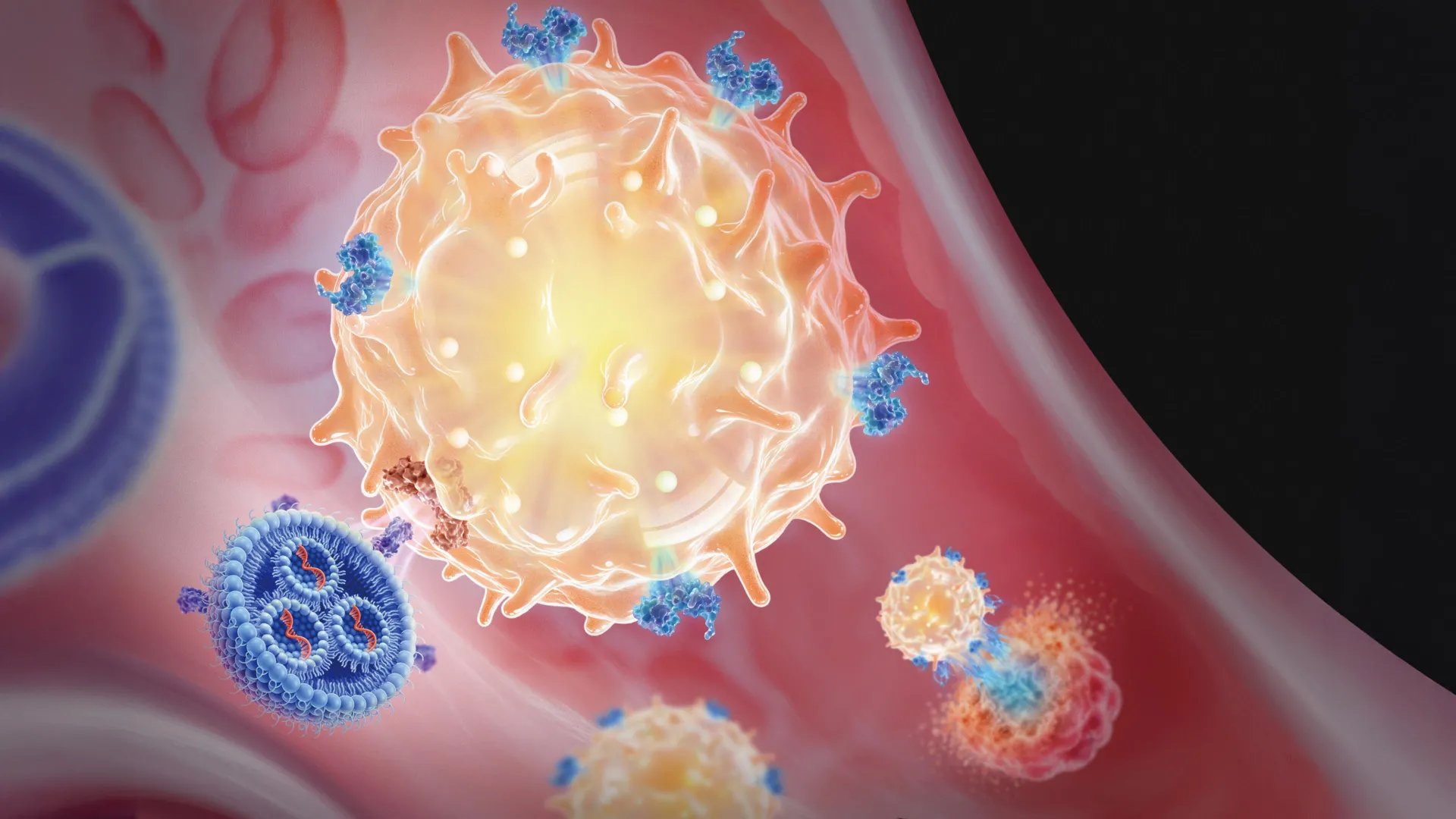
MIT researchers have developed a technique that turns immune cells into cancer fighters directly inside the body, according to research published in Nature Biotechnology. The method uses tiny particles made of fatty molecules to deliver messenger RNA to natural killer (NK) cells, instructing them to produce proteins that help them identify and destroy diseased T cells.
The resulting cells, called CAR NK cells, could eventually be used against several diseases, including lymphoma and autoimmune hepatitis. The team says engineering the cells inside the body could remove much of the time, expense and complexity of manufacturing personalized immune cell therapies.
How the nanoparticles work
The lipid nanoparticles carry instructions for producing a chimeric antigen receptor that directs the modified cell toward a specific target. The technology can be adapted to recognize different proteins, such as CD19 on B cells or CD3 on T cells.
The particles are coated with antibody fragments that attach to receptors on NK cells, helping deliver the genetic instructions. Daniel Anderson, a professor in MIT's Department of Chemical Engineering, said the idea is to deliver a nanoparticle that modifies a patient's own NK cells.
If a patient can just get an infusion of nanoparticles, it would dramatically simplify the process and reduce costs
— Daniel Anderson
Results in mice
After injecting the nanoparticles into mice, the researchers modified about 80 percent of the NK cells they were targeting. In mice with an aggressive melanoma, three of five treated animals had complete remission.
In humanized mice with T cell lymphoma, tumors were completely eliminated after five injections, results comparable to CAR NK cells made outside the body. In mice with autoimmune hepatitis, one injection removed the harmful T cells and damaged liver tissue healed.
The experiments were conducted in mice, and further research is needed to determine whether the technique is safe and effective in humans. No CAR NK cell therapies have received FDA approval.