‘Prairie Populists’ fight to win back rural voters long ceded to Republicans
Democratic and independent candidates stump the US midwest and prairie states, hoping to win over Republican strongholds In this final stretch of the US midterm elections, Democrats and independents could win back communities and towns across America’s rural heartlands through a combination of resurgent “prairie populism”, local despair over the impact of Donald Trump’s agenda and an old-fashioned tenet of…
Key points
- Democratic and independent candidates in the US midwest and prairie states are campaigning on "prairie populism" to win back rural voters who have largely backed Republicans.
- Nebraska independent Senate candidate Dan Osborn is touring all 93 counties, saying the race could come down to hundreds of votes.
- Iowa Democratic Senate candidate Josh Turek calls himself a "commonsense prairie populist" and says he will visit all 99 Iowa counties annually if elected.
Democratic and independent candidates across the US midwest and prairie states are making a late push in the midterm elections to win back rural communities long ceded to Republicans. They are combining what the Guardian describes as resurgent "prairie populism" with discontent over the impact of Donald Trump's agenda and intensive in-person campaigning.
In Nebraska, independent Senate candidate Dan Osborn is touring all 93 counties before election day. In Iowa, Democratic Senate candidate Josh Turek calls himself a "commonsense prairie populist", while Democrat Sam Forstag is emphasizing economic populism in his Montana congressional race.
Campaigning town by town
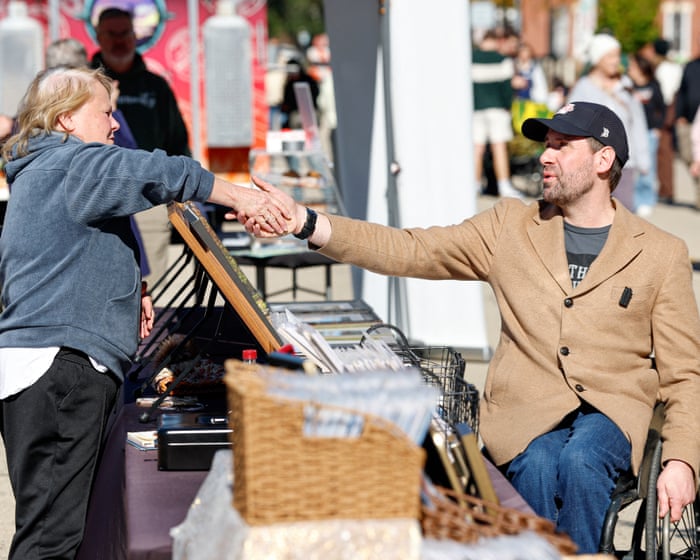
Osborn, a former union leader, walked the main street of Arthur, a town of about 100 people, meeting residents and eating a burger at the Bunkhouse restaurant. He told voters he is neither a Republican nor a Democrat and wants to work for workers, and said the race "could come down to hundreds of votes in Nebraska".
Turek said his priority is what is best for Iowa's middle class, workers, rural communities and small family farms. He represents the reddest district Democrats won in the Iowa legislature and plans to visit all 99 counties each year if elected.
I'm not a Republican, I'm not a Democrat, I just wanna work for workers
— Dan Osborn
Local issues and skepticism
Candidates are adding datacenters and artificial intelligence to their platforms, drawing on anti-corporate sentiment and rural concerns about land and lifestyles. Jane Kleeb, chair of the Nebraska Democratic party, said the party has quickly adapted to where voters are on local issues.
Not everyone is persuaded. Mark Vinton, a rancher and county Republican party chair, said he would support whoever backs Trump's policies, though he called Osborn a "reasonable guy" who took his questions respectfully. Kristy Ferguson, a 72-year-old independent in Arthur, said she voted for Osborn after a friend urged her to.
History and party strategy
Cory Haala, a history professor at South Dakota State University, said the 19th-century populist movement targeted railroads that charged farmers high rates. He said debates over monopoly, antitrust and datacenters offer new flashpoints for populist organizing.
Former senator Heidi Heitkamp told the Guardian the Democratic party chose to grow its base in the suburbs rather than maintain a rural presence. She said rural voters who once believed the administration would solve their problems have lost faith.