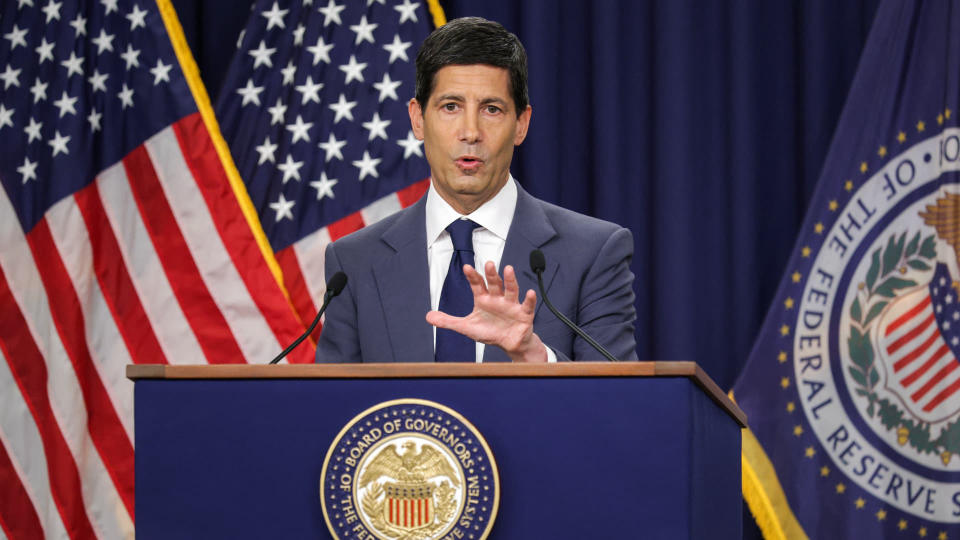
President of the European Central Bank Christine Lagarde to step down. Here's who is tipped to replace her
European Central Bank President Christine Lagarde will step down on Feb. 7 next year, she announced Thursday.
Key points
- Christine Lagarde will step down as ECB president on Feb. 7 next year, before her term ends in October 2027.
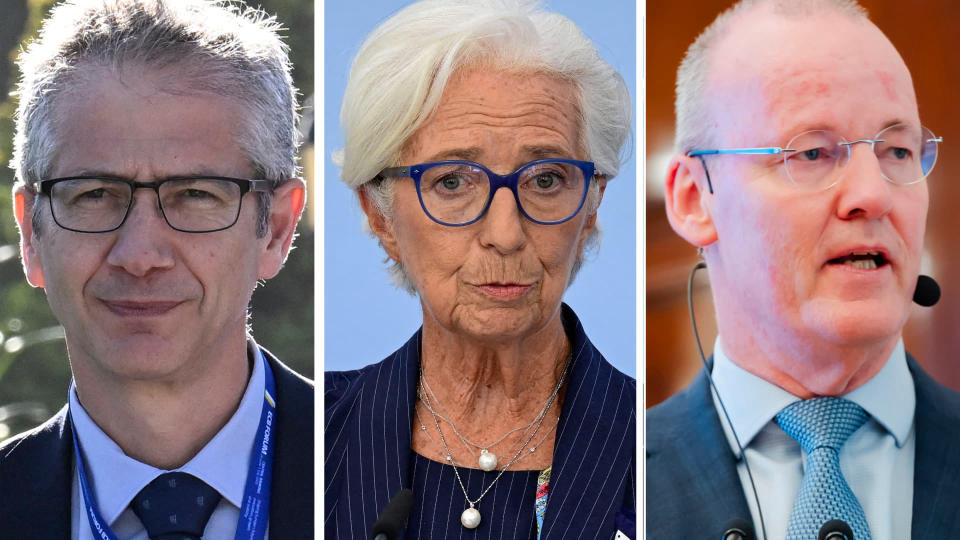
- Pablo Hernández de Cos and Klaas Knot are widely seen as top contenders to replace her.
- Her early exit means the next French president will have no role in choosing the ECB president.
European Central Bank President Christine Lagarde will step down on Feb. 7 next year, she announced Thursday, formally starting a succession race shaped by political bargaining and France's fiscal crisis. Lagarde has led the central bank since July 2019, overseeing responses to the Covid-19 pandemic, the Russia-Ukraine war and energy price shocks that pushed EU inflation above 11% in 2022 and ended the era of negative interest rates.
Lagarde will leave nearly nine months before her term was due to expire in October 2027. The process to appoint her successor will begin immediately. She did not specify a reason for the timing of her exit.
Contenders for the top job
Spain's Pablo Hernández de Cos and the Netherlands' Klaas Knot are widely regarded as top contenders. De Cos led Spain's central bank from 2018 to 2024 and is now general manager of the Bank for International Settlements. Knot was Dutch central bank chief from 2011 until 2025 and is a distinguished visiting fellow at the Peterson Institute for International Economics.
Knot is widely seen as the more hawkish of the pair. Pierre Roke of Validus Risk Management said a Knot appointment would likely be read as hawkish and could support the euro, while a De Cos appointment would signal more continuity and focus on financial stability.
It has been a source of great pride to serve this institution. I thank all of those who have supported me on this journey over the past seven years.
— Christine Lagarde
Political and fiscal context
The timing moves Lagarde's departure before France's presidential election next year, in which polling suggests far-right candidate Marine Le Pen is the frontrunner. Felix Feather, Economist at Aberdeen Investments, said an early exit means the new French president "will have no role in choosing the next ECB president."
France's bond yields have spiked and its spread over Germany's has risen to the highest level since the euro area's Sovereign Debt Crisis of the early 2010s. Berenberg Chief Economist Holger Schmieding said the ECB would need to consider who was best placed to deal with potential financial turbulence, adding that Knot "may have an edge in this respect."