Chinese scientists discover “D-rex,” a giant fungus with roots stretching back 65 million years
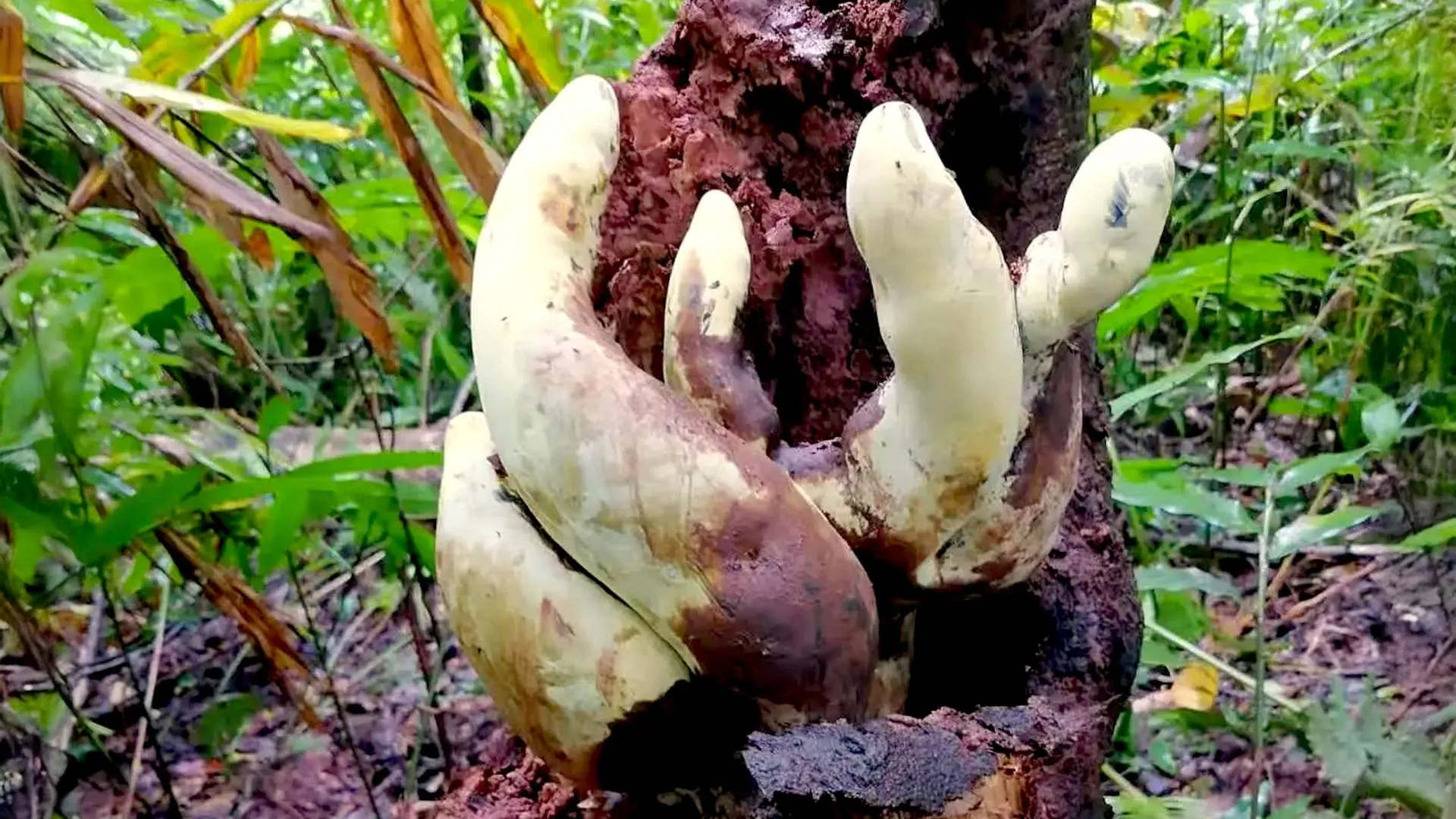
Scientists have discovered a giant new fungus in China that grows up to 20 inches tall and weighs nearly five pounds, making it the largest known of its kind. Dubbed “D-rex,” its evolutionary lineage appears to have emerged shortly after the dinosaurs went extinct, raising intriguing questions about how that ancient catastrophe may have shaped its evolution.
Key points
- Scientists in Yunnan, China, identified Dianjunus rex, a giant fungus reaching 50 cm in height and up to 2.2 kg in weight.
- The species is so distinct that it required a new genus and a new family, Dianjunaceae, within the order Xylariales.
- Molecular clock analysis suggests the lineage originated about 65 million years ago, roughly one million years after the Cretaceous-Paleogene mass extinction.
Researchers surveying forests in Yunnan, China, have identified a giant fungus named Dianjunus rex, nicknamed 'D-rex', whose upright reproductive structures reach 50 cm in height and weigh up to 2.2 kg. The team says these are the largest fruiting bodies known among fungi in the phylum Ascomycota.
The discovery was detailed in a study published in Frontiers in Fungal Biology by scientists from the Kunming Institute of Botany. The fungus was found growing from the woody roots of Chinese cork oak trees in temperate coniferous forests near Damaidi and Yipinglang and tropical rainforest near Nanbang.
A new fungal family
Genetic sequencing and physical examination showed the fungus is different enough from known species to warrant a new genus and an entirely new family, Dianjunaceae, within the order Xylariales. Its closest known relative is Graphostroma platystoma, which grows on dead hardwood across the Northern Hemisphere.
The team collected samples, preserved reference specimens and cultivated spores in the laboratory. Researchers suggest enzymes similar to those in other Xylariales members may let the fungus break down dead wood for nutrients.
This timing raises an intriguing possibility. After the mass extinction, forests experienced dramatic changes, including the sudden availability of large amounts of dead plant material.
— Dr Indunil C Senanayake
Evolutionary timing and size
Using a molecular clock technique, the scientists estimated the Dianjunaceae lineage appeared about 65 million years ago, roughly one million years after the mass extinction that eliminated the non-avian dinosaurs. The timing suggests the environmental changes that followed may have created opportunities for wood-decomposing fungi.
Before this find, the tallest known ascomycete fruiting bodies measured about 20 to 30 cm. The researchers propose that growing high above the forest floor aids wind dispersal of spores, though the large structure requires substantial energy.
What researchers said
Senanayake said the species "represents a new fungal family, Dianjunaceae" and offers a rare view of extreme fungal body forms. The team also expects further exploration of China's subtropical forests to reveal more undiscovered fungi.