Rosebank: Life on the oil field at the centre of a political storm
Scotland editor James Cook finds out what life is like on board a ship in an untapped oil field awaiting its fate.
Key points
- The UK government will decide before Christmas whether to approve production at the Rosebank oil field.
- Rosebank is larger than Jackdaw and would produce higher greenhouse gas emissions, according to the article.
- Environmental campaigners argue the project should be rejected, while supporters say it will generate tax revenue and heat homes.
The UK government is expected to decide before Christmas whether to approve production at the Rosebank oil field in the North Atlantic, the BBC has reported. Energy Secretary Miatta Fahnbulleh will make the final call on the project, which is larger than the recently approved Jackdaw field and would generate higher greenhouse gas emissions.
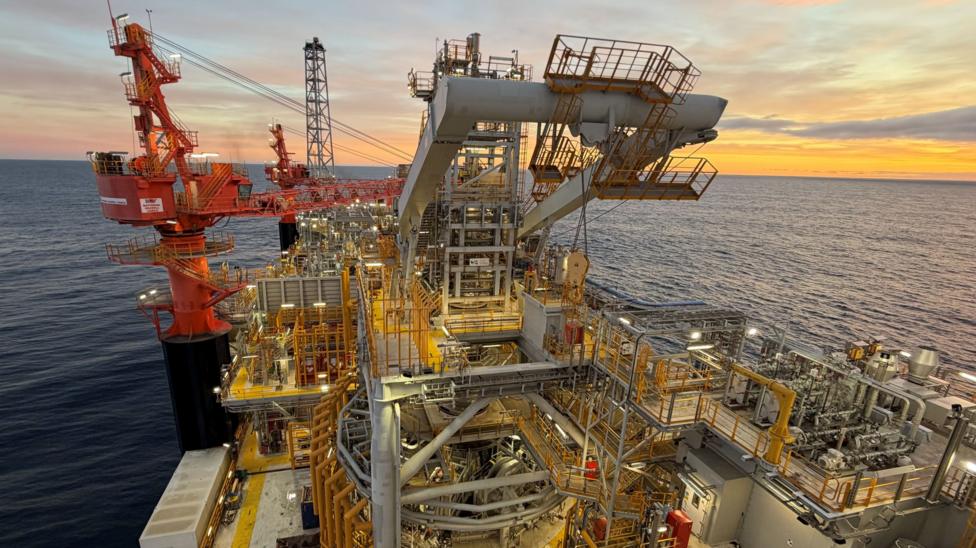
BBC journalists visited the Petrojarl Rosebank, a floating production, storage and offloading vessel moored 80 miles north west of Shetland. The field contains an estimated 300m to 500m barrels of oil, enough for perhaps 25 years, according to the article.
Life on board the vessel
The Petrojarl Rosebank is a large ship that rotates around a fixed central point called the turret to face into the weather. It has been chartered by the field's owners, Adura and Ithaca, from Aberdeen-based Altera. During the BBC's 48-hour visit, the vessel was constantly but gently rolling on the North Atlantic swell.
The 122 people on board work in well-paid jobs with facilities including a gym, sauna and single-man cabins. Nicola Boyd, who runs the helideck, said: "It's good fun, it's interesting, every day can change." Lead mechanical technician Ewan Leonard said winter weather could be "a bit of a challenge," citing a 30m heave the previous week.
The future of the energy sector in the UK is renewable energy.
— Tessa Khan, executive director of Uplift
Political and environmental debate
Consent for Rosebank was first granted under the Conservative government in 2023, but in 2025 the Court of Session in Edinburgh ruled the approvals of Rosebank and Jackdaw unlawful because they failed to account for the climate impact of burning the fossil fuels. The judge, Lord Ericht, said developers could continue work short of production while providing more detailed environmental assessments.
Environmental campaigners have tried to stop Rosebank for years. Tessa Khan, executive director of Uplift, said: "The future of the energy sector in the UK is renewable energy." Supporters argue the project will generate millions in tax for the Treasury and that gas from Rosebank could heat 500,000 British homes at peak production.