Russian bombing kills 26 people at Ukraine aid centre, Kyiv says
Officials say at least nine 3,000kg aerial bombs hit a southern Ukrainian village in what the president called an "utterly horrific" attack.
Key points
- At least 26 people were killed when Russian bombs hit an aid distribution centre in Komyshuvakha, Zaporizhzhia region.
- Five people were injured and 27 were initially reported missing after at least nine 3,000kg aerial bombs struck.
- Rescue work was repeatedly halted because of Russian drone attacks, and Tuesday was declared a day of mourning.
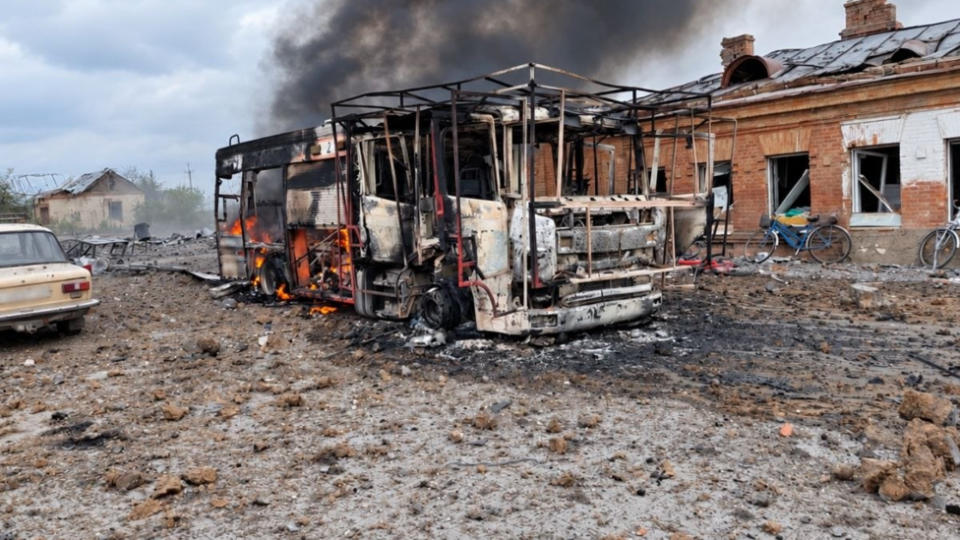
At least 26 people were killed after Russian bombs hit an aid distribution centre in the village of Komyshuvakha in Ukraine's southern Zaporizhzhia region, Ukraine's president said. Five people were injured and 27 were initially reported missing after at least nine 3,000kg aerial bombs struck, according to regional head Mykhailo Semikin.
President Volodymyr Zelensky said a first strike hit the local school, which was used for humanitarian needs, and a second attack hit the place where people were sheltering. He posted video showing a large crater from Monday's attack and rescue teams searching the rubble.
Death toll rises
Zelensky initially put the death toll at 18. Ukraine's state emergencies service DSNS later said 24 people were confirmed killed, including two rescuers and four police officers. In his video address late on Monday, Zelensky said 26 people were now known to have died.
This is yet another proof that Russia does not want any de-escalation.
— Volodymyr Zelensky
Rescue work and reaction
Semikin called the attack a "terrible tragedy" for the village and said people were still under the rubble. He said rescue teams had been forced to halt their operation several times because of Russian drone attacks in the area. A day of mourning was declared for Tuesday across the Zaporizhzhia region.
Zelensky said residents who remained in Komyshuvakha received humanitarian aid there every week on Mondays, and that Russia could not have been unaware of this. He said the attack showed Russia did not want any de-escalation and was sending the opposite signal to peace.