Scientists trick cancer cells into making the drugs that kill them
Scientists have developed a promising new cancer-fighting strategy that uses carbon monoxide naturally produced by tumor cells to manufacture powerful drugs inside the cancer cells themselves. Early laboratory experiments suggest the technique could selectively attack cancer while sparing healthy cells, potentially paving the way for safer chemotherapy alternatives.
Key points
- Researchers at RIKEN in Japan designed a compound that uses carbon monoxide in cancer cells to make anticancer drugs inside them.
- Tests on cultured cancer cells produced the drug while noncancerous cells did not, and no drug formed in blood.
- The team plans to test the approach in animal models after publishing the work in Nature Communications.
Researchers at the RIKEN Pioneering Research Institute (PRI) in Japan have developed an experimental approach that uses carbon monoxide produced by cancer cells to manufacture anticancer compounds inside those cells. The work, led by Katsunori Tanaka, was published in Nature Communications. In laboratory experiments, a specially designed compound triggered drug production in cancer cells without generating the same toxic substances in healthy cells.
The technique is at an early stage. The researchers say it could eventually offer a way to attack tumors while reducing the harmful side effects of conventional cancer treatments.
How the system works
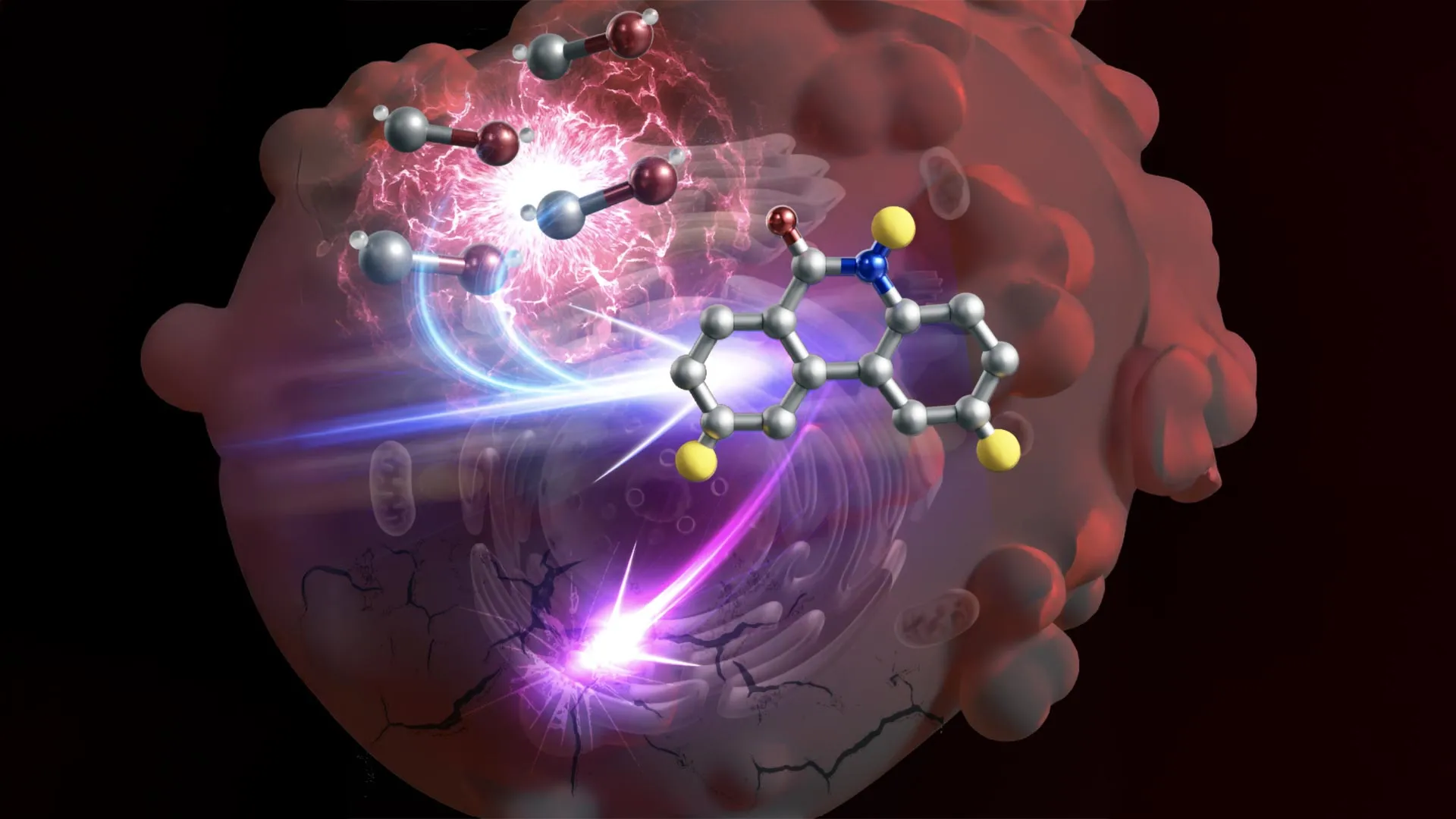
The strategy delivers a metal catalyst into cells and uses the excess carbon monoxide in cancer cells to drive a reaction that produces a toxic compound. The researchers used palladacycles, metal-containing compounds that can react with carbon monoxide to produce phenanthridinone, whose derivatives are toxic to cells and already used in anticancer drugs.
A key obstacle was that substances such as glutathione rapidly deactivate the palladium catalyst once inside cells. The team enclosed a palladacycle within albumin, a blood protein, to shield the catalyst and carry it through the bloodstream.
This work represents an important advance in therapeutic in vivo synthetic chemistry
— Katsunori Tanaka
Test results and next steps
Cultured human liver, cervical, breast and lung cancer cells were exposed to the albumin and palladacycle complex for 48 hours, along with a noncancerous cell line. Phenanthridinone was detected in the cancer cell lines but not in the normal cells. A modified system formed an anticancer compound inside cultured liver cancer cells, which then showed signs of drug-induced damage.
Laboratory testing showed the toxic drug was not produced in blood, which the researchers believe is because carbon monoxide in the bloodstream is largely bound to hemoglobin. The team now plans to test the approach in animal models.