Tanks or drones? Defense earnings reveal a more complicated rearmament boom
The world's biggest defense firms are finding that demand for traditional military equipment remains strong even as drones and AI reshape how wars are fought.
Key points
- Lockheed Martin's missiles revenue rose 24% in the third quarter, while Renk's vehicle orders jumped 46%.
- Hensoldt's optronics revenue grew 52%, driven largely by tanks and armored vehicles, its CFO said.
- NATO plans to invest more than $40 billion in counter-drone capabilities over the next five years.
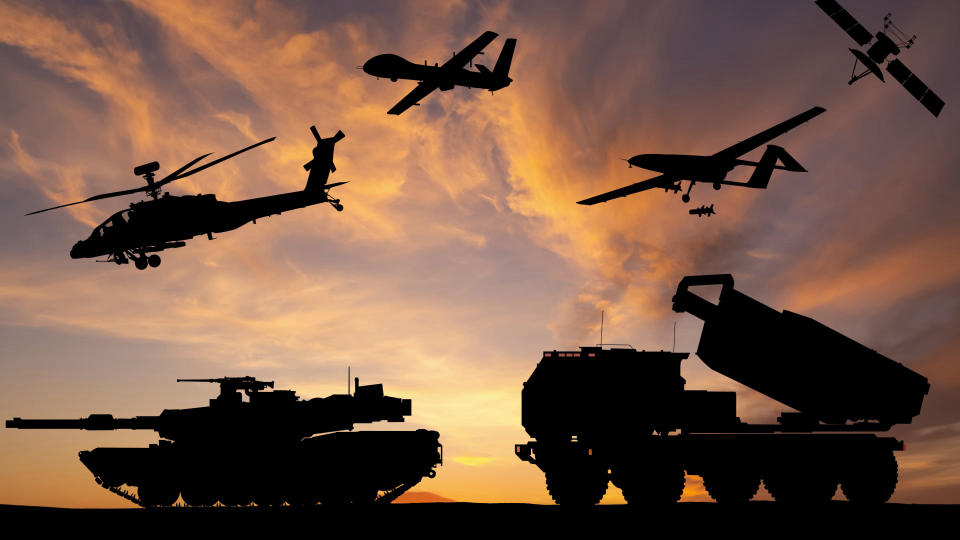
Demand for tanks, fighter jets and other conventional weapons remains strong at the world's largest defense contractors, even as drones and artificial intelligence reshape warfare, recent earnings from U.S. and European companies show. Rather than displacing traditional manufacturers, the rise of autonomous systems is creating new business for many of the same firms.
Lockheed Martin reported a 24% jump in third-quarter revenue from its missiles business, and RTX won multibillion-dollar contracts for established missile systems. In Europe, German supplier Renk saw orders for its military vehicle business surge 46% in the first nine months of the year.
Blurred lines between old and new
German defense electronics company Hensoldt reported a 52% jump in revenue from its optronics business, with its chief financial officer telling CNBC that much of the growth came from conventional equipment including tanks and armored vehicles. Rheinmetall's air defense business, which includes counter-drone systems, posted 63% revenue growth, even as the wider company cut its full-year outlook citing project delays.
According to Morningstar, drones are transforming traditional platforms rather than replacing them, with tanks and other weapons increasingly integrated into connected, data-driven battlefield networks.
This is a multi-year picture, and I think we've seen those changes both in the U.S. and also Europe
— Roman Schweizer
Spending outlook and investor concerns
Analysts mostly describe the rearmament boom as structural, and Europe faces pressure to catch up after decades of military underfunding. NATO plans to invest more than $40 billion in counter-drone capabilities over the next five years, and Secretary General Mark Rutte warned that drones have fundamentally transformed modern warfare.
Defense stocks have come under pressure this year over valuations, project delays and contract cancellations, and more recently amid concerns that Democratic midterm victories could squeeze U.S. military spending. TD Cowen analyst Roman Schweizer told CNBC that nothing has materially changed the geopolitical calculations.