The data center boom has an upside: innovation for the US grid
As the AI boom stresses the existing power grid, all sorts of new opportunities for grid modernization are also emerging as a result, industry insiders say.
Key points
- Industry insiders at TechCrunch Disrupt said the surge in energy demand from data centers could drive grid modernization rather than only strain it.
- WeaveGrid's Apoorv Bhargava said utilities are grappling with managing and orchestrating many new variables, including renewable energy and new loads.
- Veir's Tim Heidel said investment in AI infrastructure is producing technologies that can help data centers be better community neighbors.
The rapid growth of AI has sharply increased energy demand and put pressure on America's aging grid infrastructure, with concerns that electricity bills could rise in the short term and outages or technical problems could follow later. At TechCrunch Disrupt earlier this month, industry insiders offered a more optimistic view, saying the flood of new energy connections could open the door to grid modernization.
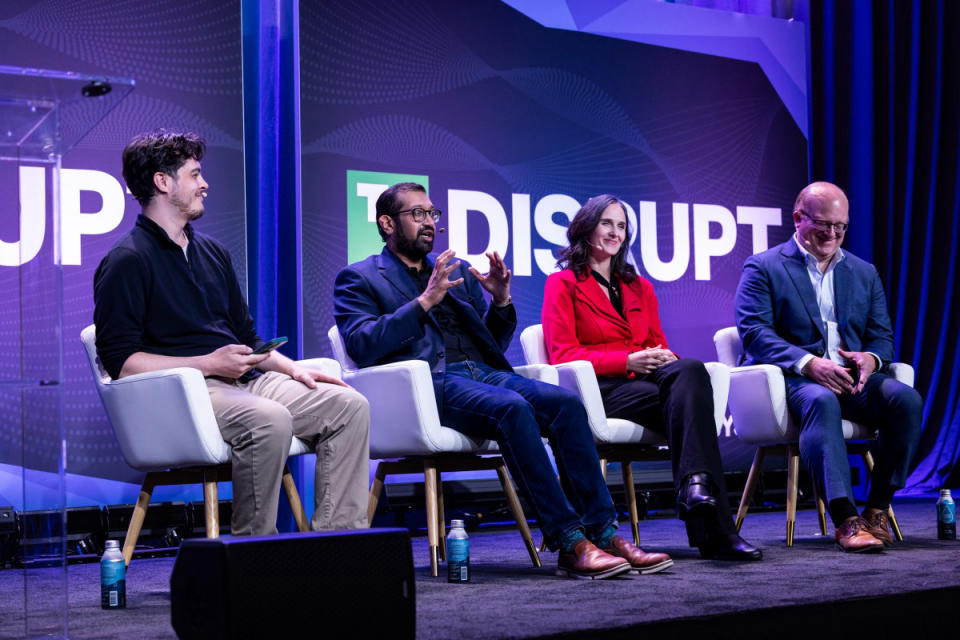
Apoorv Bhargava, founder and CEO of WeaveGrid, Tim Heidel, CEO of Veir, and Kristin Eberhard, VP of policy at Rewiring America, spoke at the event about the grid's challenges and the opportunities they see.
Managing new grid loads
Bhargava said the grid now involves many new variables, including renewable energy and new load from electric vehicles, data centers and heat pumps. He said managing and orchestrating these is fundamentally what utilities are now grappling with.
WeaveGrid's software is intended to help organizations deploy energy efficiently and optimize connections to reduce utility payers' bills, according to the founder.
The scale of the investment in AI infrastructure is driving a tremendous amount of innovation
— Tim Heidel
Building better infrastructure
Heidel's company, Veir, sells superconductive power lines that it says transfer energy more efficiently than traditional lines. The company has said its cables can carry power five times farther while requiring 20 times less space, and it raised $110 million in a Series C round earlier this month.
Eberhard said the surge in data center demand has added urgency to modernization and created an environment where industries are ready to try new things. She described the current period as "a very improv era" in which there is a lot of yes-and-ing going on.