Which countries waste the most food, and how to reduce waste at home
This World Food Day, 645 million people are going hungry, yet more than a billion tonnes of food is wasted annually.
Key points
- Roughly one in five plates of food served worldwide is wasted, over a billion tonnes a year.
- About 645 million people, or 7.8 percent of the world, faced hunger in 2025.
- Households generate 60 percent of food waste, with the Maldives wasting the most per person.
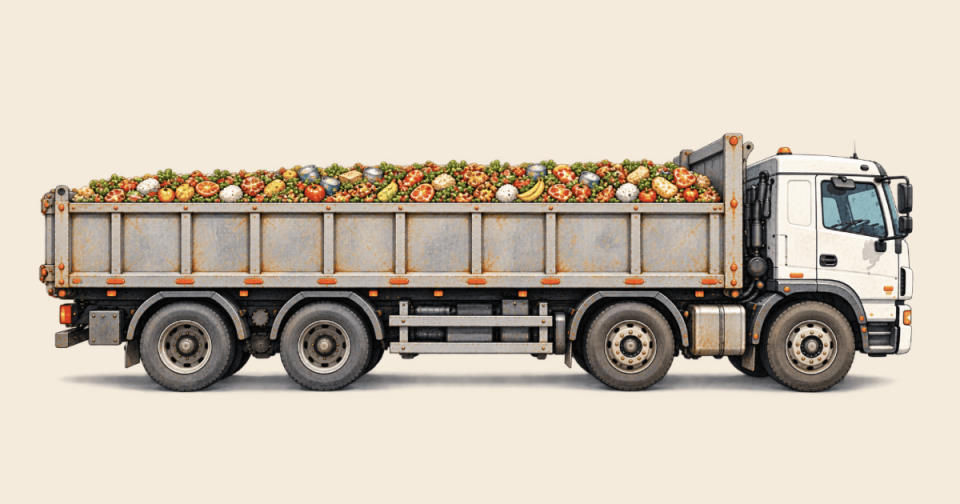
Around one in every five plates of food served globally ends up in the bin, amounting to more than a billion tonnes of food wasted each year. At the same time, an estimated 645 million people, or 7.8 percent of the world's population, faced hunger in 2025, according to the UN.
The issue is the focus of World Food Day on October 16, the annual UN observance marking the founding of the Food and Agriculture Organization (FAO) in 1945. This year's theme, "Innovate today, nourish tomorrow", calls for food systems that feed more people and waste less.
Global hunger trends
Global hunger has declined for a third consecutive year but remains above pre-pandemic levels. The UN's State of Food Security and Nutrition in the World report estimates that 7.8 percent of the world faced hunger in 2025, down from 8.1 percent in 2024 and a peak of 8.6 percent in 2022, yet still about 61 million more people than in 2019.
Africa has more hungry people than any other region. In 2025, an estimated 309 million people in Africa were undernourished, representing one in five people on the continent and almost half of the world's hungry. By comparison, 292 million people in Asia (6 percent) and 32 million in Latin America and the Caribbean (4.8 percent) were undernourished.
Innovate today, nourish tomorrow
— UN
Where food is wasted
Food is lost and wasted at every stage from farm to table. The FAO says about 13 percent of food produced globally is lost after harvest and before reaching shops, with fruits and vegetables suffering the highest losses. This pre-retail loss is worth more than $400bn a year.
Shops, restaurants and households then throw away almost a fifth of the food available to consumers, about 1.05 billion tonnes in 2022, according to the UN Environment Programme. Households account for 60 percent of this waste, followed by restaurants and food services at 28 percent and shops at 12 percent.
Waste varies by country
Each person wastes about 132kg of food a year on average, with 79kg thrown away at home. UNEP notes that hotter countries tend to waste more at home, possibly due to more fresh produce and less refrigeration.
The Maldives wastes the most, at about 260kg per person annually, roughly twice the global average. Syria, the Dominican Republic, Seychelles, Mexico and Tunisia each waste more than 210kg per person. Spain records some of the lowest levels, around 39kg or less per person.