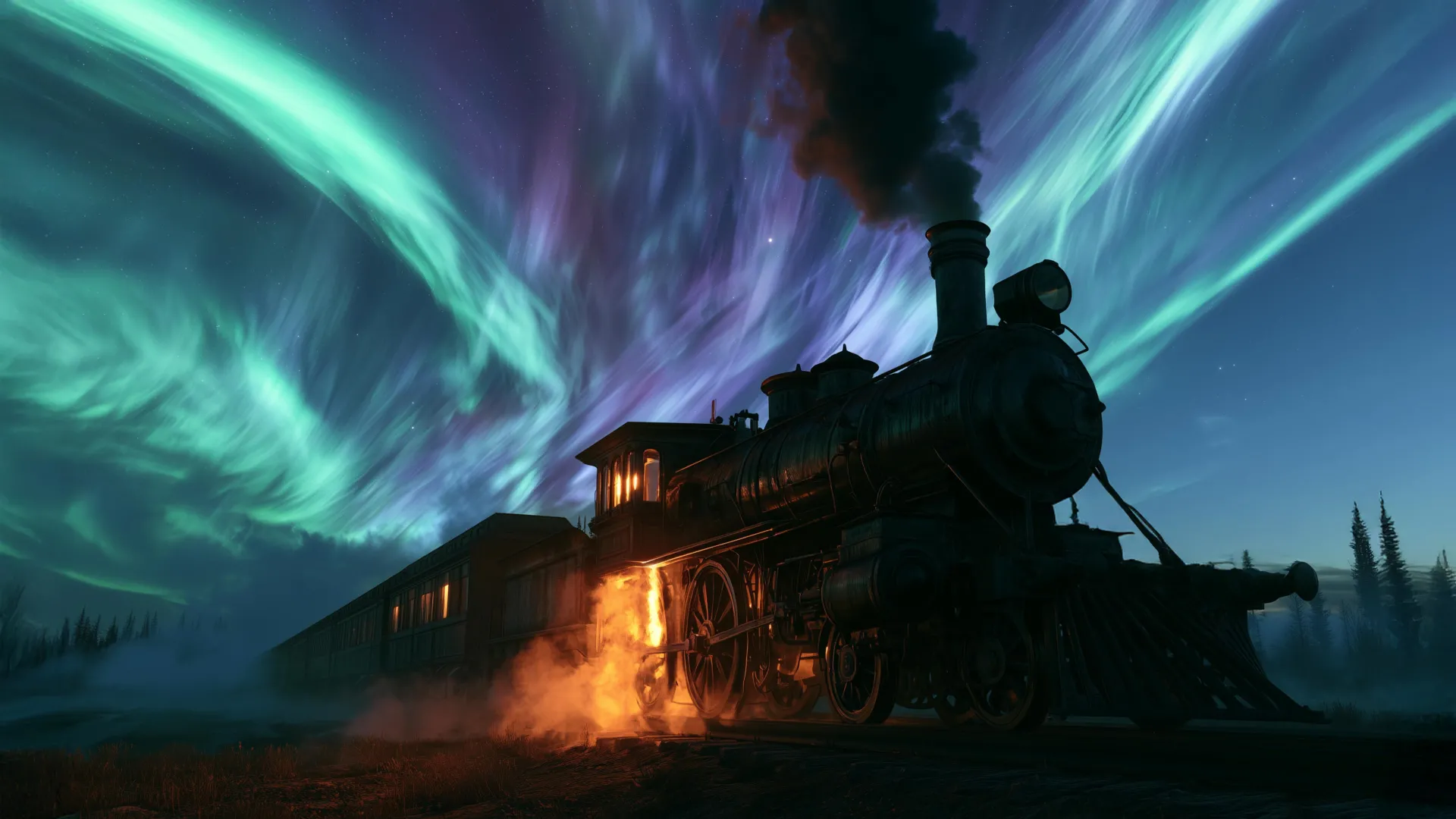
A train was delayed by a solar storm. But something didn't add up.
Scientists have cracked a 178-year-old mystery surrounding a train delayed by a solar storm, revealing that the famous incident happened in 1848 rather than 1841. The discovery rewrites the early history of space weather and highlights a threat that still endangers modern power grids, satellites, and communication systems.
Key points
- Researchers say a train delay in Exeter, England, happened in 1848, not 1841 as a Nature report claimed.
- The Exeter-to-Starcross railway line did not open until 1846, showing the original date was a typo.
- The earliest known space weather impact on technology is now telegraph interference on the Midland Railway in March 1847.
An international research team led by Lancaster University has corrected a 178-year-old record of a train delay in Exeter, England, that was blamed on solar activity. The team found that the incident described in an 1871 Nature article happened on October 18, 1848, not October 18, 1841 as reported.
The original account, by an anonymous author, said a "very intense magnetic disturbance" disrupted railway signals and delayed the 10:05 p.m. train by 16 minutes. If the 1841 date had been right, it would have been the earliest known case of space weather disrupting human technology.
How the error was found
The researchers noticed that the Exeter-to-Starcross railway line named in the report did not open until 1846, almost five years after the supposed event. Brett Carter of RMIT University said the team had effectively investigated what had to be a typo in the 1871 paper.
The team compared railway timetables and newspaper reports with records of solar activity, aurora sightings and digitized measurements of Earth's magnetic field. These records pointed to October 18, 1848, exactly seven years later.
In this study, we effectively investigated what had to be a typo in a Nature paper from 1871.
— Brett Carter
What the correction means
The Exeter disruption remains one of the earliest credible examples of space weather affecting technology, but it is no longer the first. That distinction now belongs to documented telegraph interference on Britain's Midland Railway in March 1847.
Jim Wild of Lancaster University said the research shows space weather is "not a new threat but a long-standing natural hazard." Mike Hapgood of RAL Space said preserving older records helps researchers interpret past events and strengthen future predictions.