Astronomers discover a ghostly green star unlike any known before
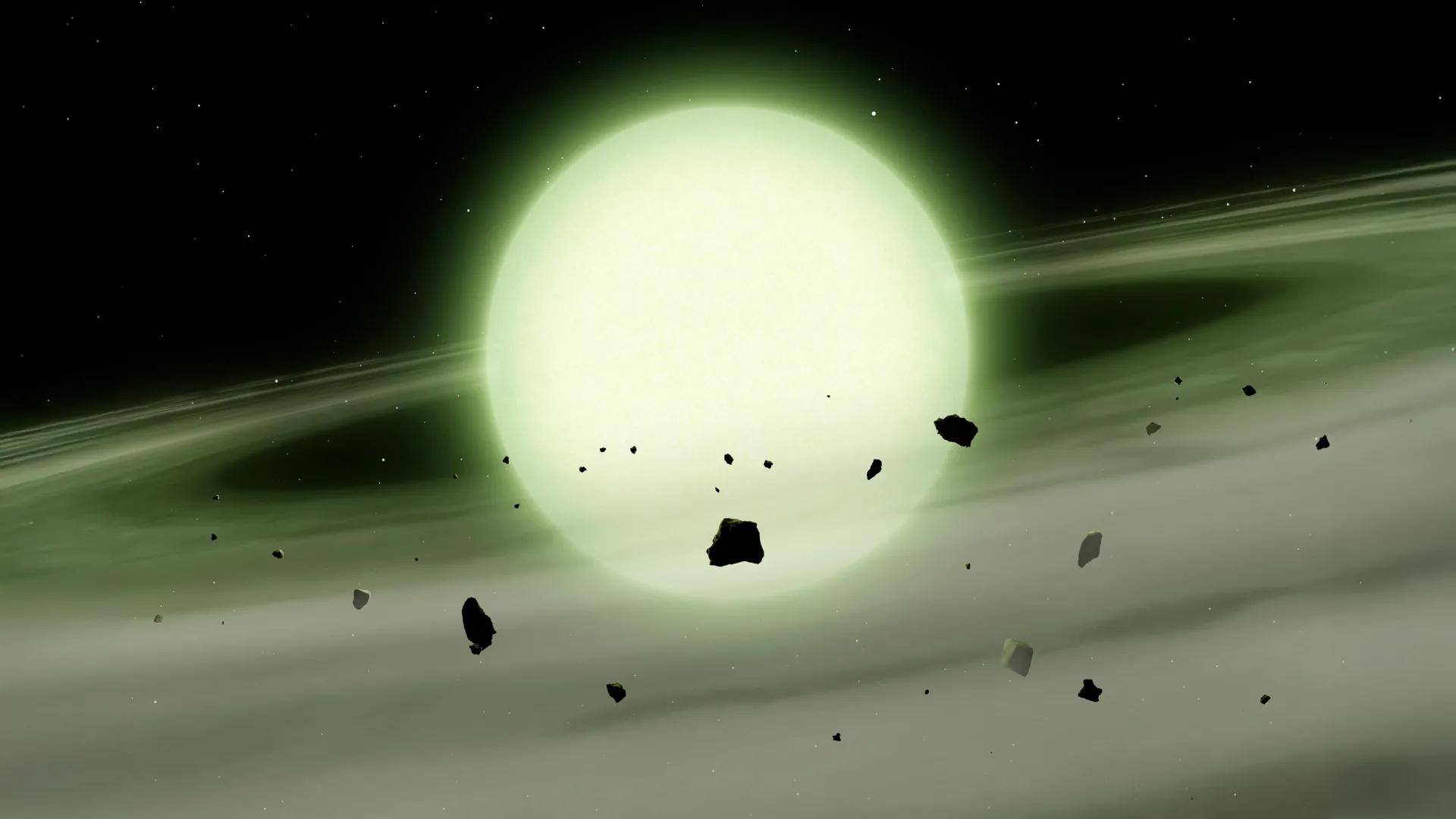
Astronomers have uncovered a surprising rainbow of dead stars, including the first known star that would appear genuinely green to human eyes. Researchers found that white dwarfs can glow in unexpected shades of pink, purple, yellow, and cyan because of unusual chemical interactions in their extremely dense atmospheres.
Key points
- Astronomers at the University of Warwick found white dwarfs can appear green, pink, purple, yellow and cyan.
- WD J1330+6435, about 4,000 degrees Celsius, is the first known star that would look genuinely green.
- Researchers estimate roughly one in 30 white dwarfs may show an unexpected color.
Astronomers at the University of Warwick have found that white dwarf stars can appear in a wide range of colors, including green, pink, purple, yellow and cyan. Their study, published in RAS Techniques and Instruments, describes the first known star that would look genuinely green to the human eye.
The team identified the green star as WD J1330+6435, a white dwarf with a temperature of approximately 4,000 degrees Celsius. It has drawn in rocky debris from its former planetary system, adding calcium, lithium and sodium to its atmosphere. The researchers say no other star has been credibly identified as genuinely green.
Why the colors appear
White dwarfs are the extremely dense remains of stars like our Sun. In the coolest of them, atmospheric material can reach densities of about 1 gram per cubic centimeter, comparable to water and millions of times denser than the Sun's visible surface.
Under these conditions, small amounts of elements such as carbon, calcium and sodium interact with the surrounding helium plasma and absorb a wider range of light wavelengths. The team calculated how each star would appear by processing stellar spectra through a model of human color vision.
The traces of sodium in the atmosphere of this white dwarf absorb the orange part of the spectrum, leaving behind a ghostly green glow.
— Dr. Mark Hollands
Other unusual stars
The researchers also identified WD J1011+2845, located 48 light-years from Earth, which may be the reddest star ever documented. Carbon carried to its surface shifts nearly all its light to wavelengths longer than 600 nanometers, giving it a deep salmon-pink appearance.
In a sample of 151 white dwarfs within about 65 light-years of Earth, five had unusual colors: two yellow and three pink. The median color temperature of the rest was about 6,800 Kelvin, meaning the typical white dwarf really is white.