Earth's "vital signs" pushed to record extremes in 2026, report says
Climate change has pushed the planet's environmental systems "deeper into uncharted territory," researchers said in a new report centered on the state of Earth's climate in 2026.
Key points
- Seven of 16 climate markers are at record extremes, researchers say in a BioScience report.
- July 2026 was the warmest month on record for the contiguous United States.
- Warming has accelerated to about 0.36 degrees Celsius per decade from 2010 to 2024.
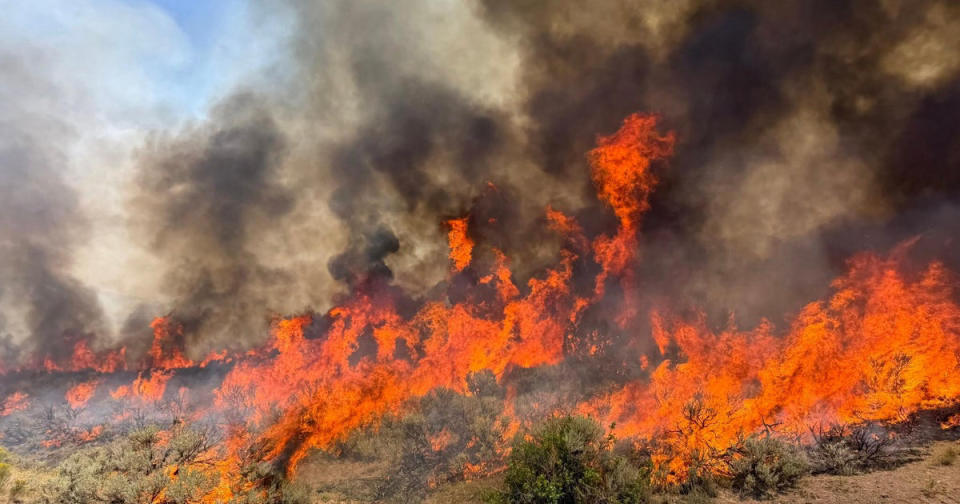
Climate change pushed Earth's environmental system to, and possibly past, its limits in 2026, with seven of 16 climate markers at record extremes, researchers said in a report published Wednesday in the peer-reviewed journal BioScience. The markers include greenhouse gases, temperature, glacier mass, oceans, wildfires and the planet's energy imbalance.
The report warns that Earth's climate "is moving deeper into uncharted territory." It says extreme heat, floods, droughts, storms and wildfires are no longer rare events but defining features of a changing planet.
A record year
July 2026 was the warmest month ever recorded for the contiguous United States, and the country had its hottest summer, the report said. Globally, ocean temperatures also hit new highs in July, while atmospheric carbon dioxide levels are higher than at any time in the last 2 million years.
Heat waves in Europe killed an estimated 14,000 people and also baked parts of the U.S., fueling wildfires that burned millions of acres. In 2025, coral reefs became the first environmental system to reach a climate tipping point, with researchers saying the damage could be permanent.
We are witnessing the rapid destabilization of the Earth's climate system. This is no longer a warning for the future; it is a diagnosis of the present.
— the researchers
Rapid destabilization
Warming has sped up, rising from roughly 0.05 degrees Celsius per decade between 1880 and 1970 to 0.19 degrees between 1970 and 2010 and 0.36 degrees between 2010 and 2024. Faster warming raises the risk of crossing tipping points and of self-reinforcing cycles, such as emissions from melting permafrost or wildfires, the researchers said.
The report noted positive shifts in renewable energy use, but said progress "remains far below the scale and speed needed to stabilize Earth's climate system." It called for rapid emissions cuts, adaptation, ecosystem protection and societal change.