El Salvador’s Bukele touts military intervention in Haiti
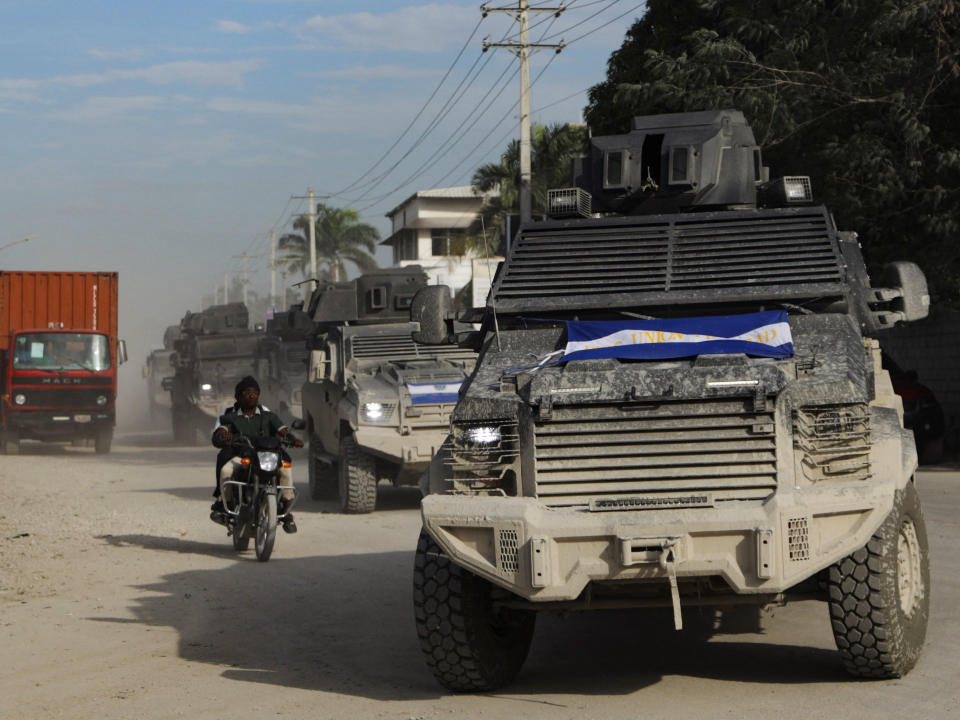
Haitian police have found a vehicle used by four missing Salvadoran technicians as Salvadoran troops deploy to Haiti.
Key points
- Bukele posted videos of Salvadoran troops patrolling Haiti and urged gangs to fight them.
- Four Salvadoran aviation technicians disappeared on October 18; their truck was found burned.
- The UN says only about 200 Salvadoran soldiers fall under the Gang Suppression Force's jurisdiction.
El Salvador's President Nayib Bukele has posted videos on X showing heavily armed Salvadoran soldiers patrolling streets in Haiti and being greeted by locals, writing: "Gather your gangs so we can go fight with them." The posts came on Wednesday, more than two weeks after four Salvadoran aviation technicians were attacked by gangs in Haiti.
Haitian police said on Tuesday they had found the burned remains of a truck used by the four men, in the Santo neighbourhood of Croix-des-Bouquets outside Port-au-Prince. The men, who disappeared on October 18, have not been found. Police were working with the UN-backed Gang Suppression Force (GSF) and Salvadoran troops when they found the vehicle.
Troop deployment and UN concerns
The disappearance led Bukele to send more than 2,000 troops and military hardware to Haiti. On Tuesday he posted a video he said showed Salvadoran military helicopters firing on gangs attacking GSF soldiers from Chad, and wrote that "The gangs no longer have the upper hand."
UN Secretary-General spokesman Stephane Dujarric told reporters in New York that only about 200 of the Salvadoran soldiers fell under the GSF's jurisdiction. He said any security operation must be carried out within international human rights law and that people's rights must be respected.
We fear that this armed conflict will claim even more victims, and displace even more people in the coming days
— Davina Hayles
Haitian authority and civilian impact
Haiti's Prime Minister Alix Didier Fils-Aime said the foreign forces operate under Haitian authority, stating: "The international forces did not come to replace the state. They came to support it, to reinforce our capacity."
Doctors Without Borders said 30 people, including women and children, were injured in the eight days after the Salvadorans disappeared, by heavy gunfire and drone explosions. The group said fighting had blocked access to roads and bridges and made travel to healthcare facilities "extremely risky" for the wounded.