Prediction markets cement their status after forecasting Democratic sweep of Congress
Prediction markets projected election results well before media outlets in an effort to position themselves as fast, reliable news sources.
Key points
- Prediction markets favored Democrats to flip both chambers before polls closed on Tuesday.
- Polymarket said it called 10 key races a median 31 minutes ahead of CNN, Fox News and the AP.
- Researchers said accuracy this time does not remove risks or the case for stronger regulation.
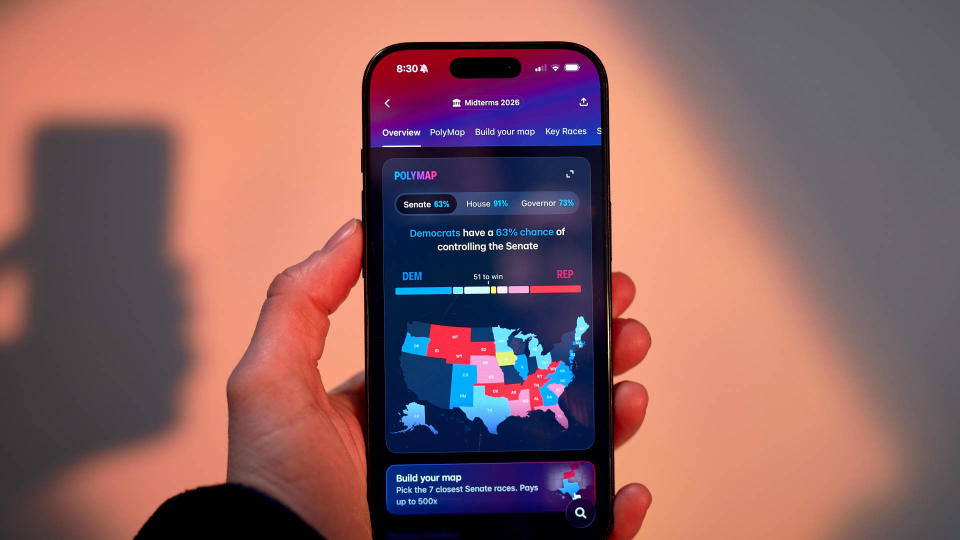
Prediction market platforms accurately forecast a Democratic sweep of Congress on Tuesday, projecting outcomes before many news outlets did, CNBC reported. Before the first polls closed at 6:00 p.m. ET, markets favored Democrats to flip both the U.S. House and Senate and saw them as narrow favorites for at least 53 Senate seats.
Democrats have so far won 54 Senate seats, including Iowa, which markets placed at 50-50 odds, and South Carolina, where Republicans were narrowly favored. Results are still outstanding in Mississippi and Alaska, where markets give Democrats Scott Colom and Mary Peltola 90% odds of winning.
Platforms tout early calls
Kalshi spokesperson Jack Such said the platform was confident making calls when a candidate's odds were above 99% and trading activity for the opposite candidate "dried out." Polymarket said that in 10 key races it called results a median 31 minutes ahead of CNN, Fox News and the Associated Press.
Markets also adjusted quickly when early counts shifted. In Texas, Gina Hinojosa's odds on Polymarket rose from 39% to 73% within five minutes of initial poll closings, after she ousted Republican Gov. Greg Abbott.
It's now routinely hours between when prediction markets call it versus the TV networks
— Polymarket CEO Shayne Coplan
Doubts and past misses
Michelle Kendler-Kretsch of the Anti-Corruption Data Collective said a strong night should not end efforts toward stronger regulation, citing a Reuters/Ipsos survey that found most Americans oppose trading on elections. "Risks and vulnerabilities didn't change overnight just because the markets were accurate this time around," she said.
Markets had missed major races before the midterms, including Brazil's presidential race, where Luiz Inácio Lula da Silva had about 20% odds on Kalshi before polls closed, and some Democratic primaries over the summer. Economists said low-odds winners do not mean the markets were wrong, and Eric Zitzewitz of Dartmouth said it is unclear whether casual observers understand how market probabilities work.