Mosqitter is turning its mosquito traps into an AI-powered surveillance network
Mosqitter is turning its mosquito-trapping hardware into an AI-powered surveillance network designed to identify species, monitor populations, and provide earlier warnings of mosquito-borne disease risks.
Key points
- Mosqitter, a 30-person Pennsylvania startup, has over 5,000 mosquito traps operating across five continents.
- The company is developing an AI-powered monitoring network called Febris to identify mosquito species and forecast disease risks.
- Mosqitter is raising a $5 million round in two tranches and projects over $1 million in revenue in 2026.
Mosqitter, a 30-person startup based in Pennsylvania, is turning its chemical-free mosquito traps into an AI-powered surveillance network. The company, presenting Wednesday at TechCrunch's Startup Battlefield in San Francisco, aims to identify mosquito species and provide early warnings about disease risks.
The World Health Organization reports that dengue cases more than doubled from 6.5 million in 2023 to a record 14.6 million in 2024. Mosqitter CEO Anastasiia Romanova told TechCrunch that the company now has more than 5,000 devices operating across five continents, up from just over 250 in 2022.
How the technology works
Mosqitter's devices lure and trap female mosquitoes by mimicking human heat, scent, and breathing cues. The company began R&D in Ukraine in 2019 and launched business operations in 2021. Its computer-vision system analyzes biological characteristics to distinguish between mosquito species.
To identify a mosquito, Mosqitter runs an image through its neural network, checks the result against external datasets, and has entomologists validate the findings. It then assigns a confidence score. Romanova compared the process to "three judges analyzing a case and producing a verdict."
We saw an opportunity: If we could catch the female mosquito at the point when she is about to lay eggs, we could potentially reduce the mosquito population and prevent it from growing
— Anastasiia Romanova
Products and expansion plans
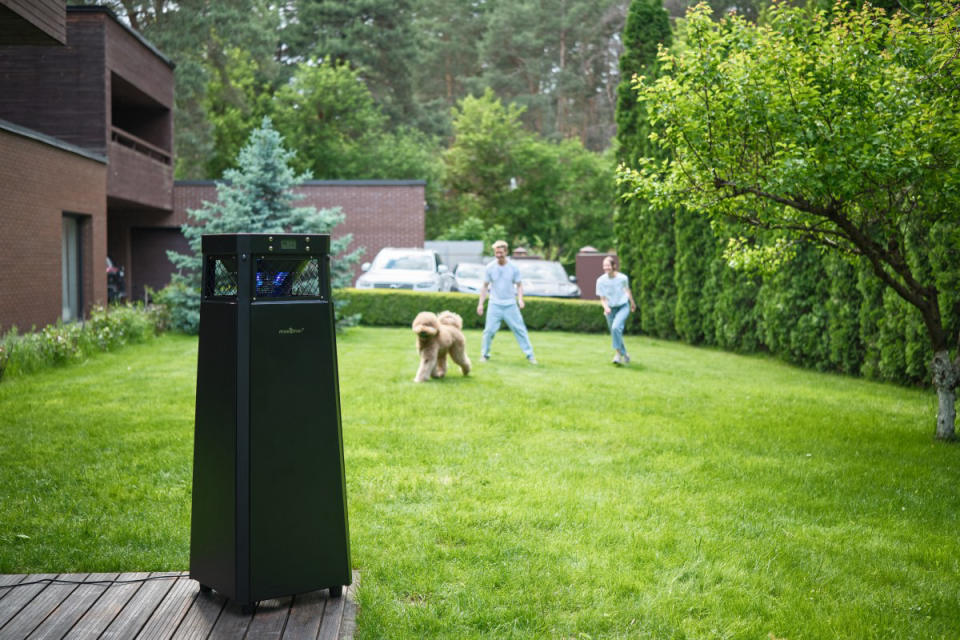
The company's portfolio includes the Mosqitter Grand for larger areas and public spaces, and the Mosqitter Mini for smaller residential spaces. It plans to introduce its Febris Monitoring System next month. Romanova said Febris does not diagnose disease but can indicate increased potential risk by identifying mosquito species.
Mosqitter is seeking B2B partners globally and targets institutional customers for Febris, including governments, public-health agencies, airports, municipalities, and universities. It has built local manufacturing and sales operations in Brazil and considers the U.S., Greece, India, Ukraine, and Nigeria key markets. The Mini retails for $199, while the Grand costs $1,999.