NASA reveals a haunting skull hidden in Antarctica’s ice
NASA satellites have captured an eerie, skull-shaped formation on a remote Antarctic island, but its haunting appearance conceals a troubling warning about melting glaciers. Unusually warm winter temperatures have exposed large areas of dark ice, potentially accelerating future melting and gradually transforming the skull's ghostly features.
Key points
- NASA satellite images show Vega Island in the Weddell Sea resembles a skull from above.
- Images from March 2025 and October 2026 show far less snow cover in the later view.
- Glaciologist Mauri Pelto said warm winter conditions in 2026 left large areas of ice exposed.
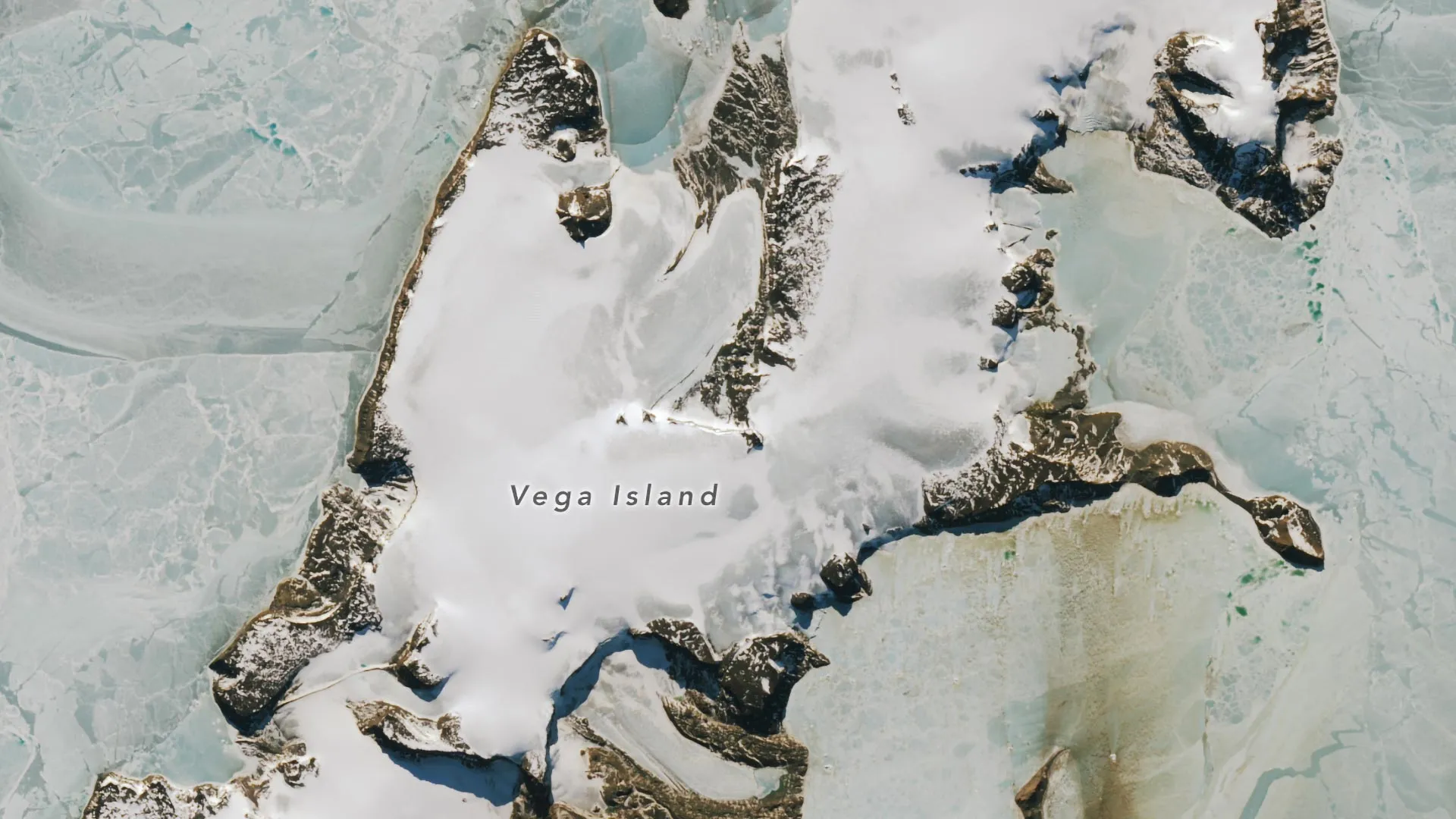
NASA satellite images show that Vega Island, in the Weddell Sea east of the Antarctic Peninsula, looks like a grinning skull when seen from above, with rocky and icy features resembling a face turned toward nearby Devil Island. The images were taken by the OLI instrument aboard Landsat 9 on March 22, 2025, and October 10, 2026; clouds obscured the island in March 2026.
The skull shape comes from natural landmarks. A nunatak, a rocky peak rising above the ice, looks like an empty eye socket, a lateral moraine outlines the mouth, and Bahía del Diablo (Devil's Bay) Glacier forms what appears to be the lower jaw.
Less snow and exposed ice
The two views show a clear difference in snow coverage. In March 2025 snow covered the terrain, consistent with March being the region's wettest month, but by October 2026 large parts of the island were bare, leaving darker glacier ice exposed.
Glaciologist Mauri Pelto of Nichols College said unusually warm conditions during the winter of 2026, especially in June, contributed to the large areas of exposed ice seen in October. He said the exposed surfaces on Vega Island and neighboring islands suggest little fresh snow accumulated over the winter, with some lost through sublimation and strong winds.
The winter season was no treat for these glaciers.
— Mauri Pelto
Melting and the skull shape
Fresh snow reflects much sunlight, while darker exposed ice absorbs more solar energy. As daylight increases and temperatures rise, these darker surfaces are likely to warm faster, potentially speeding up melting, though even a modest new snowfall could temporarily slow the process.
The formations that give the island its skull shape are also vulnerable as glaciers retreat. Pelto said that when covered in snow and ice the skull is preserved, but when exposed to melt it weathers away, changing the jawline and expanding the eye socket.