Scientists discover a bizarre Jurassic “squid” unlike anything ever seen
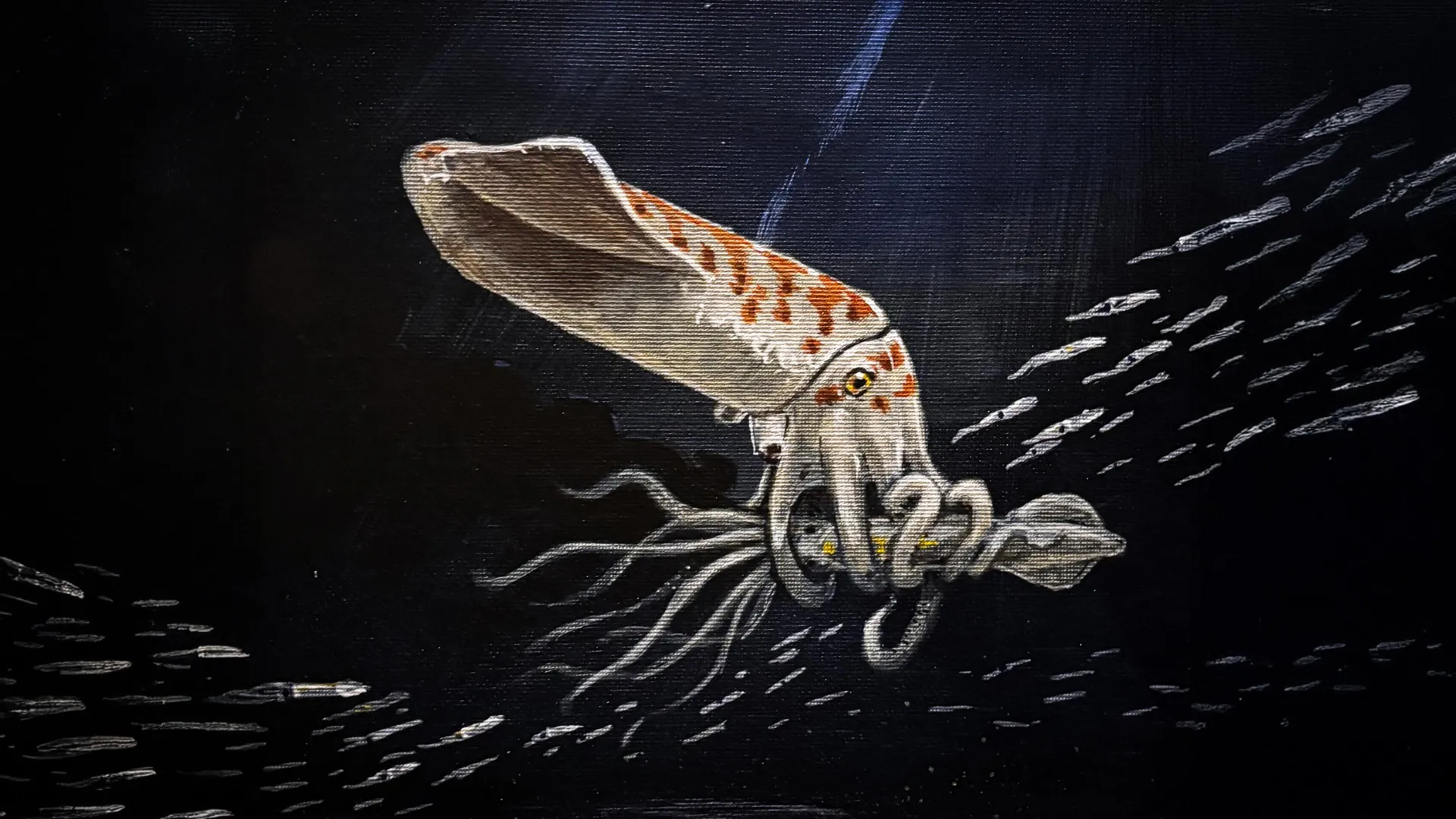
Scientists have identified the “fattest” belemnite ever discovered, a bizarre, barrel-shaped squid relative that lived in Wyoming’s ancient seas 160 million years ago. The exceptionally rare fossils reveal a creature unlike anything previously known, potentially a predator of smaller squid-like animals and a surprising survivor of a supposedly vanished family.
Key points
- Two rare fossils found in Wyoming revealed Wyoteuthis linsterorum, a belemnite species that lived about 160 million years ago during the Jurassic Period.
- Its internal skeleton is about 10 centimeters long and 6 centimeters wide, making it the thickest belemnite ever identified.
- Researchers used CT scanning to find links to an ancient belemnite family thought to have vanished millions of years earlier.
Two rare fossils found in Wyoming have revealed a new species of belemnite, an extinct relative of modern squid and octopuses, that lived about 160 million years ago during the Jurassic Period. The species has been named Wyoteuthis linsterorum.
An international team from the United States, United Kingdom and New Zealand described the find in the journal Papers in Palaeontology. The creature is notable for its unusually thick, barrel-shaped internal skeleton, described as the chunkiest belemnite ever identified.
A skeleton unlike others
Belemnites are among the most commonly found fossils, usually known for narrow, bullet-shaped skeletal parts called rostra that measure 5 to 10 centimeters long and 1 to 2 centimeters wide in Wyoming specimens. The new species' rostrum is about 10 centimeters long but 6 centimeters wide, the thickest known example.
Researchers estimate the living animal, including its arms, could have reached about 60 centimeters, or roughly two feet. Wyoming paleontologist Bill Wahl, a study coauthor, said the belemnite "stuck out like a sore thumb" compared with the many others found in the region.
After spending years fossil hunting in Wyoming and collecting countless fossils of the common Pachyteuthis belemnites here in Wyoming, this one is unlike anything I have ever seen!
— Jessica Lippincott
How the discovery unfolded
The first specimen was found in the late 1990s by Dr. Burkhard Pohl, founder of the Wyoming Dinosaur Center, but it stayed unstudied in a museum drawer for years. A second specimen was found by fossil collector Cliff Linster near Ten Sleep, Wyoming, and donated to the center in 2019.
CT scanning revealed a link to an ancient belemnite family believed to have disappeared millions of years before this animal lived. The genus name means "a squid from Wyoming," and the species name honors Cliff Linster and his family. Linster died in June before the research was published. Both known fossils are on display at the Wyoming Dinosaur Center in Thermopolis, Wyoming.