Scientists predicted doomsday for November 13, 2026. Should we be worried?
In 1960, scientists predicted that runaway population growth would bring humanity to the brink of destruction on November 13, 2026, and their mathematical forecasts remained surprisingly accurate for decades. But as birth rates declined and population growth slowed, the terrifying prediction unraveled, revealing how even convincing scientific models can fail when human behavior changes.
Key points
- A 1960 Science article predicted the human population would approach infinity on November 13, 2026.
- The authors were Heinz von Foerster and students Patricia M. Mora and Lawrence W. Amiot.
- Forecasts held up until around 1993, when global population fell behind; birth rates are now slightly less than half the 1960 level.
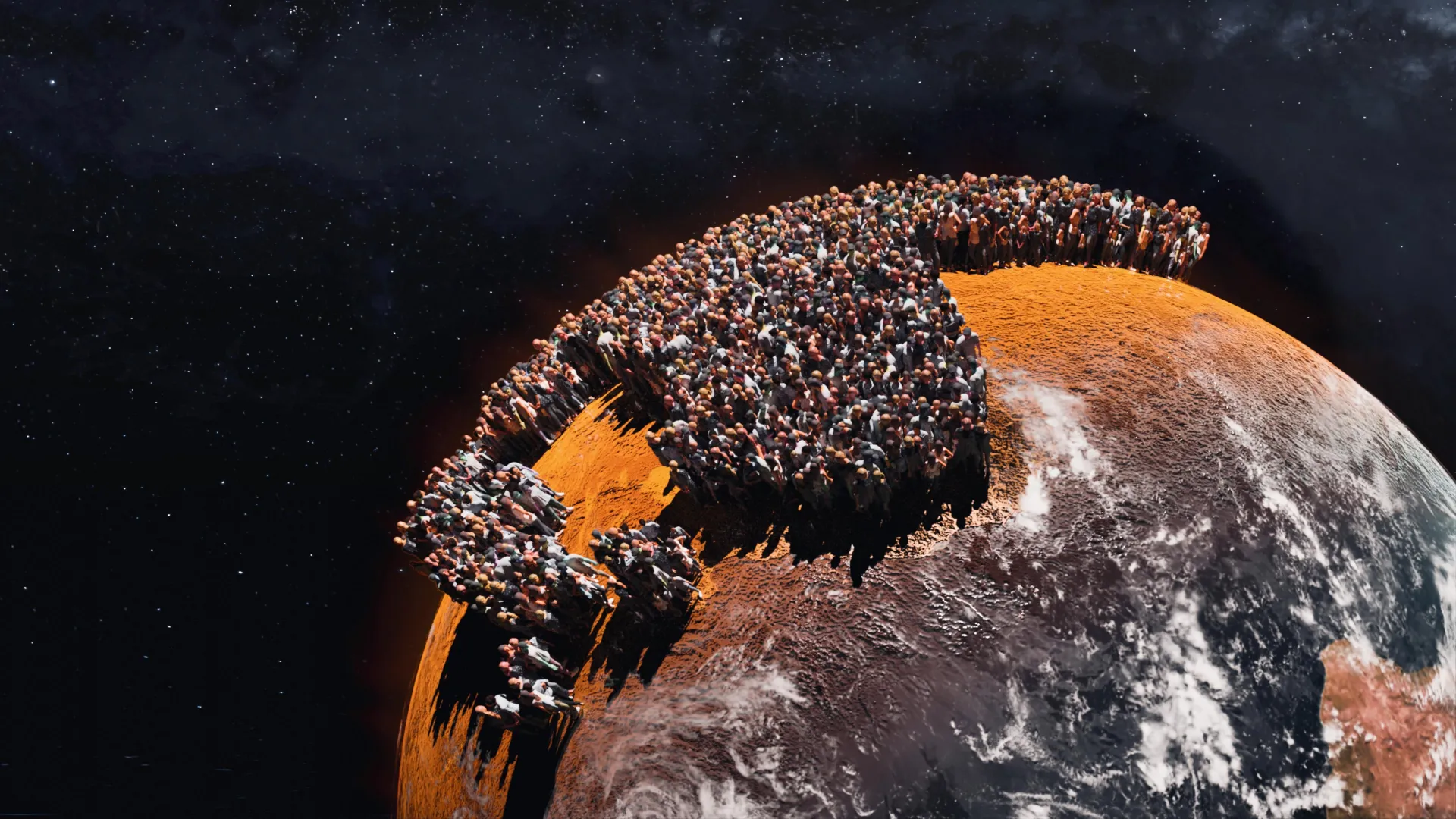
A 1960 article in the journal Science, titled "Doomsday: Friday, 13 November, A.D. 2026," predicted that on that date the human population would approach infinity and effectively annihilate itself. The date is less than a month away.
The authors were Heinz von Foerster, an Austrian-American professor and cybernetics expert, and two of his students, Patricia M. Mora and Lawrence W. Amiot. They argued that humans are exceptional and might grow at an ever-increasing rate, beyond exponential growth.
How the prediction was received
The claim drew widespread public attention, including stories in Time and The New York Times, and also received sustained scientific attention. When mathematicians and demographers attacked the work in letters to Science, the authors defended the underlying math and conclusions.
The "doomsday" equation was regularly cited from the 1960s through the 1980s in textbooks on genetics, ecology and demography, and appeared in a 1963 Canadian Parliamentary committee and a 1971 U.S. Supreme Court abortion case.
Our great-great-grandchildren will not starve. They will be squeezed to death.
— Heinz von Foerster and co-authors
Why the forecast faltered
The projections proved highly accurate until around 1993, when the global population began falling behind the forecasts. According to the article, this happened because the world began doing what the authors recommended: reducing the global birth rate by half.
Today, the global birth rate is slightly less than half what it was in 1960.