Something strange is happening beneath a volcano near 2 million people
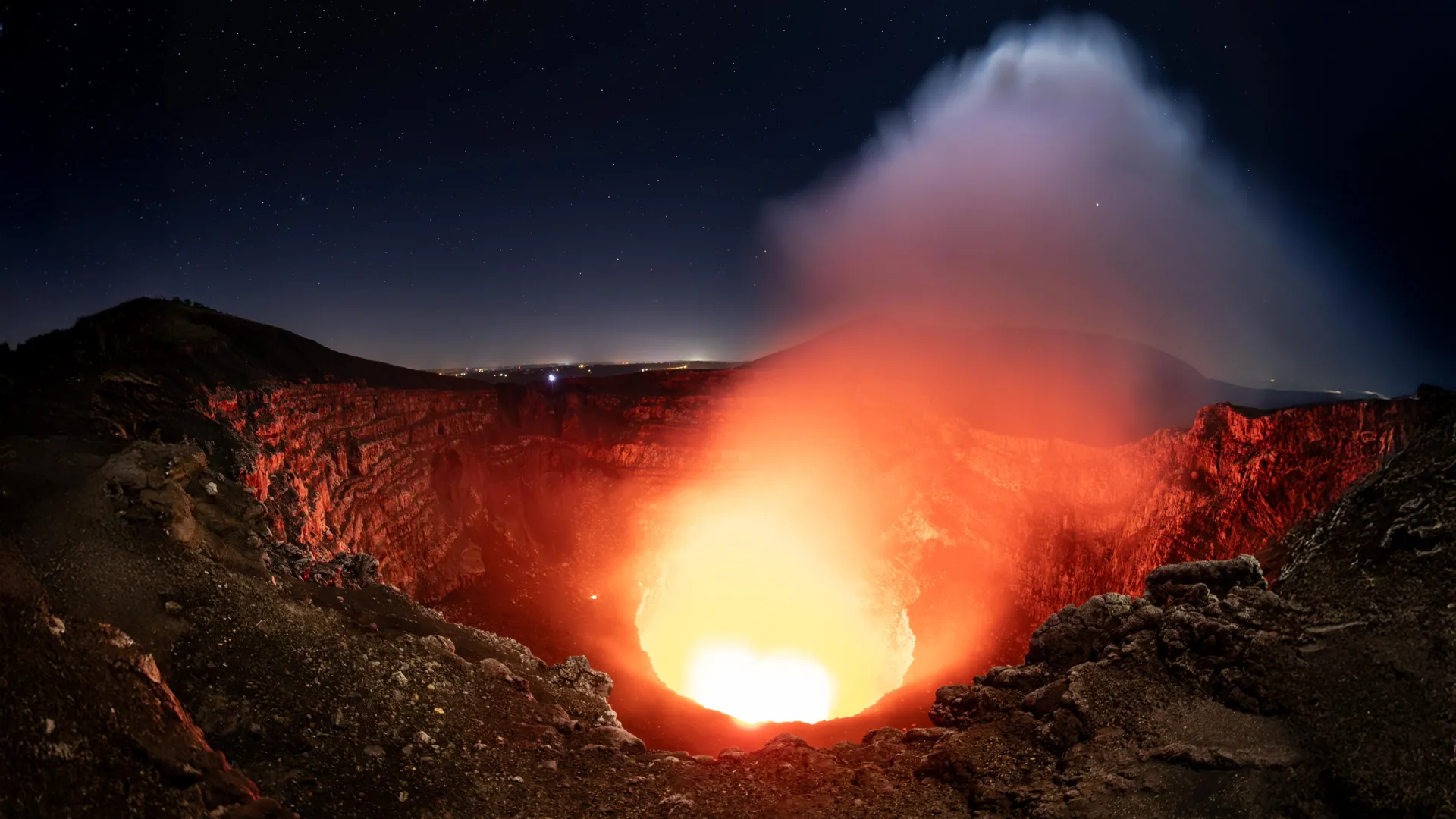
Scientists have discovered evidence of two hidden magma sources beneath Nicaragua’s Masaya volcano, where satellite observations revealed mysterious ground movements suggesting magma is shifting deep underground. The findings could improve eruption forecasting for the active volcano, which sits near 2 million people and attracts tourists to its spectacular lava lake.
Key points
- Penn State scientists found evidence of two previously unrecognized magma sources beneath Nicaragua's Masaya volcano.
- Satellite data from 2018 to 2024 showed the caldera first sank, then rose, while Santiago crater kept sinking.
- About 2 million people live within 13 miles of the volcano, which is also a national park.
Scientists at Penn State have found evidence of two previously unrecognized magma sources beneath Nicaragua's active Masaya volcano, according to findings published in Geophysical Research Letters. About 2 million people live within 13 miles of the volcano, which is also a national park and popular tourist destination.
The researchers used six years of satellite observations to track subtle changes in the ground around Masaya. One part of the volcano initially sank before beginning to rise, possibly because fresh magma was entering a deep reservoir, while the ground around the active Santiago crater and lava lake kept sinking, suggesting a separate, shallower reservoir was behaving differently.
How the movement was tracked
The team analyzed measurements from the Sentinel-1 satellite, which observes the volcano about once every 12 days, using a technique called interferometric synthetic aperture radar (InSAR). The method can detect very small changes in surface elevation and works through cloud cover, which the researchers said matters because many volcanoes, including Masaya, are in tropical areas.
Lead author Lizzie Johnson said the sinking and rising could mean magma is draining away and then new magma is moving in. She said the continued deflation around Santiago crater over the whole study period suggests the plumbing system is more complex and could be due to decreasing magma in a second, shallower reservoir.
These observations help scientists better understand how magma moves beneath Masaya and may improve monitoring and eruption forecasting in the future
— Lizzie Johnson
Monitoring and hazards
The researchers said their observations did not reveal any immediate danger to surrounding communities, but that understanding the volcano's normal behavior could make unusual changes easier to recognize. Masaya last produced a major lava flow in 1772, and its persistent degassing often produces dangerously high concentrations of sulfur dioxide, Johnson said.
Young Cheol Kim, who completed his doctorate in geosciences at Penn State this summer, said continuous monitoring helps scientists establish baseline activity and warn people in a timely manner if needed.