Archaeologists may have just found the world's oldest shipwreck
A mysterious shipwreck off Turkey’s coast may be the oldest ever discovered, dating back approximately 4,500 years to the age of the Egyptian pyramids. Although the wooden vessel has disappeared, its surviving pottery cargo reveals clues about an ancient trading network that may have connected distant Mediterranean civilizations. Researchers believe the ship may have crashed against rocks during a storm while…
Key points
- A shipwreck off Kekova, Turkey, is believed to be the world's oldest, dated to around 2700–2400 BCE.
- The previous oldest wreck was off Dokos, Greece, from about 4,200 years ago.
- Pottery cargo suggests trade links across the eastern Mediterranean in the Early Bronze Age.
Archaeologists believe they have found the world's oldest shipwreck in shallow waters off Kekova, west of Antalya in Turkey. The wreck was discovered in 2024 by Associate Professor Hakan Öniz of Akdeniz University, Antalya, who has worked along the coastline for decades.
Based on clues from its cargo, including pottery vessels, the research team has tentatively dated the wreck to around 2700–2400 BCE, about 4,500 years ago. The previous oldest known shipwreck was off the coast of Dokos in Greece, thought to be from about 4,200 years ago.
What was found
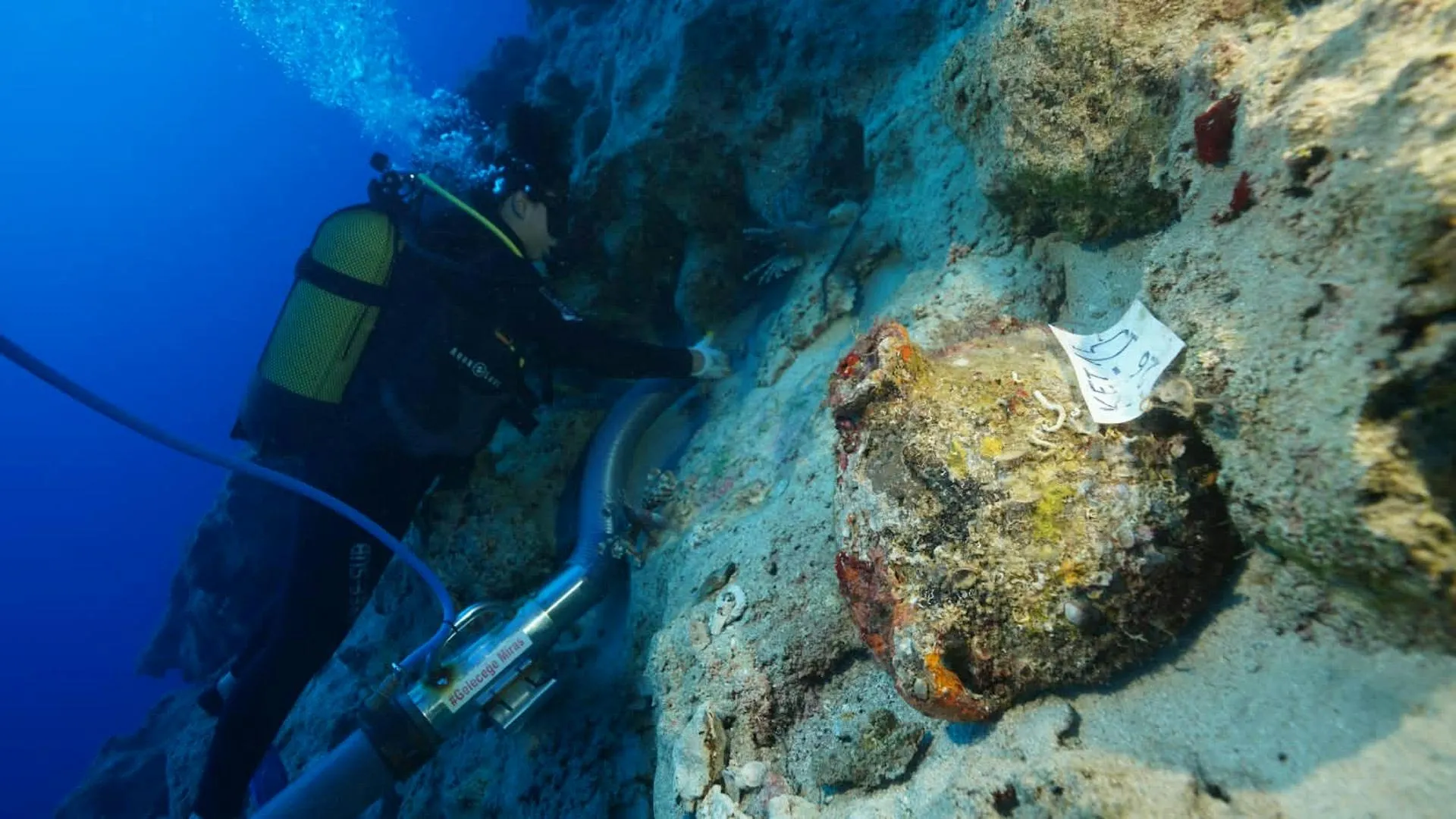
Little remains of the ship itself due to underwater exposure. The cargo included large ceramic storage vessels, or amphorae, with two handles and a raised horizontal clay belt around the widest part. Divers spent four months extracting the pottery from barnacles on the rocky underwater slope.
The ship was evidently traveling along the coast of southern Turkey. It now rests on the seabed between two islands and likely sought refuge in lee waters during a storm. Residues visible to the naked eye remain in the jars, and scientific analyses are pending.
missing piece
— the research team
Trade links and dating
The pottery's shape and manufacturing technique help date the cargo and the ship. The team's best assessment is that some of the belted jars, or the clays used to make them, may have originated in the Central Jordan Valley. The discovery could transform understanding of ancient Mediterranean connections during the Early Bronze Age.
The precise dating is still under consideration, and earlier or later dates are possible. A paper outlining the results has not yet been published in a peer-reviewed journal. The ship is described as a missing piece in the story of networks, trade and commodity exchange in the wider eastern Mediterranean.