Astronomers may have discovered the first moon beyond our Solar System
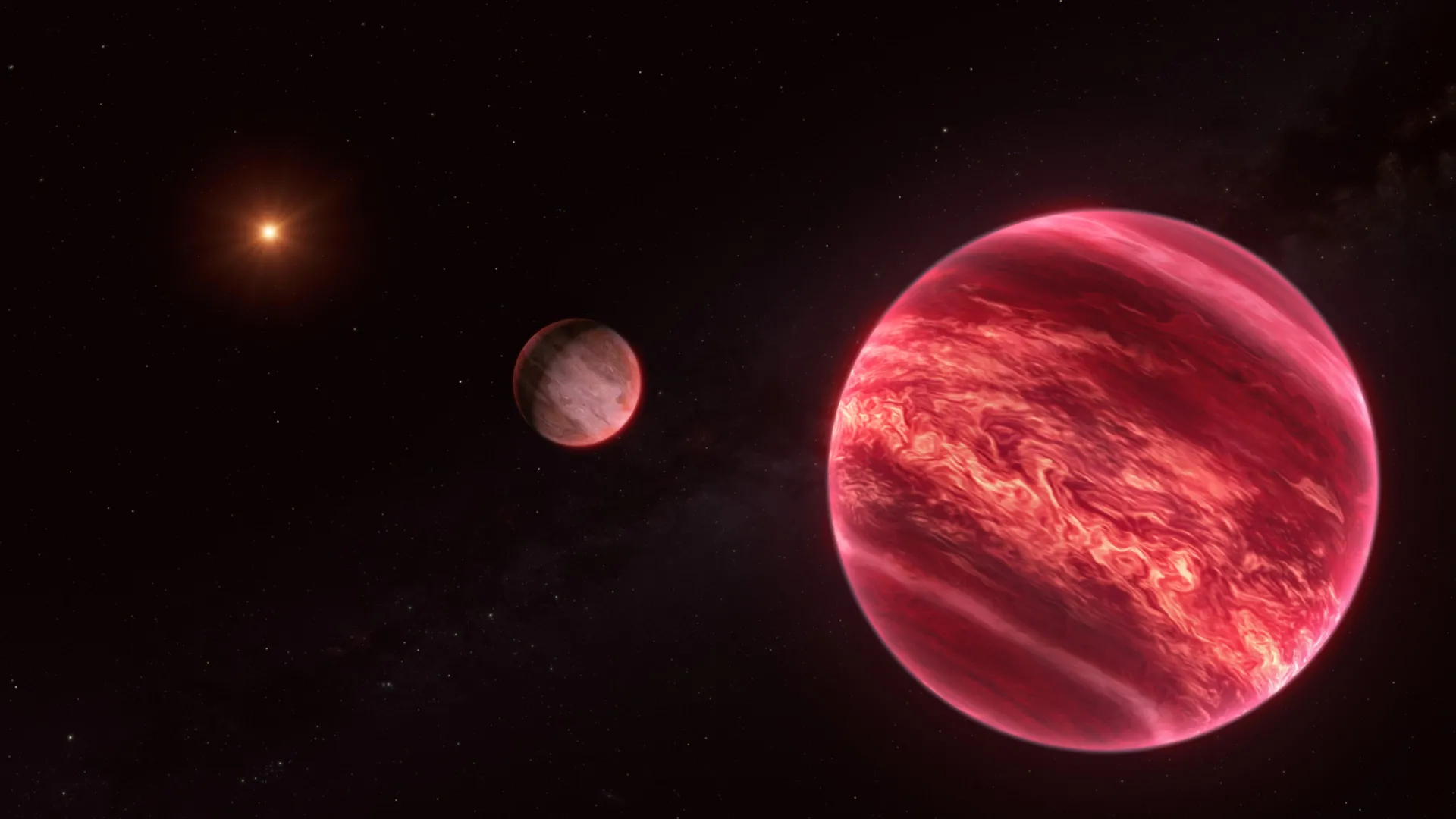
Astronomers have uncovered evidence of a bizarre, potentially historic discovery: the first moon ever detected beyond our Solar System. Unlike familiar moons, this mysterious object is at least as massive as Jupiter and orbits a brown dwarf, which itself circles a star. The unusual arrangement challenges traditional definitions of planets and moons, leaving scientists unsure what to call it.
Key points
- Astronomers using ESO's Very Large Telescope found evidence of a moon-like body orbiting a brown dwarf in the CD-35 2722 star system.
- The candidate object, called an exosatellite, has at least as much mass as Jupiter, while the brown dwarf it orbits is more than 30 times Jupiter's mass.
- If confirmed, it would be the first detection of a natural satellite outside our Solar System, though astronomers have no universally accepted definition of an exomoon.
Astronomers may have found the first moon beyond our Solar System, according to observations made with the European Southern Observatory's Very Large Telescope. The candidate object sits in the CD-35 2722 star system and orbits a brown dwarf rather than a planet.
The system is relatively young. Its central star has about half the Sun's mass, and the brown dwarf circling it is more massive than a planet but too small to sustain the hydrogen fusion that powers ordinary stars. The newly identified body orbits that brown dwarf.
A moon far heavier than ours
The researchers call the object an exosatellite. It has at least as much mass as Jupiter, making it far heavier than any natural satellite in our Solar System, and the brown dwarf it circles is more than 30 times as massive as Jupiter.
Kevin Hoy, an ESO student in Chile and lead author of the study published in Nature, described the arrangement as "super weird" compared with our own Solar System. He said the object is massive enough to be a planet but does not orbit a star, though it orbits something that does.
As exotic as it is, this system is truly unique and represents a breakthrough: the first plausible detection of an exosatellite
— Alice Zurlo
Why the finding matters
Astronomers have not agreed on an official definition of an exomoon, and the CD-35 2722 case shows why the labels are hard to apply. Alice Zurlo, director of YEMS and a collaborator on the study, said the reported satellite is a giant gaseous body orbiting a highly massive companion.
More than 6,000 exoplanets have been identified, but only a handful of possible exomoons have emerged from observations and the evidence for them remains limited. Earlier in 2026, a team led by Quentin Kral reported possible signs of a satellite in the HD 206893 system without a definitive detection. ESO's upcoming Extremely Large Telescope is expected to help in the search.