Astronomers uncover a mysterious magnetic web above the Sun
The Sun’s seemingly peaceful regions are hiding a surprisingly complex magnetic world. Using a balloon-borne telescope high above Earth, scientists discovered delicate, thread-like magnetic structures woven through the solar atmosphere, apparently shaped by twisting motions on the Sun’s surface. They also mapped magnetic fields inside towering jets of solar material, revealing how those fields change with height.
Key points
- Sunrise-III balloon telescope found thread-like magnetic structures in the Sun's quiet regions.
- The magnetic canopy in the chromosphere is more intricate than a simple expanding structure.
- Computer simulations suggest surface movements twist magnetic field lines to create these features.
An international research team led by the National Astronomical Observatory of Japan (NAOJ) has discovered a complex network of magnetic structures above relatively calm regions of the Sun. The observations were made using the Sunrise-III solar observatory, which traveled high into Earth's stratosphere aboard a balloon in 2024.
The findings show that even the Sun's seemingly quiet regions contain elaborate magnetic structures. They also offer new clues about how energy travels upward through the solar atmosphere and contributes to its heating.
Details of the discovery
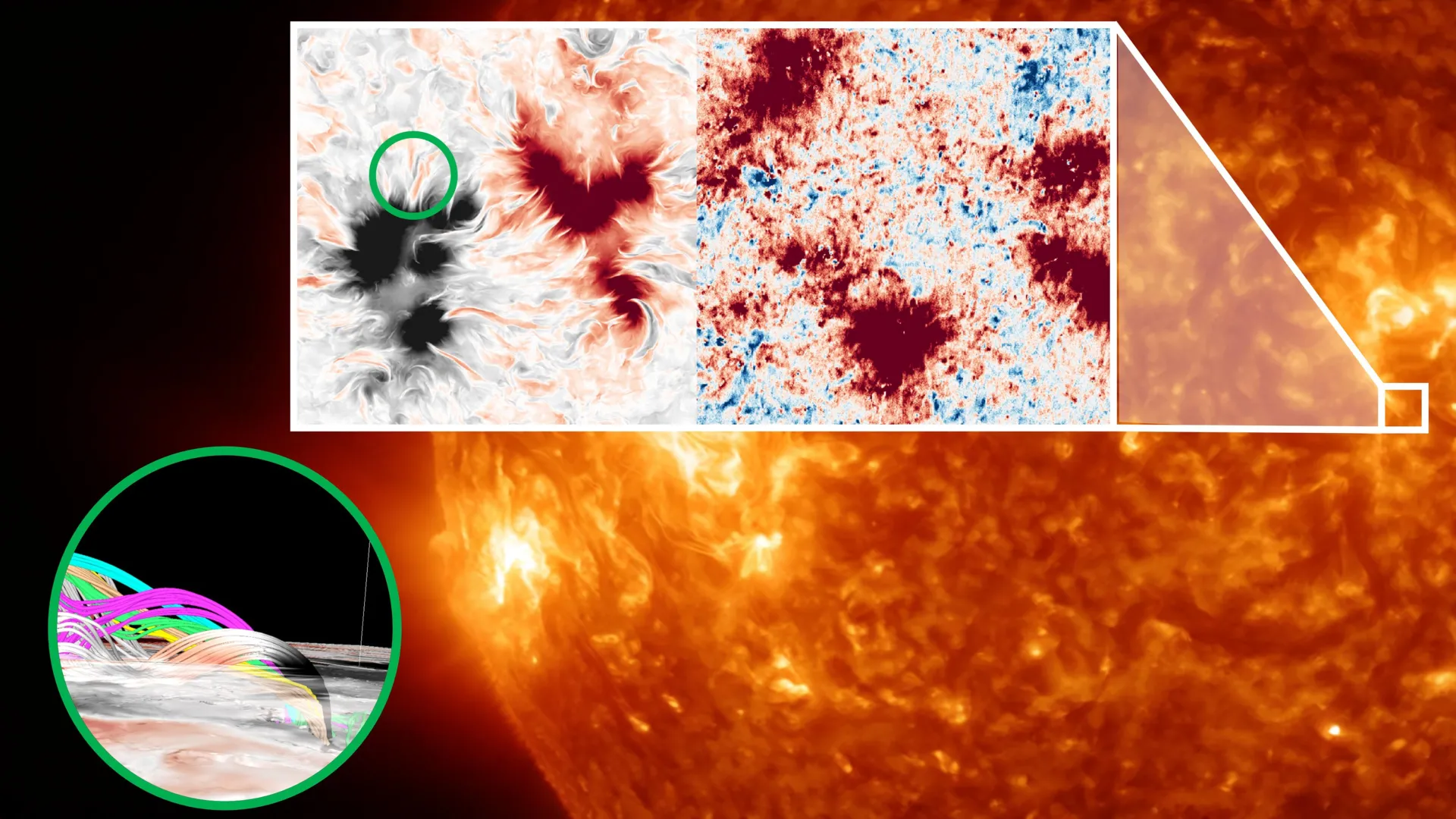
Sunrise-III detected numerous thin, elongated magnetic structures woven into a larger network of magnetic fields above a quiet region of the Sun. This network, known as the magnetic canopy, extends through the chromosphere, a layer of the solar atmosphere above the Sun's visible surface.
The canopy develops as magnetic fields concentrated at the solar surface spread outward and arch upward into the chromosphere. Rather than forming a smooth, uniformly expanding structure, the new observations reveal that the canopy contains many narrow, thread-like features.
Researchers used computer simulations that reproduced the patterns recorded by Sunrise-III. The results suggest that movements on the solar surface twist magnetic field lines, creating the intricate structures observed higher in the atmosphere.
quiet does not mean magnetically inactive
— the article
How the observations were made
Sunrise-III is an international project built around a 1-meter telescope carried by a high-altitude balloon. During its 2024 mission, the observatory floated approximately 35 kilometers (about 22 miles) above Earth in the stratosphere, where atmospheric interference is greatly reduced.
The balloon's gondola carried three scientific instruments, including SCIP (Sunrise Chromospheric Infrared spectroPolarimeter), a near-infrared instrument developed under NAOJ's leadership. SCIP measures magnetic fields continuously across different layers of the solar atmosphere, from the photosphere to the chromosphere.
The observatory also examined another quiet region near the solar limb, measuring magnetic fields within spicules, narrow jets of solar material that extend upward from the surface. These observations revealed how the distribution of magnetic fields changes with increasing height above the Sun's visible edge.