‘Every person has their luck’: Morocco’s beach metal detectorists
For many, the search is driven less by profit than by the thrill of an unexpected discovery.
Key points
- Mustapha Harmouch, 33, searches Agadir's beaches about four times a month with a metal detector.
- He found 14 Moroccan falus coins in one spot near Sidi Ouassay, the oldest dated 1289 on the Hijri calendar.
- Moroccan law requires authorisation for archaeological searches and reporting of accidental finds.
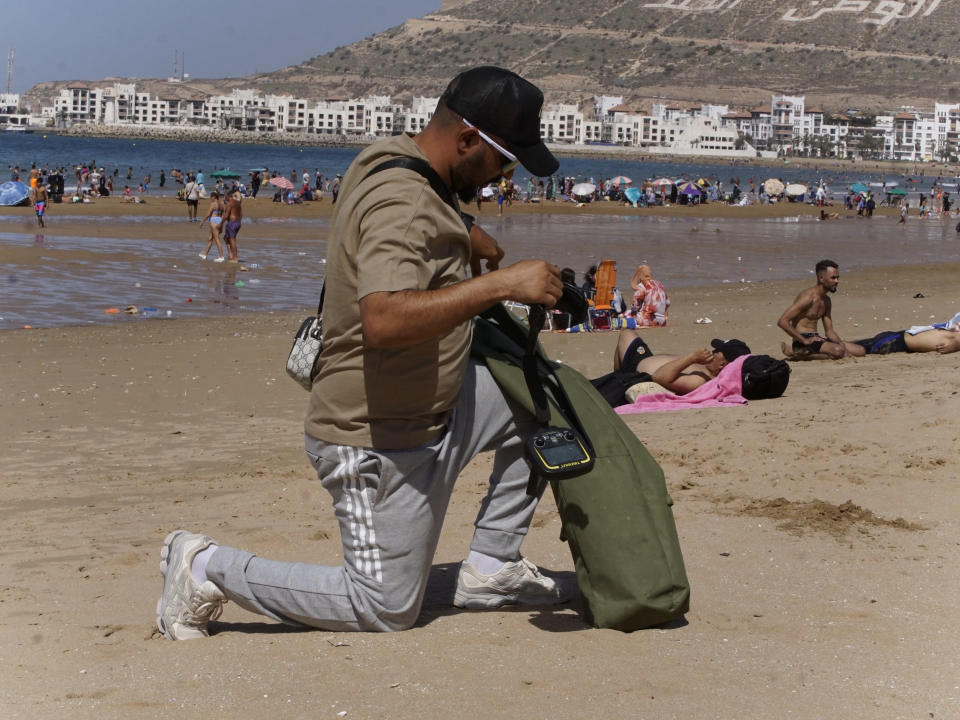
Mustapha Harmouch, a 33-year-old content creator, sweeps his metal detector across the sand at Agadir's Corniche in Morocco, searching for buried objects. He told Al Jazeera English that the appeal lies in not knowing what the detector will find, since it gives the same signal for a coin, a ring or discarded aluminium.
Harmouch goes detecting about four times a month, often with members of the Moroccan Association for Research and Exploration Enthusiasts, and favours Taghazout and the Corniche because there is less rubbish there. His finds have included jewellery, Moroccan coins, foreign currency such as a French 20-franc silver coin, and a small gold ring in Taghazout.
Coins and a false meteorite
In Sidi Ouassay, about 65km south of Agadir, Harmouch says he found 14 Moroccan falus, old bronze or copper coins, in a single spot. Some were too damaged by salt and time to read easily, but he says the oldest dates to 1289 on the Hijri calendar. He said he collects the coins as a memory rather than for their price.
In the same area he once thought he had found a meteorite, only to learn it was a common, inexpensive mineral. He said that before asking, he thought he had made the best discovery.
The excitement comes partly from not knowing what lies beneath the sand
— Mustapha Harmouch
What the law requires
Morocco's main legal framework for protecting historical monuments, archaeological sites, works of art and antiquities dates to Law 22-80, and the government has reiterated that unauthorised archaeological searches on land or at sea are prohibited. Searches for objects of historic, archaeological or anthropological importance require authorisation, and accidental discoveries must be reported without damaging or moving the objects except where necessary to protect them.
Underwater archaeologist Basma Oumaima said the context of a find can matter as much as the object itself. She said metal detectors can be useful in archaeology when used in a proper survey where every find is located, recorded and studied.
Other detectorists on the coast
Mohamed Botaib, a former sports coach looking for work, searches beaches, forests and mountains as a hobby and has found ordinary coins, dirhams and rings. Jalal Zegnoune, a full-time maintenance technician in Casablanca, said he removes objects such as rusted sardine-can fragments, nails and lost fishing gear because some can be dangerous to beachgoers.
Harmouch says he respects the law: association members carry identification, avoid private property and heritage sites, and treat detecting as a hobby. He says his income comes mainly from content creation and a fishing equipment store.