Goodbye, cavities? Scientists create gel that could regrow tooth enamel
Scientists have developed a revolutionary gel that could regrow lost tooth enamel by harnessing minerals naturally found in saliva, potentially overcoming one of dentistry’s biggest limitations. The regenerated enamel behaves much like healthy enamel, raising hopes for a simple treatment that could repair damaged teeth, prevent decay, and reduce sensitivity.
Key points
- Researchers at the University of Nottingham have developed a gel that could regrow damaged tooth enamel.
- The fluoride-free gel uses proteins that mimic natural enamel formation and draws calcium and phosphate from saliva.
- The team aims to launch a first product through its start-up Mintech-Bio by next year.
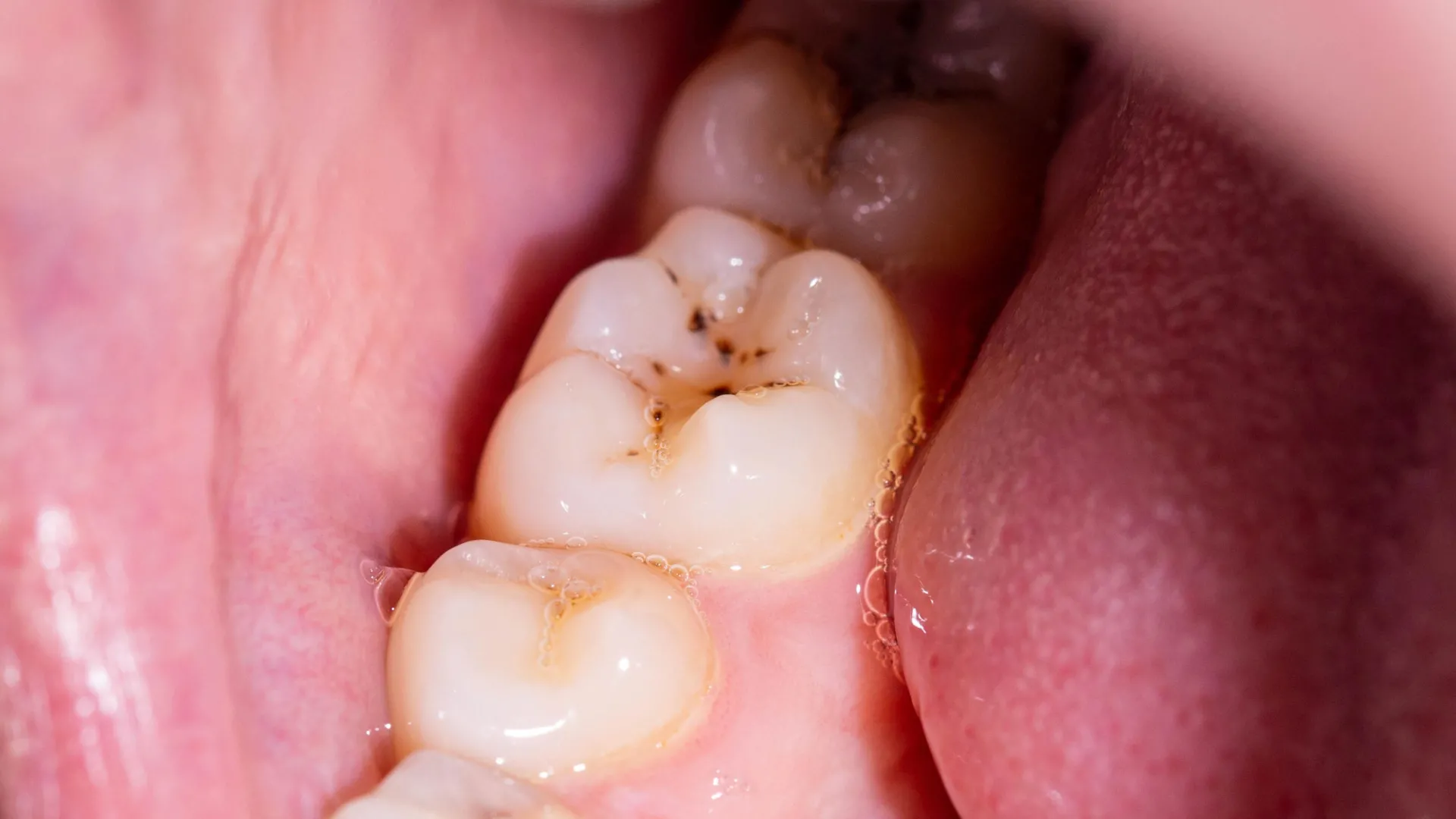
Scientists at the University of Nottingham have created a gel that could regrow damaged tooth enamel, a layer the body cannot naturally rebuild once teeth are fully developed. The findings were published in Nature Communications.
The material is inspired by the biological processes that form enamel in early childhood. It is designed to repair enamel weakened by mineral loss or erosion and to reinforce enamel that remains healthy.
How the gel works
The gel contains no fluoride. Instead, it uses a material made from proteins that imitates key characteristics of the natural proteins that guide enamel formation. Applied like existing fluoride treatments, it forms a thin coating that fills microscopic cracks and gaps and provides a framework for rebuilding enamel.
The coating attracts calcium and phosphate ions already present in saliva and organizes them into new crystals that grow in alignment with existing enamel, a process the researchers call epitaxial mineralization. The team also found the gel can build an enamel-like layer over exposed dentine, which could reduce tooth sensitivity and improve the attachment of fillings.
We have tested the mechanical properties of these regenerated tissues under conditions simulating 'real-life situations' such as tooth brushing, chewing, and exposure to acidic foods, and found that the regenerated enamel behaves just like healthy enamel.
— Dr. Abshar Hasan
Tests and next steps
The researchers tested the regenerated material under conditions mimicking brushing, chewing and contact with acidic foods. They said its mechanical properties were comparable to those of healthy natural enamel.
Professor Alvaro Mata, who led the study, said the technology is "safe, can be easily and rapidly applied, and it is scalable." The team has begun commercialization through its start-up Mintech-Bio and hopes to have a first product out by next year.