Scientists discover a bacterial defense so strange they thought it was broken
Scientists have discovered a bizarre bacterial defense system that works almost completely backward from anything seen before. Unlike typical bacterial immune systems that keep a deadly toxin under control until a virus attacks, this unusual mechanism waits until an infection begins before producing the DNA that switches on its lethal weapon. The infected bacterium then destroys itself, preventing the virus from…
Key points
- Gladstone scientists found type VI retrons activate a toxin using DNA rather than suppressing one.
- The systems produce little DNA and no detectable toxin until a phage infects the cell.
- Researchers say the discovery could inform gene-editing tools and new antimicrobial treatments.
Scientists at Gladstone Institutes have identified a bacterial immune system that works in nearly the reverse of known defenses. The findings, published in Molecular Cell, describe how a group of systems called type VI retrons use DNA to switch on a lethal self-destruct process when viruses attack. The work was published on October 13, 2026.
In previously studied retrons, a toxin is already present in an uninfected cell and is held in check by short pieces of single-stranded DNA. Type VI retrons instead produce little detectable DNA and no noticeable toxin in healthy cells, according to the article.
How the defense works
Researchers grew suspicious when they could not find the single-stranded DNA normally associated with retrons. Experiments showed bacteria carrying type VI retrons could still defend against phage infections, so the systems were functional despite lacking the expected molecular signs.
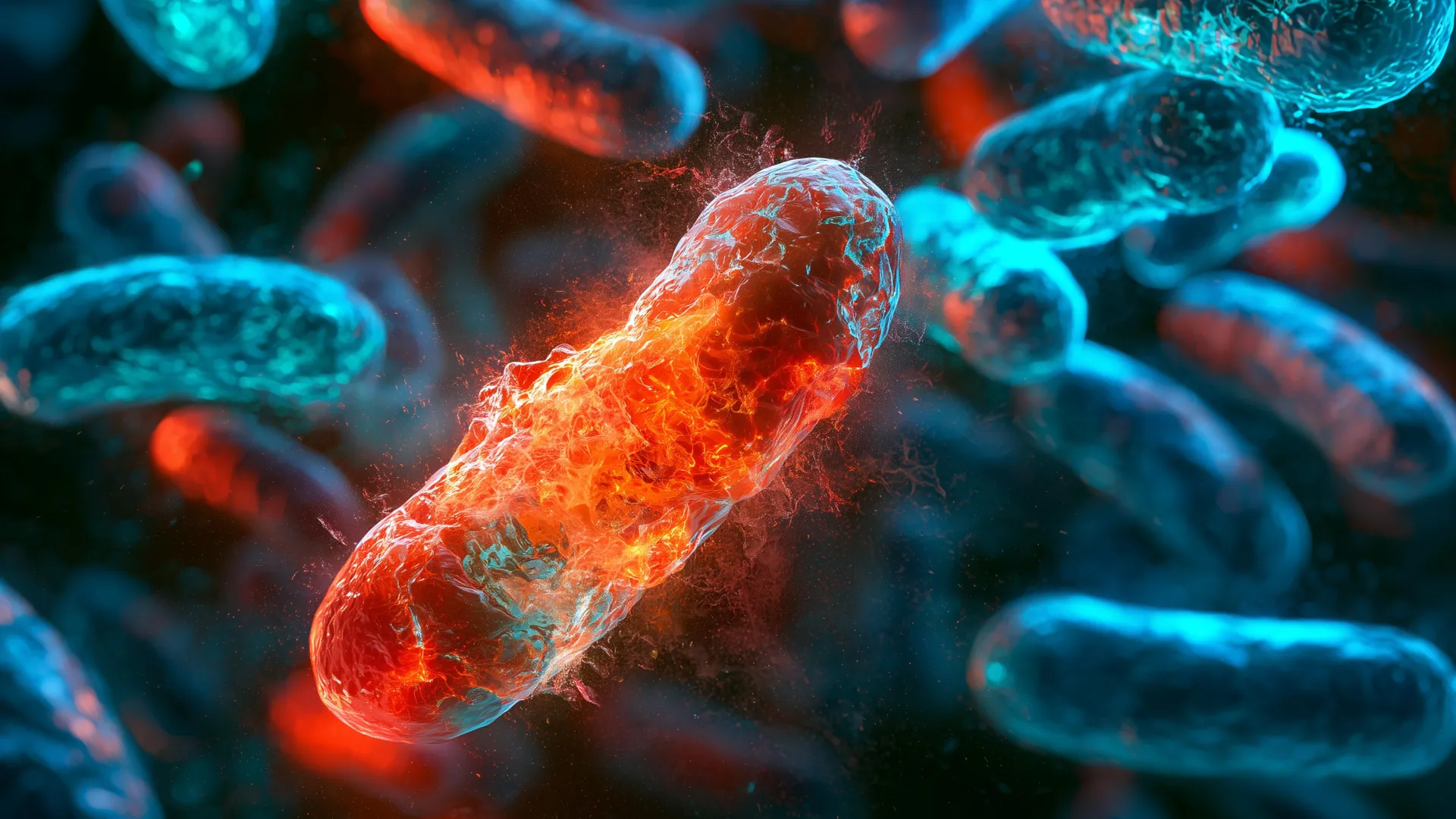
The team found that a phage triggers a sharp rise in DNA production. As DNA accumulates, it interacts with an RNA molecule that had been blocking toxin production, removing the restriction. The resulting small toxin inserts into the cell membrane and kills the infected cell, stopping the virus from spreading.
This is, by far, the strangest of the retron systems that we or anyone else has come across
— Seth Shipman
Possible applications
Shipman's laboratory is exploring ways to turn the retron's machinery into synthetic molecular sensors and switches that regulate gene activity. Researchers are also investigating whether the unusually small toxins could be adapted into new antimicrobial treatments.
The study's authors include researchers from Gladstone, the University of Copenhagen and UC San Francisco. The research received support from the National Science Foundation, the Gordon and Betty Moore Foundation and other organizations.