Scientists just found dinosaur blood that survived 115 million years
Scientists have discovered chemically confirmed traces of ancient blood inside 115-million-year-old dinosaur bones, challenging assumptions about how long biological molecules can survive. The extraordinary preservation could unlock new clues about dinosaur physiology and even help scientists search for ancient life elsewhere in the universe.
Key points
- Researchers found preserved red blood cells and heme molecules in 115-million-year-old bones of Aratasaurus museunacionali from Brazil.
- The mineral hausmannite appears to have stabilized the fossilized blood cells and their molecular components over time.
- Scientists say the discovery challenges assumptions that hemoglobin-related molecules cannot survive deep time.
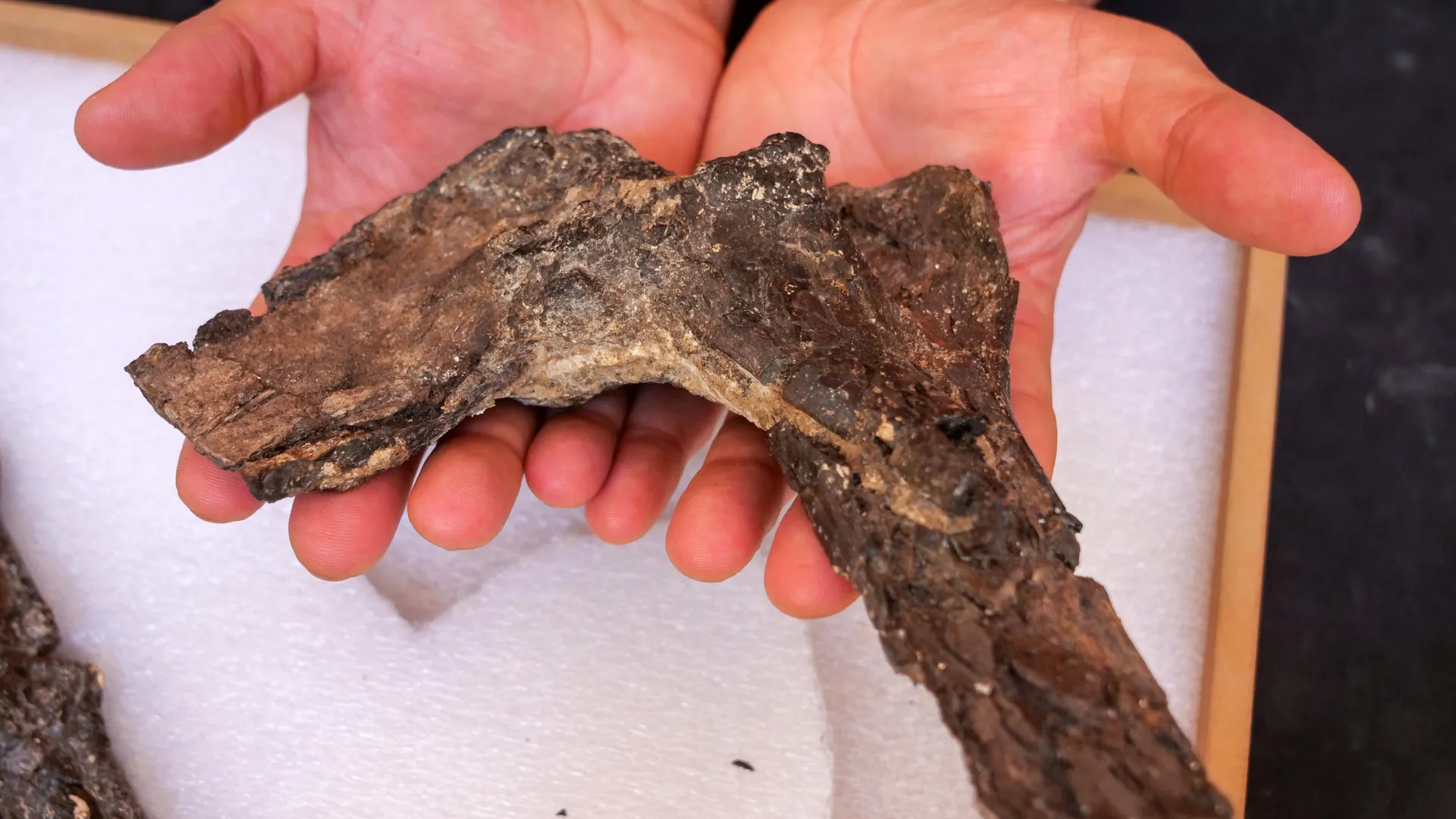
An international team led by Curtin University has found preserved red blood cells and chemical traces of blood molecules in the bones of a meat-eating dinosaur that lived 115 million years ago. The dinosaur, Aratasaurus museunacionali, was discovered in northeastern Brazil, and the findings were published in the Proceedings of the National Academy of Sciences.
The researchers describe the result as the first definitive chemical confirmation of molecules derived from hemoglobin inside fossilized dinosaur red blood cells. Earlier studies had found cell-like structures in ancient fossils but had not conclusively shown these molecular remains were present.
What the analysis found
Examining the dinosaur's limb bones, the team identified many mineralized red blood cells inside vascular canals, the small passages that once held blood vessels. Chemical analysis revealed preserved heme molecules, components of hemoglobin, the protein that carries oxygen in red blood cells.
The study also found amino acids linked to collagen, a structural protein in bones and connective tissue. The researchers connect the preservation to hausmannite, a mineral they say helped stabilize the blood cells and their molecular contents over a very long period.
To detect intact heme-derived molecules in 115-million-year-old red blood cells is astonishing: this really is a landmark discovery
— Professor Kliti Grice
Burial conditions and wider interest
The team suspects the dinosaur was quickly covered by sediment in an environment with little oxygen and abundant microbial activity, conditions that may have helped preserve material that would normally break down. The work involved scientists from Curtin University, the Japan Agency for Marine-Earth Science and Technology, the Brazilian National Museum, the Regional University of Cariri and Johns Hopkins University.
The findings challenge a long-held view in paleontology that blood-related molecules, especially those from hemoglobin, could not survive such vast spans of time. Researchers say the results could open new ways to study the evolution of blood and metabolism in extinct animals, and may be relevant to astrobiology and the search for ancient life beyond Earth.