These tiny snakes roll four times faster than they slither
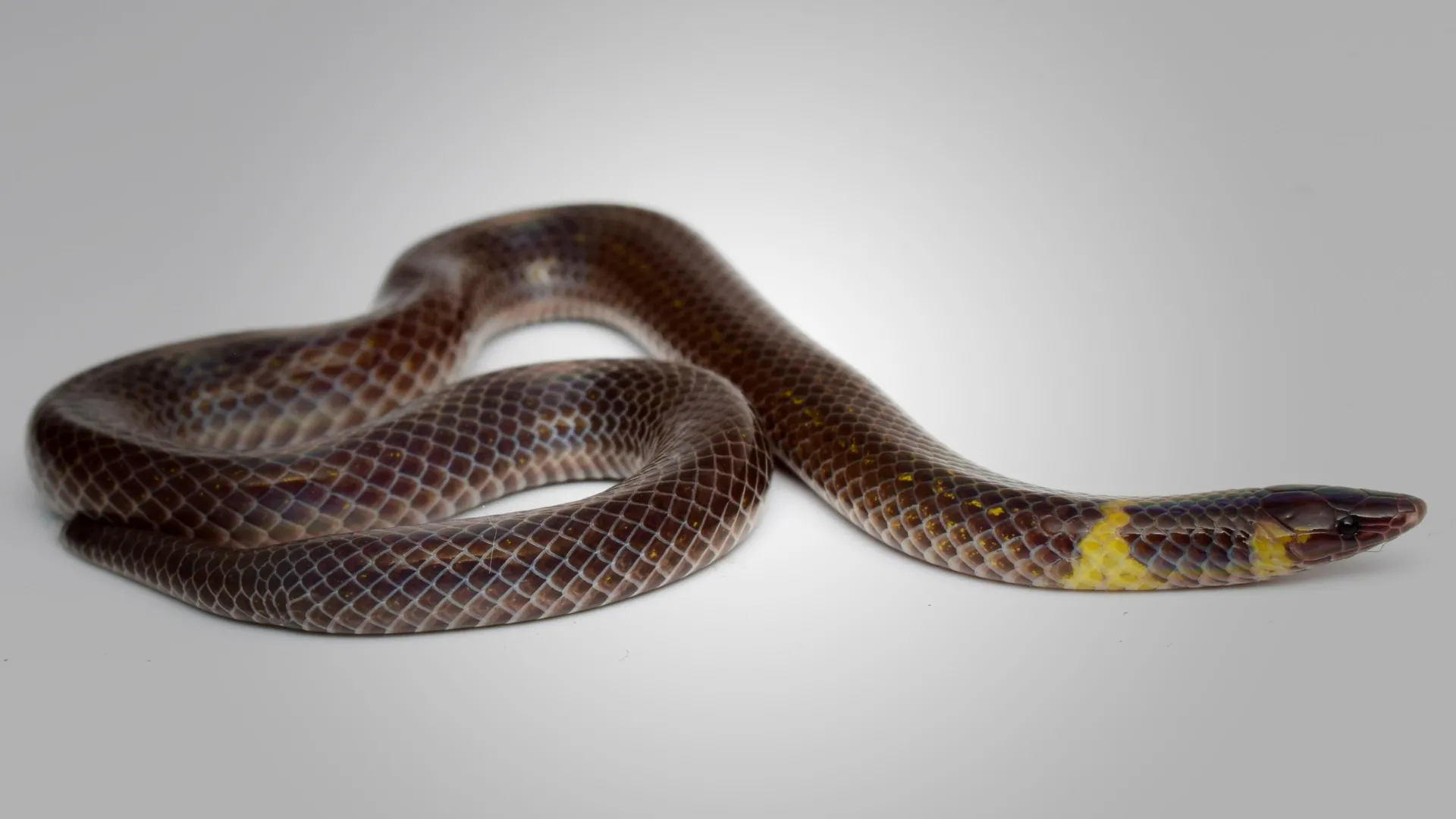
Tiny snakes in Southeast Asia have mastered an extraordinary escape technique: rolling across the ground at speeds up to four times faster than ordinary slithering. Scientists discovered that dwarf reedsnakes accomplish this feat through precisely coordinated body movements that allow their bodies to rotate while their heads remain remarkably stable.
Key points
- Dwarf reedsnakes of the genus Pseudorabdion can roll across the ground about four times faster than they slither.
- Researchers filmed the snakes from multiple angles and found they alternate rolling on each side while sweeping a curved body section downward.
- The snakes keep their heads facing forward and at a nearly constant height while their rear bodies rotate rapidly.
Tiny snakes in Southeast Asia called dwarf reedsnakes can roll across the ground at speeds about four times faster than their normal slithering, according to research that examined how the reptiles manage the movement. The snakes belong to the genus Pseudorabdion and are among the few animals known to deliberately roll to escape potential predators.
Researchers filmed the snakes from several angles and studied how different parts of their bodies moved during rolling. The work was provided by Toho University.
How the snakes move
While rolling, the snakes reached peak forward velocities of 1.72 to 3.69 meters per second, about four times their maximum speed during lateral undulation, the side-to-side motion most snakes use. They stayed within a narrow racetrack measuring just 20 centimeters across.
The recordings showed the snakes do not spin their whole bodies together. Instead, they alternate rolling on one side and swinging a curved section of the body downward beside the head, a movement the researchers called a "stroke." The side touching the ground switches each cycle, and the stroke changes direction from left to right or right to left.
stroke
— the researchers
Head stays steady
Even as the rear of the body rotates substantially, the snakes keep their heads pointed in the direction of travel and at a relatively consistent height above the ground. This stabilization is especially noticeable at higher speeds, when the snakes tend to hold their heads elevated and reduce upward and downward movement.
The snakes achieve this without any mechanical separation between the rotating and stabilized parts of their bodies. The researchers say the findings show how precise coordination can let an animal perform movements its anatomy might not suggest.