400,000-year-old teeth reveal a stunning twist in human evolution
A groundbreaking discovery is rewriting the story of human evolution, revealing that an ancient human species once thought to be an evolutionary dead end may have left genetic traces in people alive today. By extracting proteins from 400,000-year-old Homo erectus teeth discovered in China, scientists uncovered evidence suggesting that these early humans interbred with Denisovans, another mysterious ancient human…
Key points
- Proteins from six Homo erectus teeth about 400,000 years old were recovered from three Chinese sites.
- The study suggests Homo erectus interbred with Denisovans in East Asia around 400,000 years ago.
- A genetic variant linked to this legacy appears in about 21% of people in the Philippines and about 1% in India.
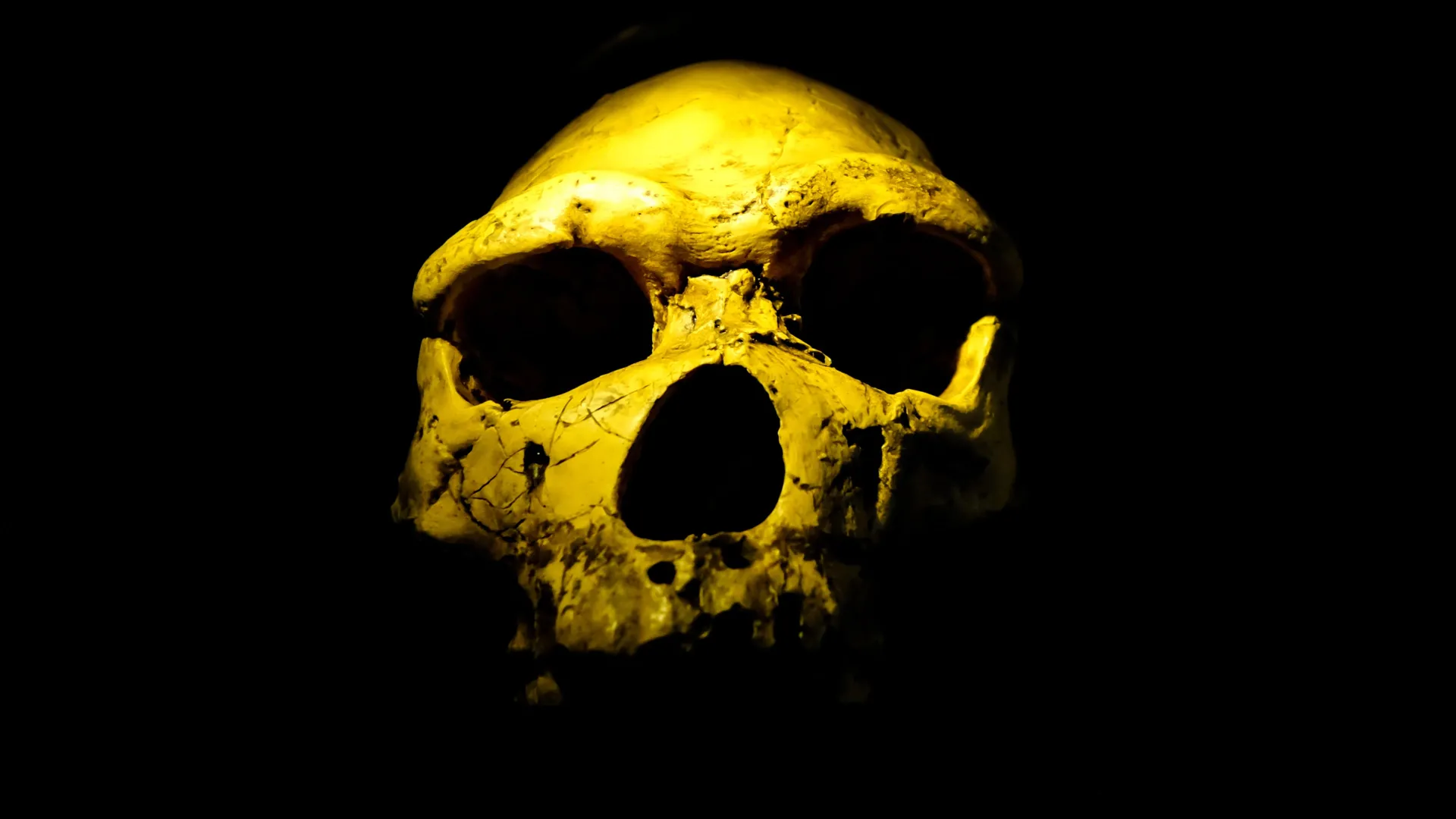
A study published in Nature by Qiaomei Fu of the Chinese Academy of Sciences and colleagues has recovered biological information from Homo erectus fossils too old for DNA analysis, according to a report in ScienceDaily. The team extracted ancient proteins from the enamel of six teeth found at three Chinese sites: Zhoukoudian, Hexian and Sunjiadong. All the teeth date to around 400,000 years ago.
The findings suggest that Homo erectus exchanged genes, probably through interbreeding, with Denisovans in East Asia roughly 400,000 years ago. The study indicates that some of this genetic legacy was passed on to living people in the Philippines, Papua New Guinea and across south-east Asia.
What the proteins showed
Tooth enamel is the hardest tissue in the body, and its proteins survive after DNA has degraded. All six specimens share a previously unknown amino acid variant, a single letter changed in the protein sequence that has not been seen in any other hominin. This variant groups the east Asian Homo erectus into a distinct group and settles debate over whether the unusual Hexian fossils were Homo erectus.
The lineage we once thought was a dead end has, it turns out, left a small but detectable trace in living human genomes
— the article
A wider pattern of interbreeding
A second shared variant also appears in Denisovans. The corresponding genetic variant is found in living people at frequencies of 21% in the Philippines and about 1% in India, a pattern matching what would be expected if it entered modern humans through Denisovan ancestry. The article says the most reasonable interpretation is that Homo erectus passed the variant to Denisovans, who later passed it to the ancestors of modern south-east Asians and Oceanians.
The report adds that interbreeding between archaic human lineages was routine rather than exceptional. Modern humans outside Africa carry roughly 2% Neanderthal DNA, while Papuans and Aboriginal Australians carry an additional 2 to 5% Denisovan ancestry.