Scientists discover that a clogged filter could revolutionize oil refining
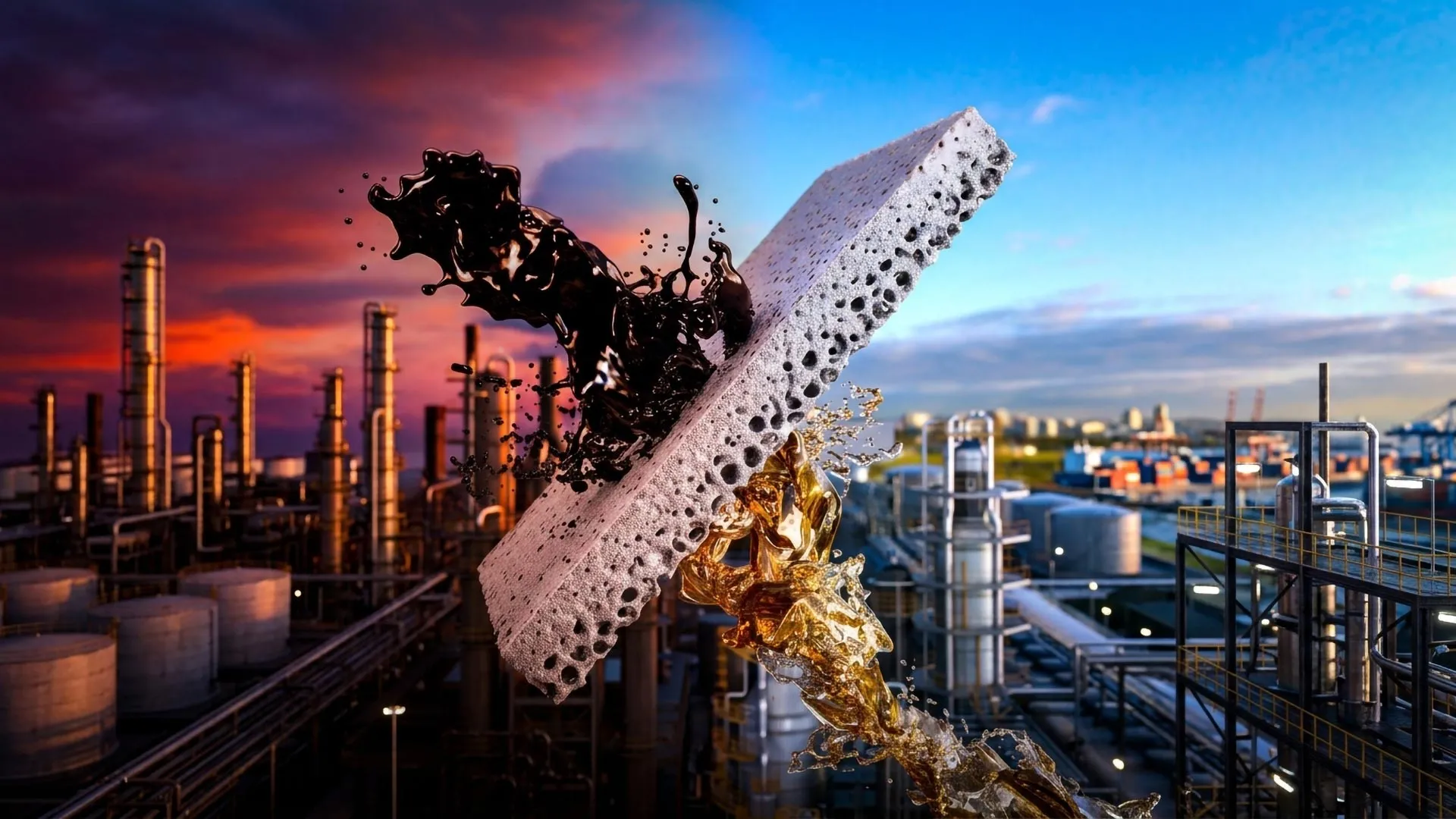
Scientists have developed a remarkable new membrane that separates crude oil at room temperature, using the oil itself to create microscopic filtration channels. The breakthrough could cut refining energy consumption by nearly 32%, carbon emissions by almost 38%, and operating costs by 36%, potentially transforming one of the world's most energy-intensive industries.
Key points
- Researchers at KAIST and Georgia Tech separated crude oil at room temperature using an uncoated PAN membrane.
- The membrane's pores narrow below 2 nanometers as heavy molecules build up, letting lighter fractions through.
- Simulations project 31.6% less energy use and 37.6% lower CO2 emissions if the membrane is added to refining.
Researchers led by Professor Dong-Yeun Koh at the Korea Advanced Institute of Science and Technology, or KAIST, with Professor Ryan Lively's group at Georgia Tech, have demonstrated a membrane that separates crude oil at room temperature. KAIST announced the results, which were published in Nature.
The membrane is made from porous polyacrylonitrile (PAN), an inexpensive polymer already used as a support material in industrial filtration. The team says it could cut the energy used in refining, which has long depended on heating oil above 350 °C.
How the membrane works
As crude oil flows through the bare membrane, heavier hydrocarbon molecules collect on the pore walls and narrow the openings to less than 2 nanometers. This buildup, normally called fouling and treated as a problem, let lighter fractions such as naphtha, gasoline and kerosene pass quickly while slowing heavier substances.
The uncoated PAN membrane reached crude oil permeation rates about 23 times higher than earlier leading membranes and ran stably for 28 consecutive days, according to the article.
This study reveals a new scientific principle in which a membrane interacts with a complex mixture and spontaneously forms its own separation channels.
— Professor Dong-Yeun Koh of KAIST
Projected savings and next steps
The membrane could be installed as a modular system ahead of existing distillation equipment. Simulations projected a 31.6% drop in energy use, a 37.6% cut in carbon dioxide emissions, 20.7% less cooling water use and 36% lower operating costs. Researchers estimate that adopting the system across Korea's refining and petrochemical industries could avoid about 10 million tonnes of greenhouse gas emissions a year, roughly the annual emissions of four million combustion-engine vehicles.
The team plans to improve large-scale membrane production and long-term reliability. It also sees possible uses in pyrolysis oil treatment, solvent recovery in battery manufacturing, pharmaceutical purification and biofuel production.